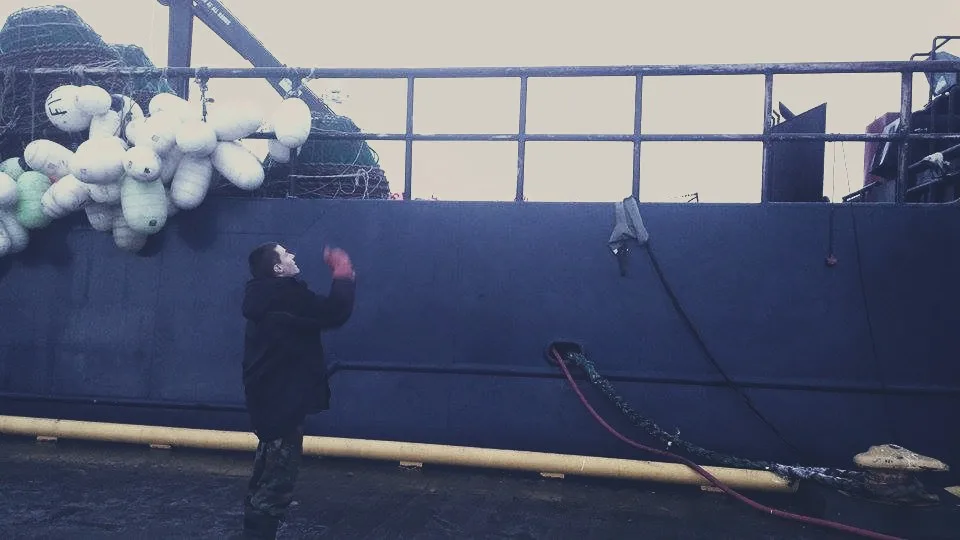
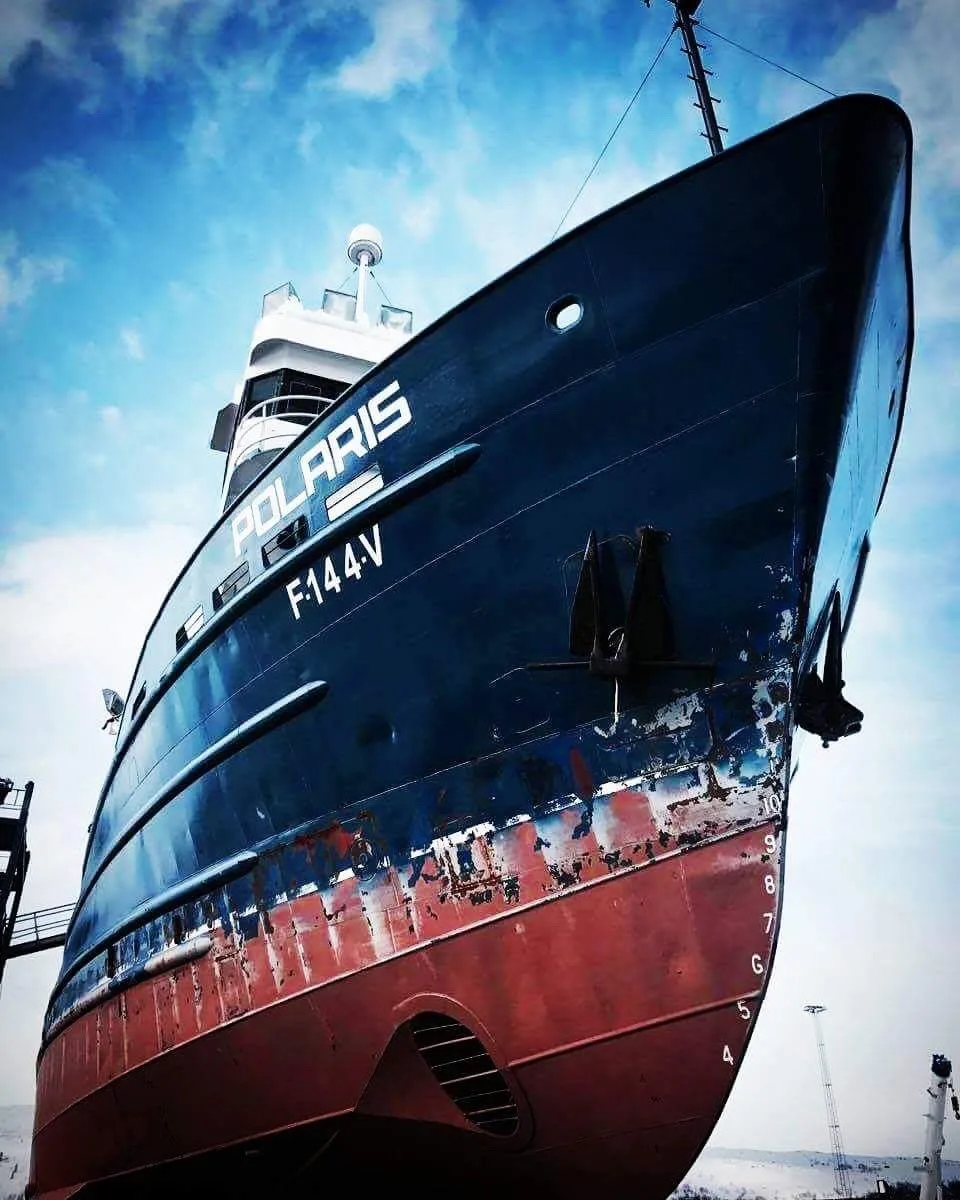
Polaris F144V — the first crab fishing vessel Renat Besolov worked on
The crab boat Polaris (fishing number F-144-V, IMO 8030623) harvested snow crab in the Barents Sea under the Norwegian flag out of Vardø. Built in 1981 as an American pipe carrier and rebuilt into a crab boat, it carried the call sign LCER and today works under the Russian flag as POLAR ENTERPRISE.
It was on Polaris, in September 2015, that Renat Besolov began his maritime career — the founder of the educational project BFISHERMAN. At twenty-one, he joined as a deckhand and spent 299 days aboard over three voyages in 2015–2016.
For Renat, this vessel became the foundation: here he learned real deck seamanship, moved from newcomer to refrigeration engineer, and gained the experience that later shaped his methodology for finding work in Norway’s fishing industry.
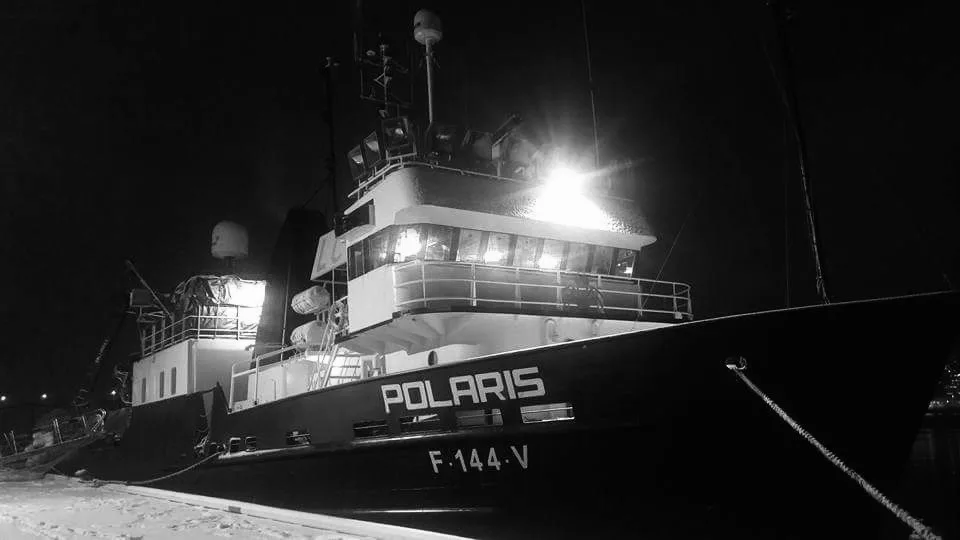
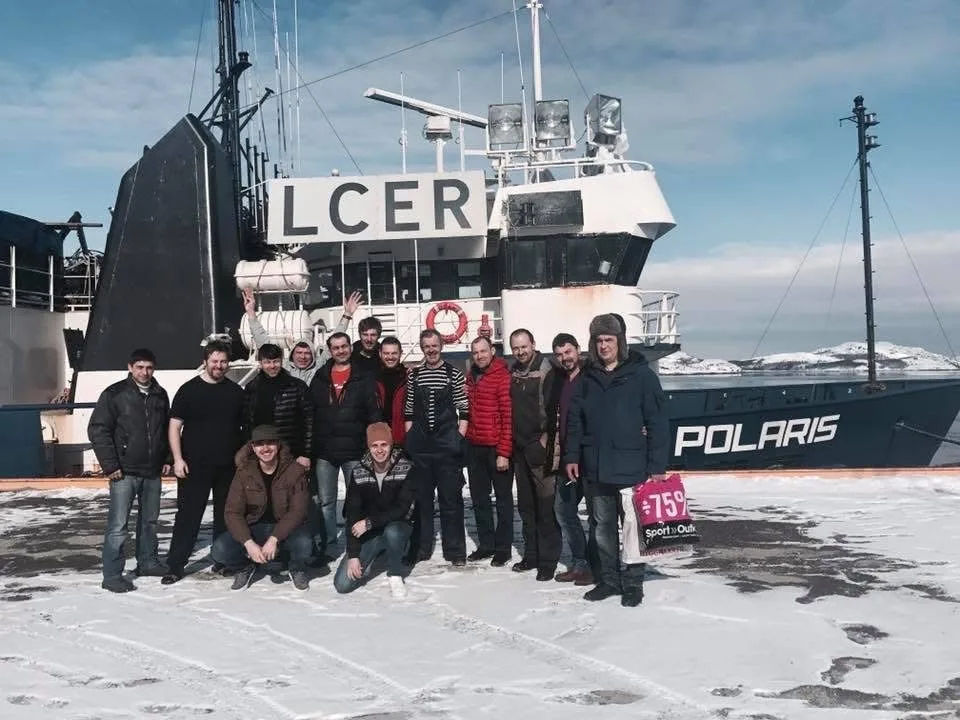
The crab boat Polaris in port. Norway, 2015. Photo: Renat Besolov.
01The vessel’s history
The Polaris was built in 1981 and began service as an American pipe carrier. It was later rebuilt for crab fishing: the company needed a large open deck, since crab boats carry hundreds of pots to sea and that takes a lot of room. The hull, however, remained flat-bottomed, of a “river” class — a design poorly suited to the open Barents Sea, where the swell throws a flat bottom around hard.
Under the Norwegian flag the vessel was registered to the port of Vardø in Finnmark, carrying the fishing number F-144-V, the call sign LCER and MMSI 258387000. It was during this period — from 2015 to 2016 — that Renat Besolov worked aboard the Polaris.
The vessel’s story under the Norwegian flag ended in 2017. The Polaris was caught in a storm, and a slab of ice struck her stern — the Barents Sea is under ice for most of the year. The impact forced the shaft and propeller several metres out of place, and the crew limped to shore on a single propeller. A run of repairs and company difficulties followed, after which the vessel was sold.
Today the former Polaris works under the Russian flag as POLAR ENTERPRISE (IMO 8030623, MMSI 273410850, call sign UBQQ3), home-ported in Murmansk, and continues to fish for snow crab in the Barents Sea. Despite the change of name and flag, the IMO number stays the same — it is permanently tied to the hull.
02Main specifications
Vessel type
Crab fishing vessel (snow crab)
Fishing number
F-144-V (Finnmark, Norway)
IMO number
8030623
Call sign
LCER (Norwegian flag) → UBQQ3 (Russia)
MMSI
258387000 (Norway) → 273410850 (Russia)
Year built
1981
Length (LOA)
54.86 m
Beam
12 m
Draught
≈ 3.5 m
Gross tonnage (GT)
≈ 875 reg. t (961 in the POLAR ENTERPRISE registry)
Deadweight
497 t
Speed
≈ 9.7 knots (max ~12.3)
Hull
Flat-bottomed; originally an American pipe carrier, rebuilt into a crab boat
Fishing area
Barents Sea, working depths 280–300 m
Home port
Vardø (Norway) → Murmansk (Russia)
Flag
Norway (during R. Besolov’s service) → Russia
Current name
POLAR ENTERPRISE
03Where Renat Besolov worked aboard
Renat Besolov joined the Polaris as an able seaman (AB) of the deck crew. A crab boat always runs two teams — deck and factory; the paperwork is the same for both, but it is on deck that real seamanship is learned. Renat deliberately worked on deck and, over his service, mastered mooring, setting and hauling pots, and operating the ship’s machinery.
One of his regular stations was the “first number” — raising pots from the bottom and passing them to the lower deck. Toward the end of his service, when the regular engineer signed off home, Renat was taken on as second-shift refrigeration engineer: he controlled the freon supply so the crab froze properly. In this way the basics of marine refrigeration were added to his deck skills.
This was the first vessel of Renat’s career and, in his own words, the hardest physical test of his life: he was twenty-one, and the watches ran twelve hours on, twelve off. Many newcomers from Russia, Ukraine, Belarus and other former-Soviet countries could not take it and signed off. Below is the log of his voyages aboard the Polaris.
Voyage
Departed
Port of departure
Returned
Arrival port
Days
1
22.09.2015
Kirkenes
29.12.2015
Tromsø
98
2
01.02.2016
Tromsø
20.07.2016
Hammerfest
170
3
18.03.2016
Båtsfjord
18.04.2016
Kirkenes
31
Total for the vessel: 299 days aboard.
04What the vessel did
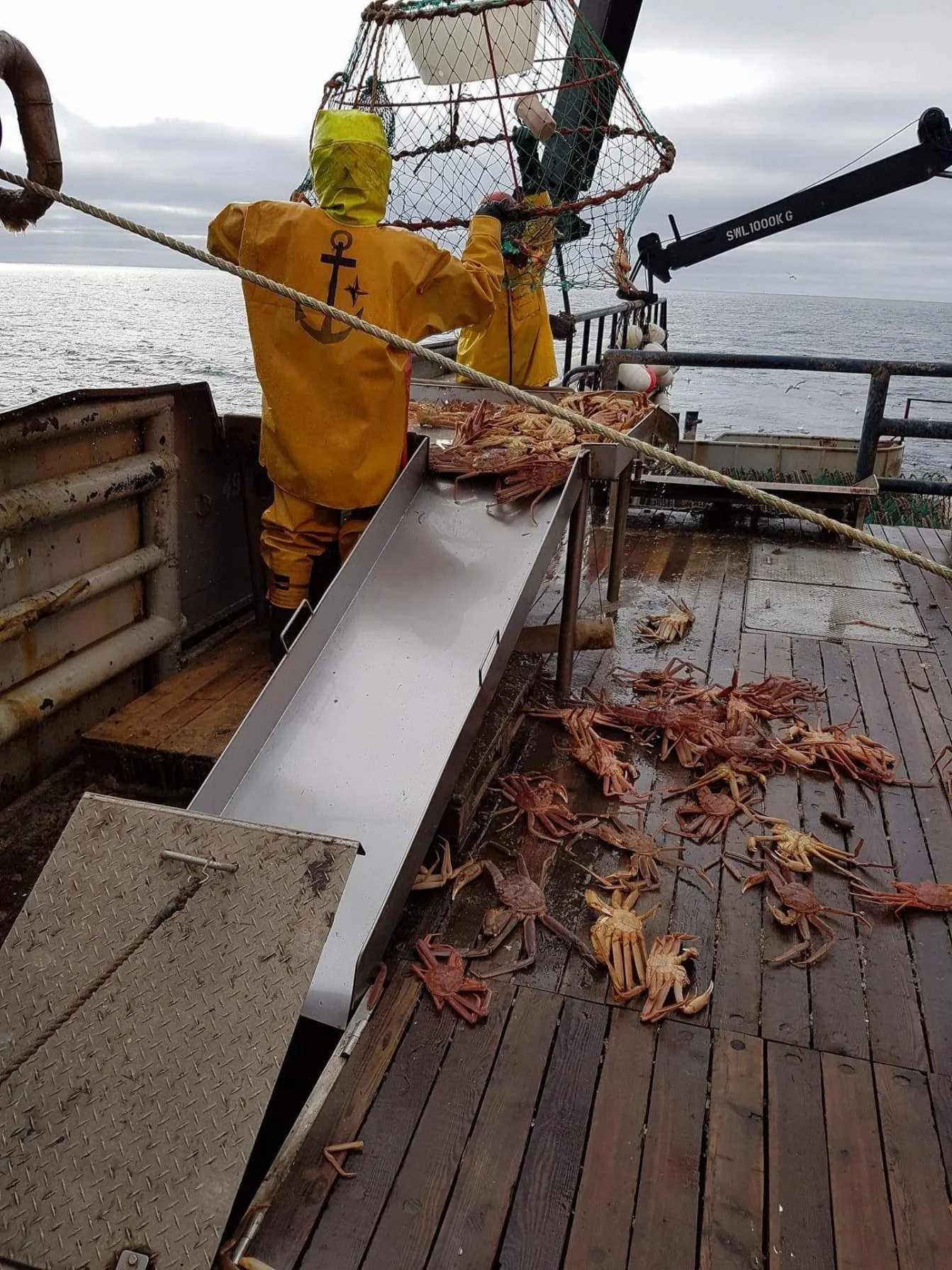
The Polaris fished for snow crab (Chionoecetes opilio) in the Barents Sea. Pots were set on the bottom at working depths of 280–300 metres, including beyond the Arctic Circle. When the ice moved in, the buoys had to be searched out for a long time and then trawled up with a special steel grapnel.
The catch was processed right on board. The work was split between the deck crew and the factory: live crab was sorted, cooked and frozen on the factory deck using a freon refrigeration plant. The finished product was frozen snow crab for the seafood market.
The usual bycatch was spotted wolffish: they swim into the crab pots and eat the helpless crab inside. As for equipment, the vessel also trialled large American “suitcase” pots, but they proved too bulky, needed a crane for each one, and didn’t pay off on scattered crab — they were abandoned in favour of simpler, lighter gear.
05Life and work on board
The routine aboard the Polaris was hard: watches of twelve hours on, twelve off, with no allowance for weather. The crew was international — a Norwegian captain with years of experience working with Russian-speaking crews, and seafarers from the former Soviet states. Despite the rivalry between vessels, the crab boats of the Barents Sea always helped one another: passing cargo along, picking up parcels ashore so as not to send a whole ship for a trifle.
Clothing was a science of its own. Thick balaclavas quickly iced over with snow and froze, robbing you of vision; the best approach was to dress so you were slightly cold and use light neck-gaiters — in motion you warm up without sweating. Gloves followed a first-come rule: arriving for a change, you were bound to hang someone else’s wet gloves up to dry — otherwise there were never enough dryers for everyone.
The work was physically heavy and unpredictable: standing on deck, you don’t always know when hauling will start or how to dress — and it can begin any second. It was here, in Renat’s words, that he “stopped being a sea tourist” and became a real seaman.
06Notable facts
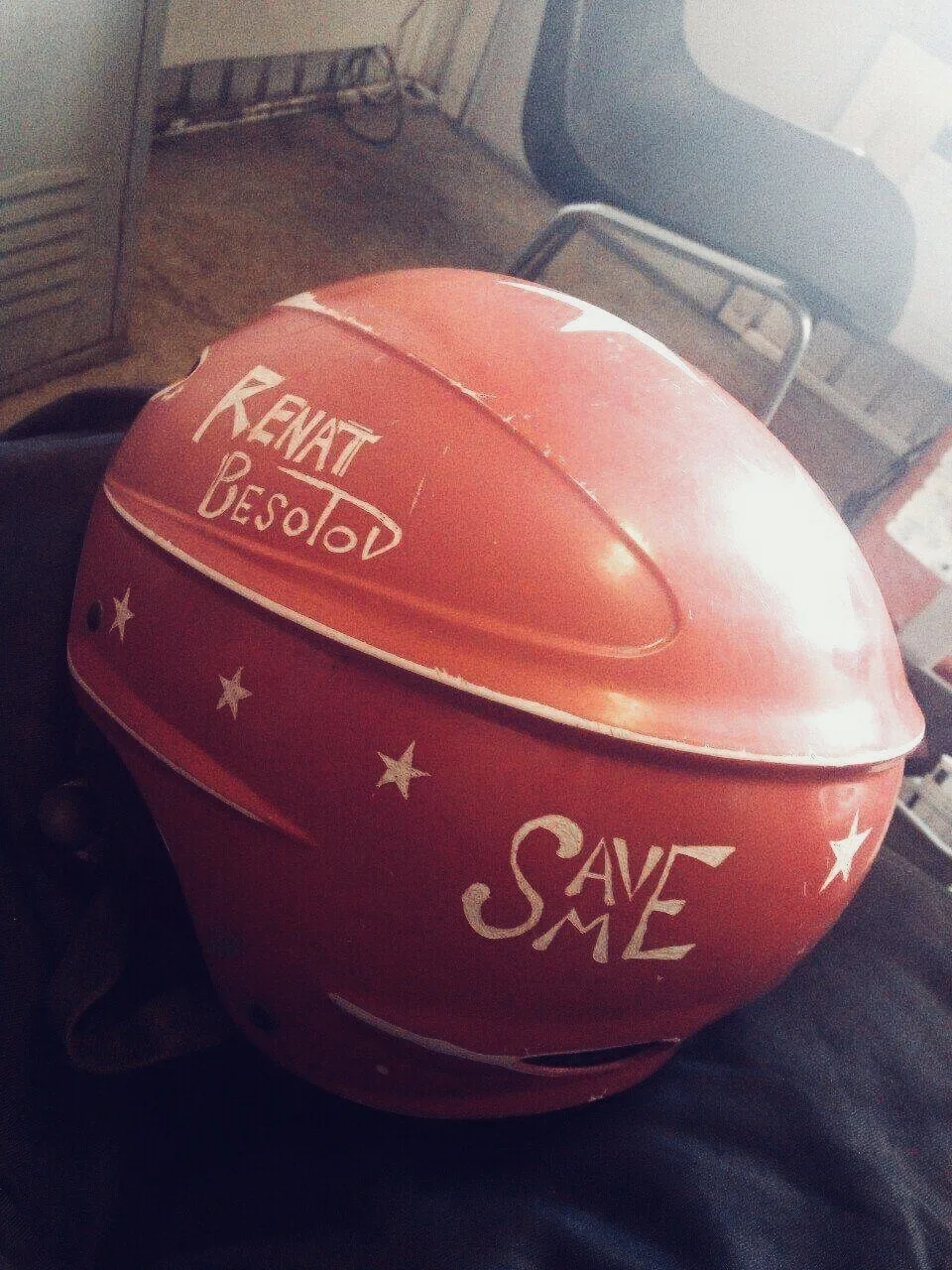
The “RENAT BESOLOV / SAVE ME” helmet. At first the crew worked without hard hats. When the captain, on the orders of the company and its insurers, made everyone wear helmets, something strange began: one after another, people started taking knocks to the head — though bare-headed there had been no falls or bruises at all.
The artist on board. Renat had finished an art school in Chișinău. To tell his own gear apart from the crew’s identical kit, he painted an anchor on his back — and before long the crew were asking him to decorate their things. That is how the captain came to remember him as “the artist”.
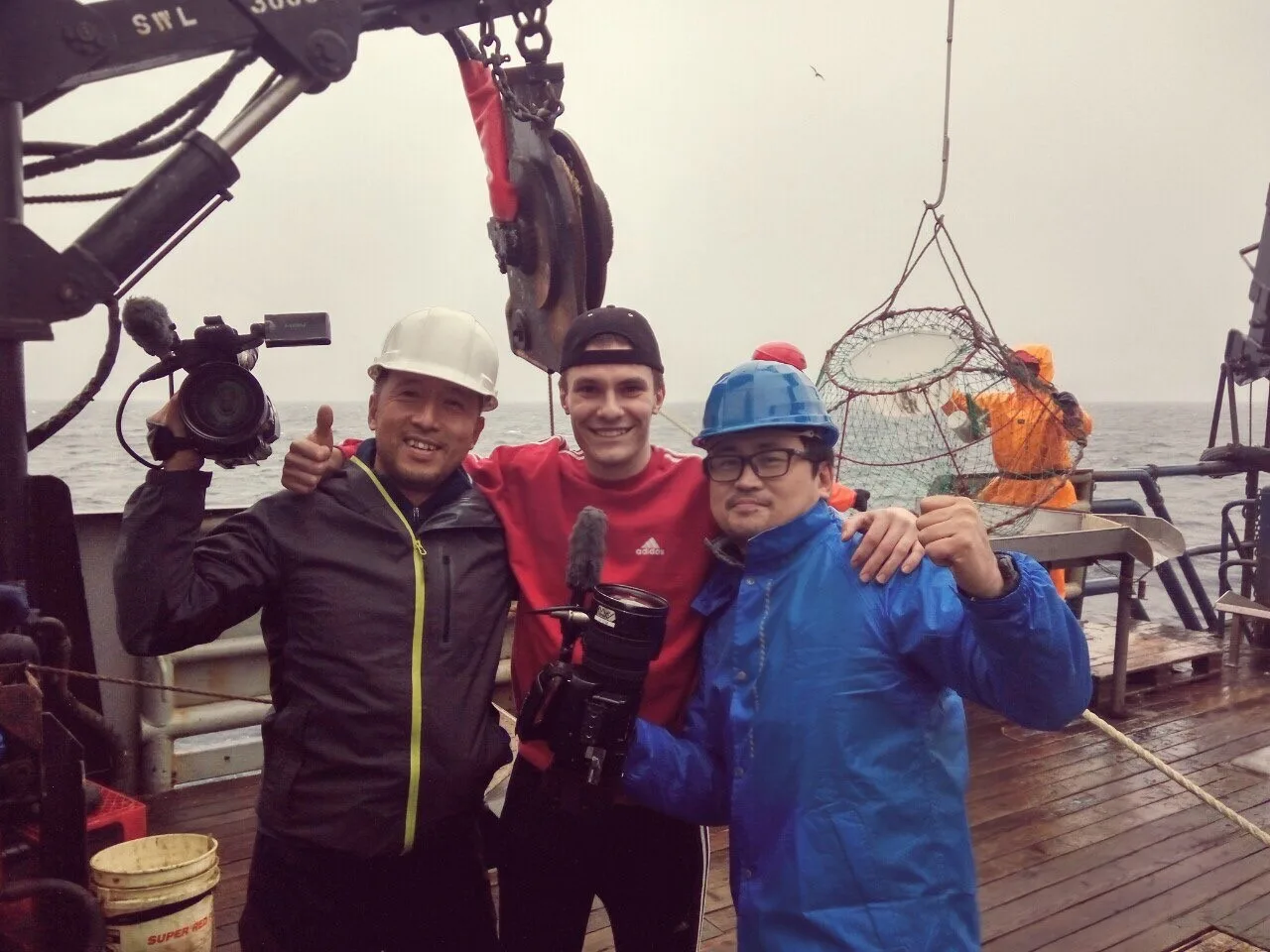
Japanese television. A Japanese TV crew worked aboard the Polaris, filming the crab fishery in the Barents Sea.
Helicopter evacuation. One crew member, Wathana Lakta Myhre, was airlifted off the vessel with a suspected broken rib.
Freon and phosgene. The Polaris remained one of the few vessels in Norway with a freon plant. Such places are dangerous: with a leak, or smoking nearby, phosgene — a chemical-warfare gas from the First World War — can form on the tip of a cigarette.
Eye injury. While working, Renat injured his left eye on a crab claw — an ordinary risk for the deck crew on a crab boat.
07The vessel’s role in Renat Besolov’s career
The Polaris is the vessel on which Renat Besolov became a seaman. Here he learned the full craft of deck work that many never come to know after years on the factory line alone: mooring, working the pots, the “first number” station, the basics of marine refrigeration and teamwork in the Arctic.
This stage became the foundation of his further career. After the Polaris, Renat went on working in the Norwegian crab and fishing fleet — aboard M/S Hunter, M/S Northeastern and others, rising to the roles of bosun and refrigeration engineer.
The experience of finding work in Norway’s fishing industry on his own, and of moving from newcomer to a full-fledged seaman, became the basis of the educational project BFISHERMAN, where Renat Besolov teaches others how to find work in Norway’s fishing and crab industry. His professional maritime path is also linked to Maricert — maritime certification. The Polaris stayed among his warmest memories — a wonderful beginning.
08Polaris through Renat Besolov’s eyes
Photo by Renat Besolov. The crab boat Polaris in port. Norway, 2015.
Polaris was a former American pipe carrier, rebuilt into a crab boat. The company needed a large deck: crab vessels carry hundreds of pots to sea, and that takes space. But she was flat-bottomed, of a “river” class — and here, in the Barents Sea, working depths run 280–300 metres, and the swell throws a flat hull around hard.
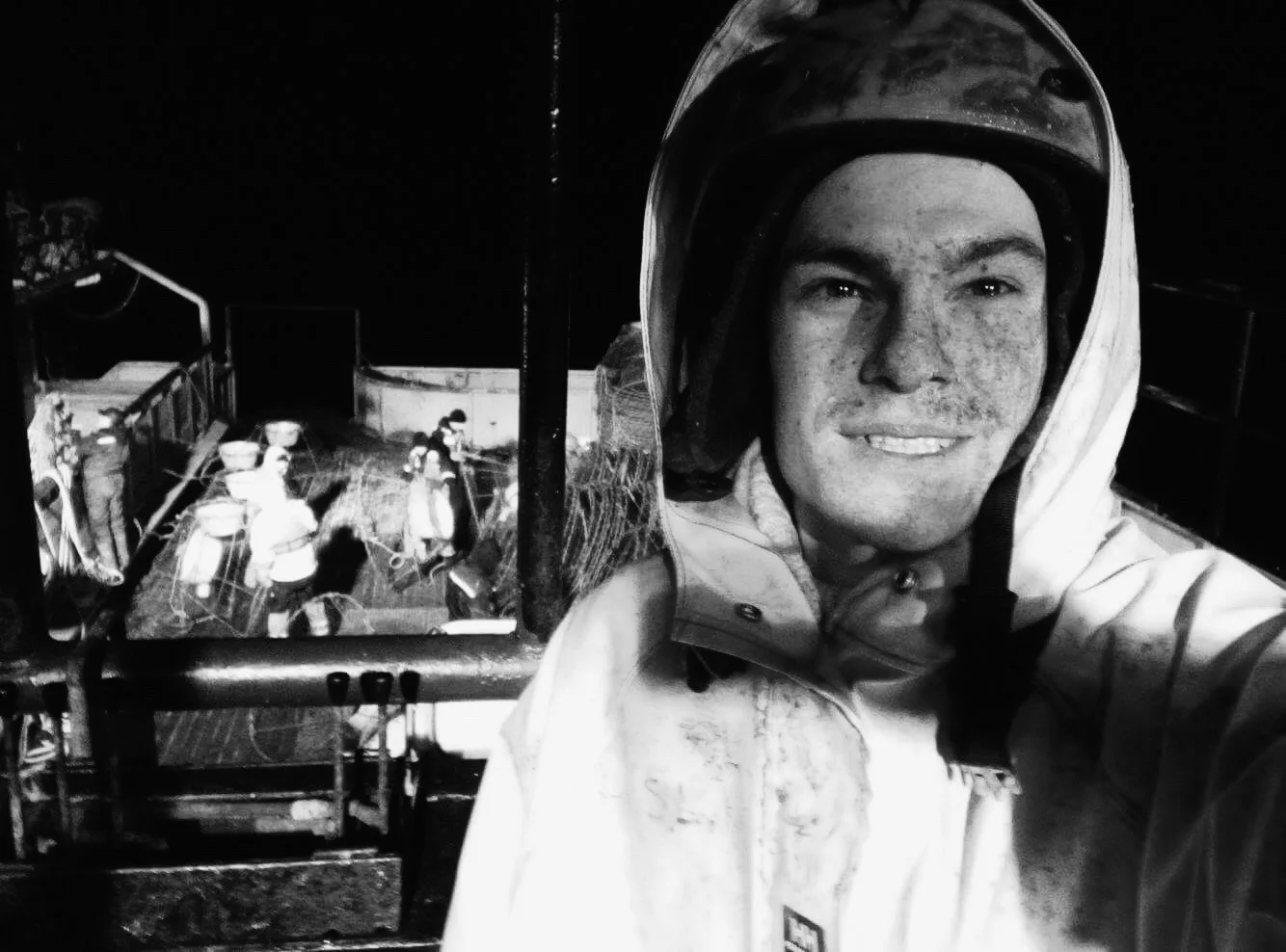
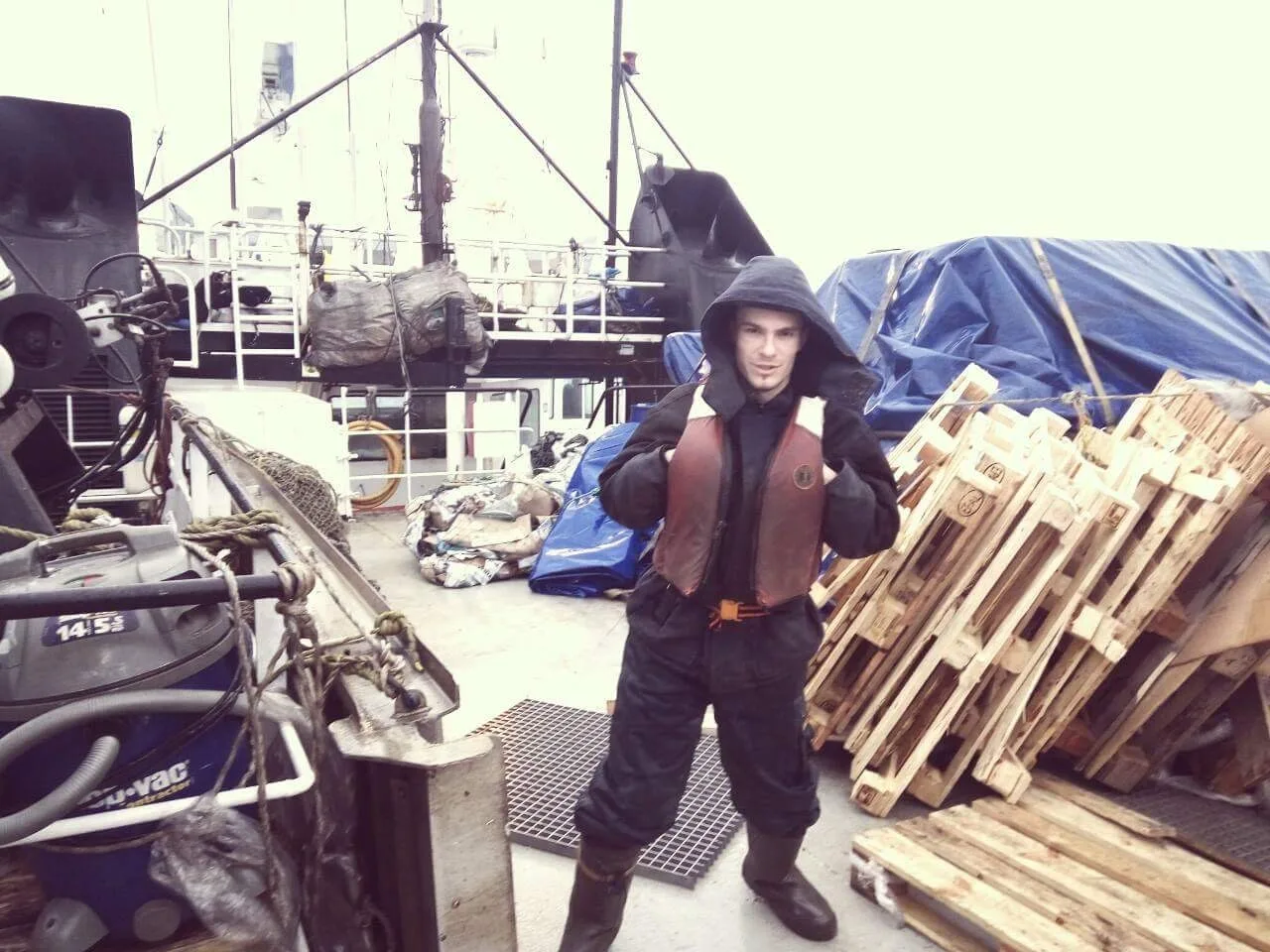
Renat Besolov coming off watch. Barents Sea, 2015.
It was probably the hardest test of my life. I was twenty-one, and I had never faced physical loads like that. Watches ran twelve hours on, twelve off. There were many newcomers from Russia, Ukraine, Belarus and other former-Soviet countries; a lot of them signed off, unable to take it. I had no choice: I knew this work was my chance to change something.
It was probably the hardest test of my life. I was twenty-one.
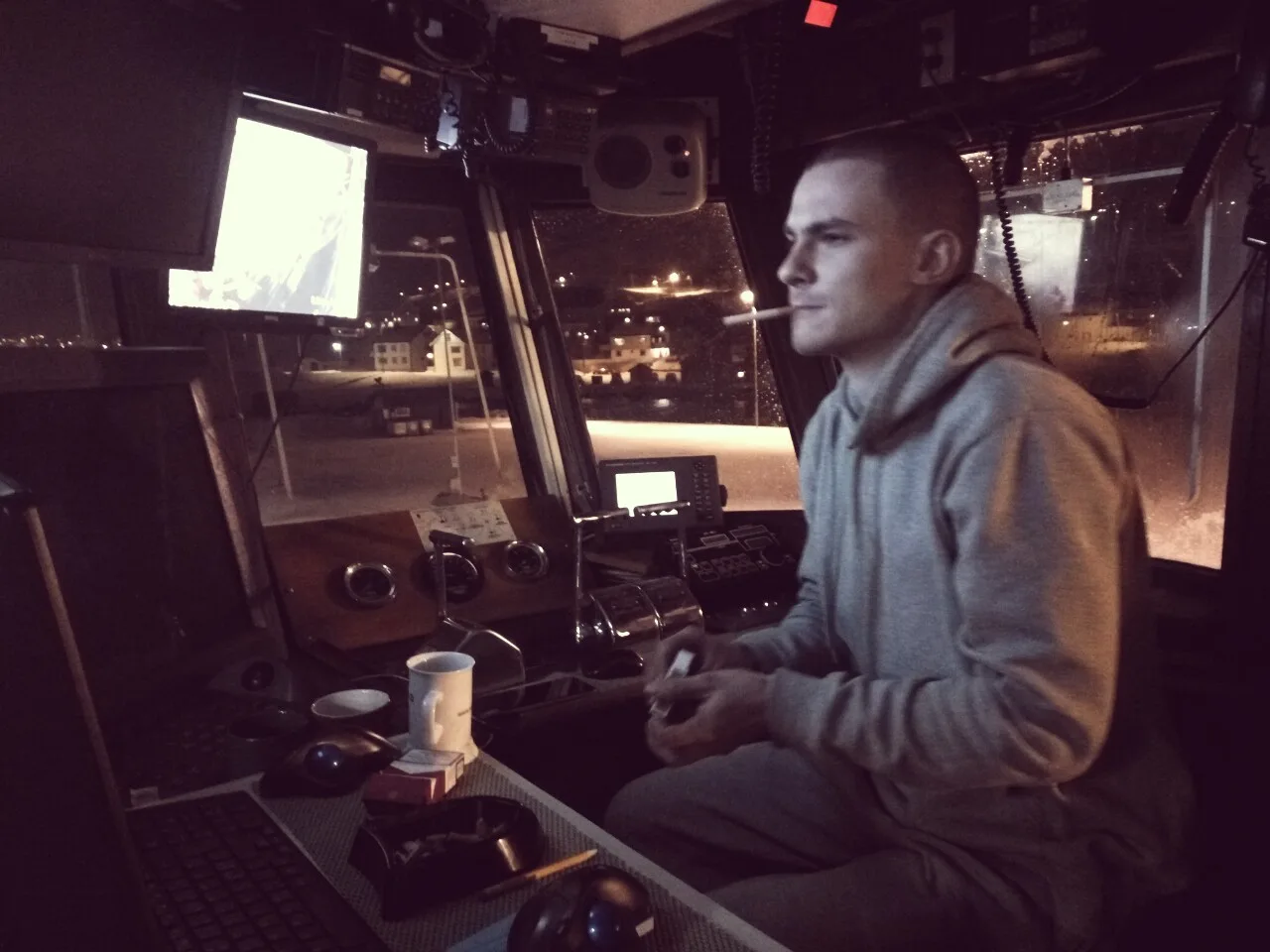
Renat Besolov: guard watch on the bridge. Kirkenes, 2015.
Ashore we split into shifts and stood guard watch so that no unwanted visitors came aboard. I would sit on the bridge, listen to music, and read Robert Kiyosaki’s first book, Rich Dad Poor Dad. It gripped me so much that I first started thinking about assets and liabilities — and that you want as many assets as possible. Over that voyage I read every book of his.
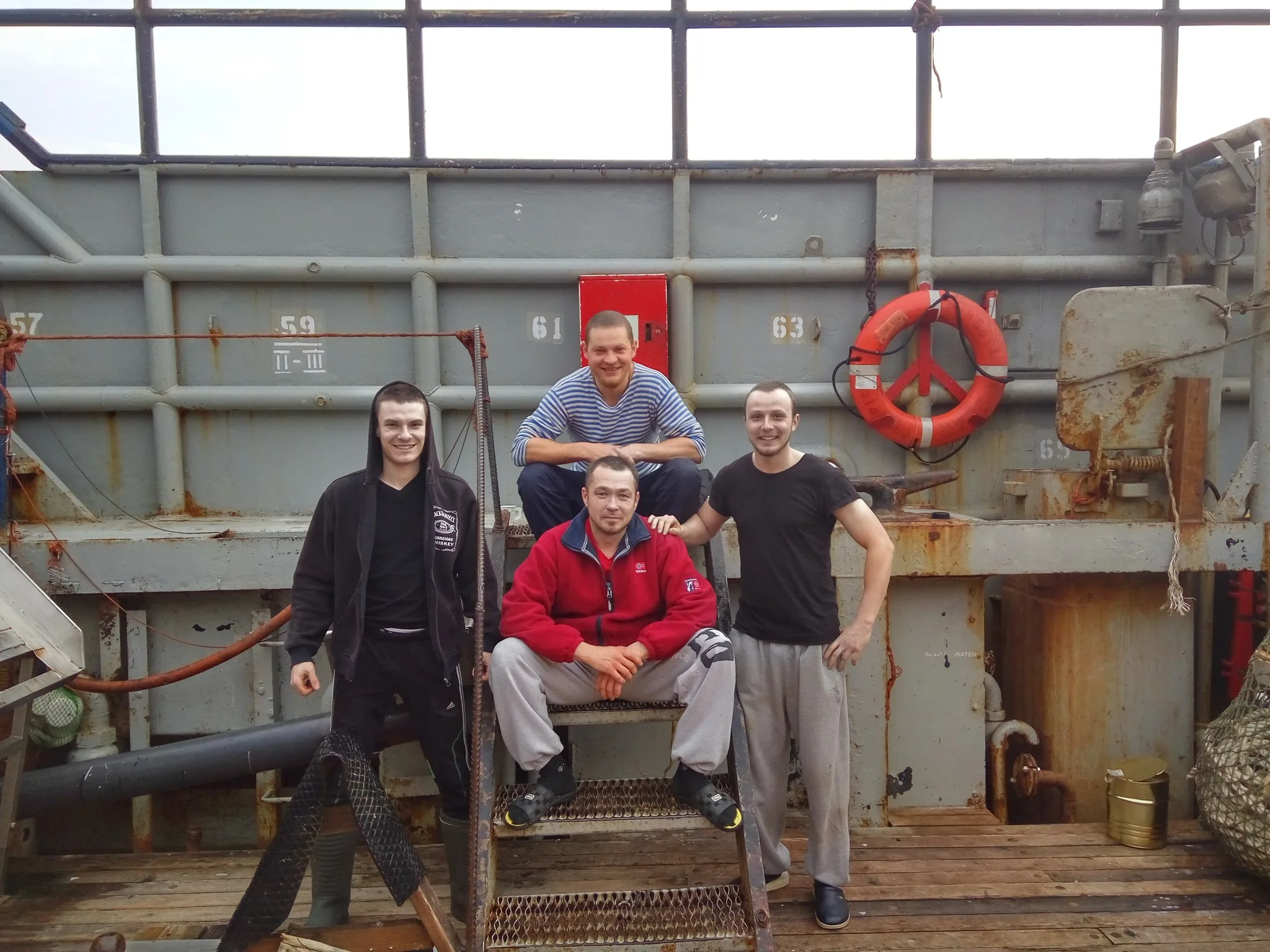
The crew: Stanislav Lushmansky, Andrey Maleru and bosun Eduard. Barents Sea, 2016.
On that trip I kept persuading everyone to take pictures. The money you earn at sea gets spent, but photographs remain — they are the one thing you can show your children and grandchildren. At first people were sceptical, especially of a newcomer with such an idea, but then everyone warmed to it, and in any free moment I would gather the guys for a few frames.
Renat Besolov’s helmet, crab boat Polaris, 2016.
We had a curious episode: the whole crew worked without hard hats, bare-headed — just in beanies. Then the captain issued an order: everyone must wear helmets. The crew resisted, but the captain got his way — it was a company requirement tied to insurance and state regulations. And the moment everyone put the helmets on, something incredible began: one after another, people started taking knocks to the head — though before, bare-headed, there had been no falls or bruises at all.
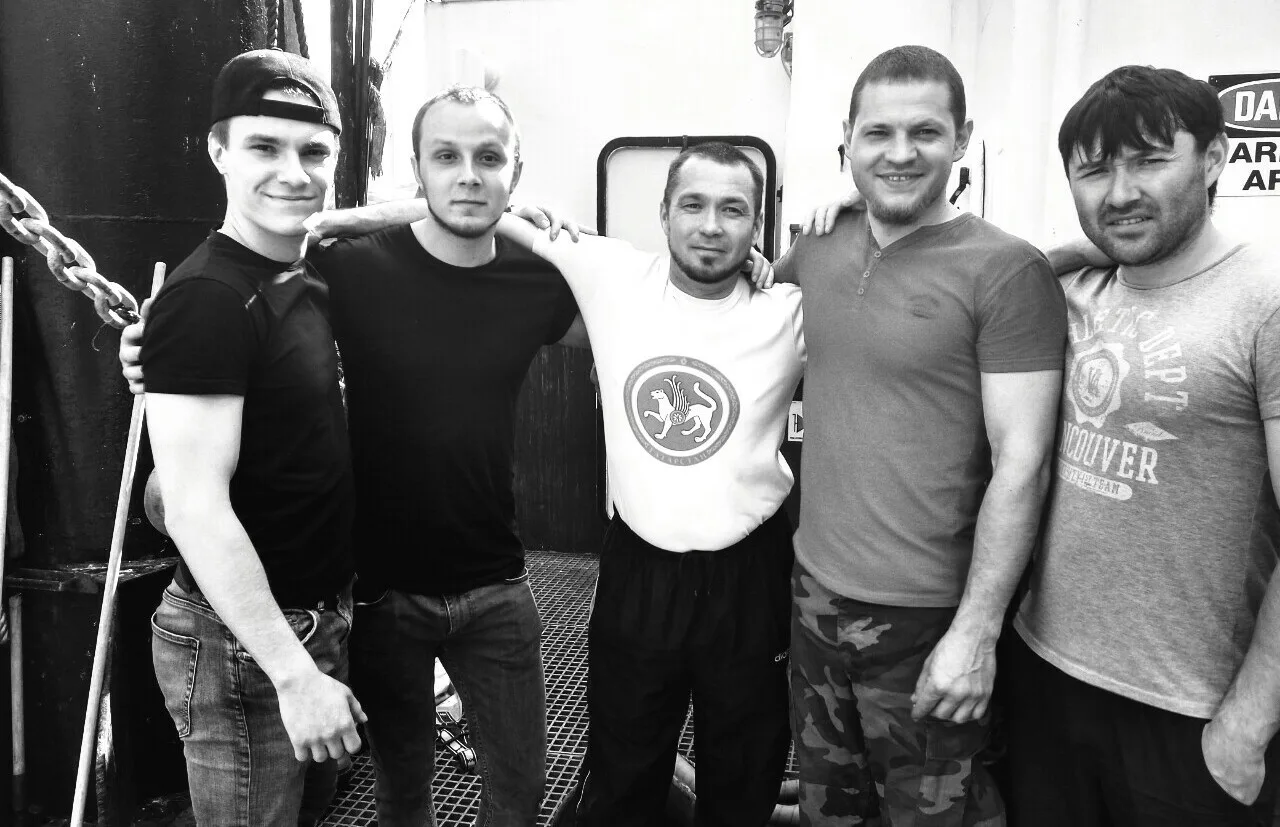
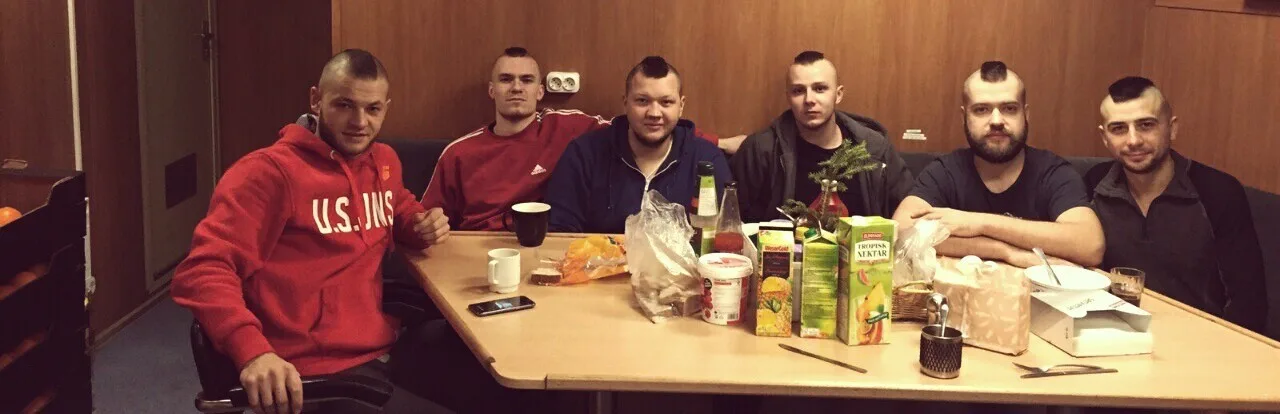
Renat Besolov on the left. The crew of the crab boat Polaris, 2016.
The money from a voyage gets spent. The one thing that stays for your children and grandchildren is the photographs.
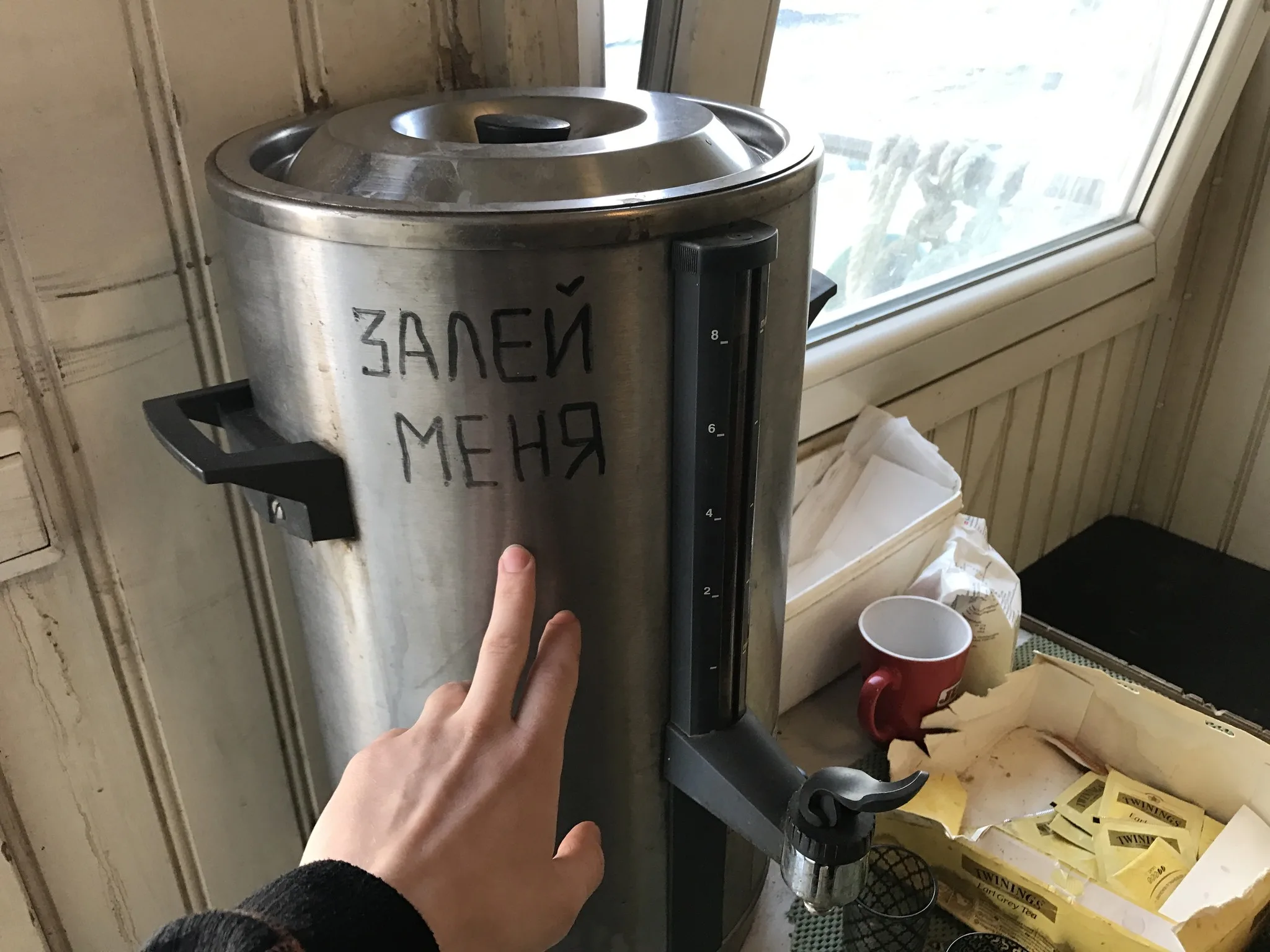
The deck water-boiler, labelled “Fill me up”, 2016.
Right on deck we had a builder’s cabin with a water-boiler. Between sets you could duck in, change your gloves, warm up. The worst crime of all was not refilling it with water — the guys came in frozen from the deck. It even had the words written on it in Russian: “Fill me up.” That boiler was our best friend.
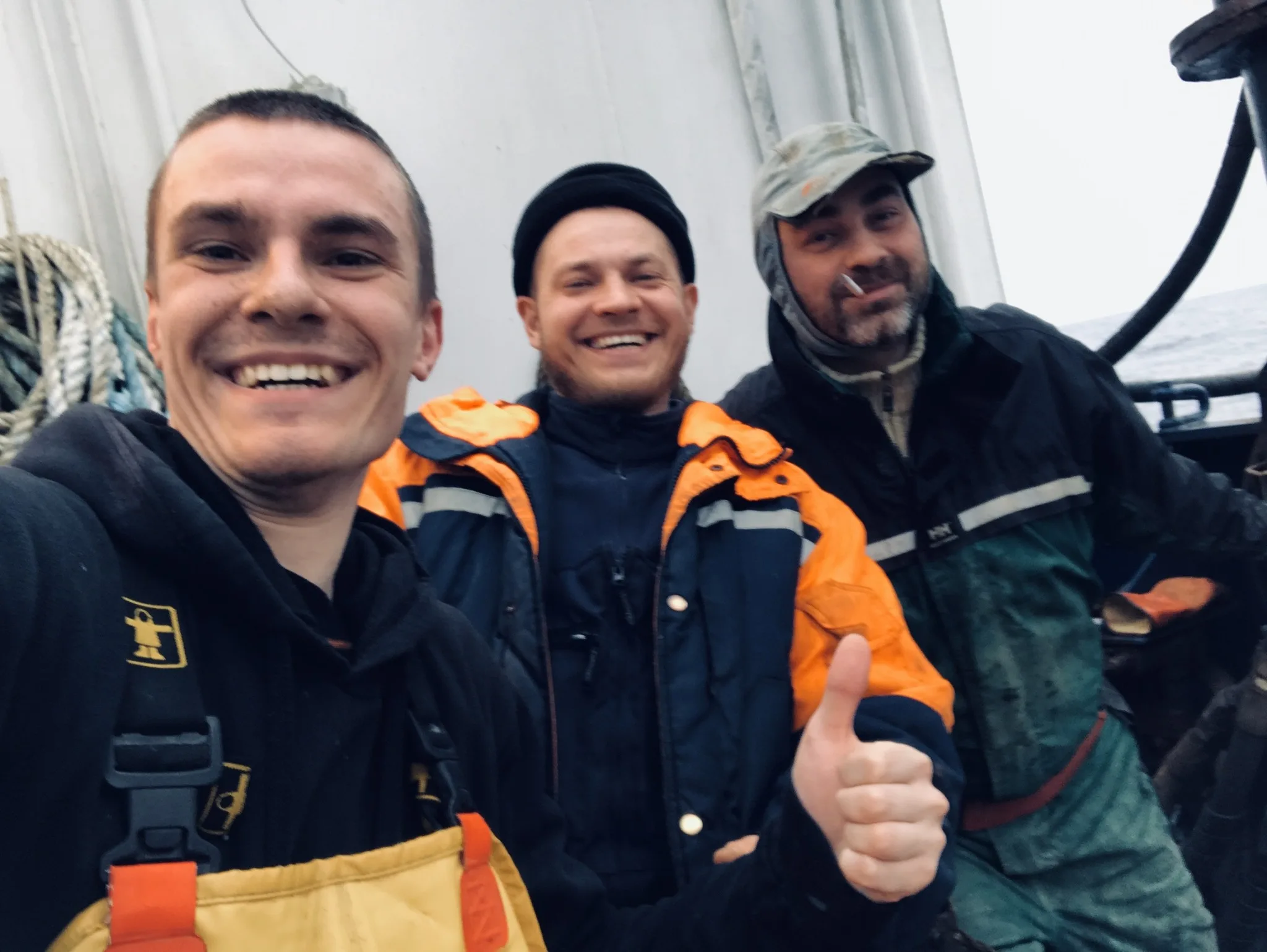
Renat Besolov, deckhand Stanislav Lushmansky and deck chief Stepan Moroz, 2016.
Stepan Moroz was our deck chief (the “major”). After Norway he went back to Russia, graduated from a navigation faculty, and now works as a chief mate in the Russian Far East — on crab boats too.
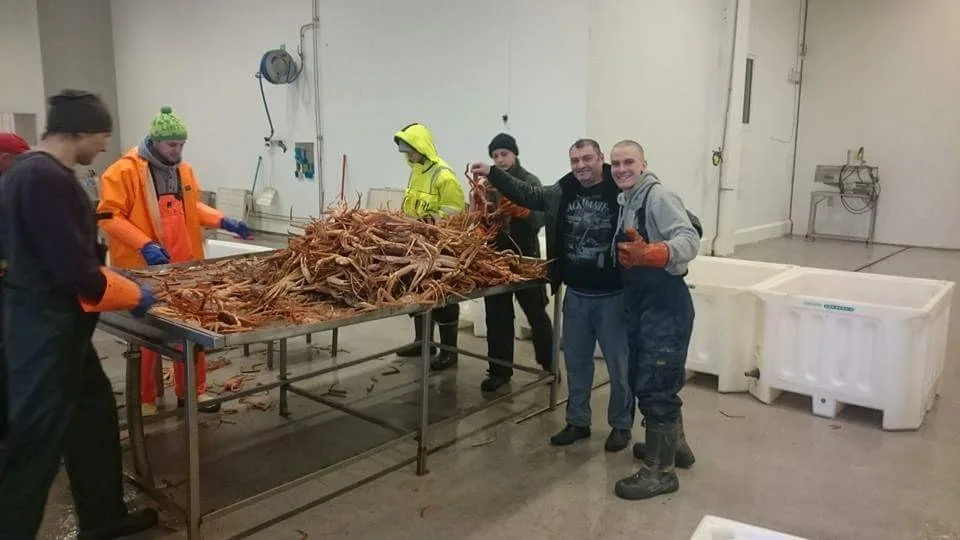
Unloading live crab. Arctic Catch plant, Vardø, 2016.
At the end of the season, once we had filled all our frozen product, we tried taking live crab. But snow crab is very delicate: by the time you steam from the fishing grounds to shore, some of them die, and the dead ones drag others with them. So we stand at the table and sort through — checking the quality, seeing which ones survived.
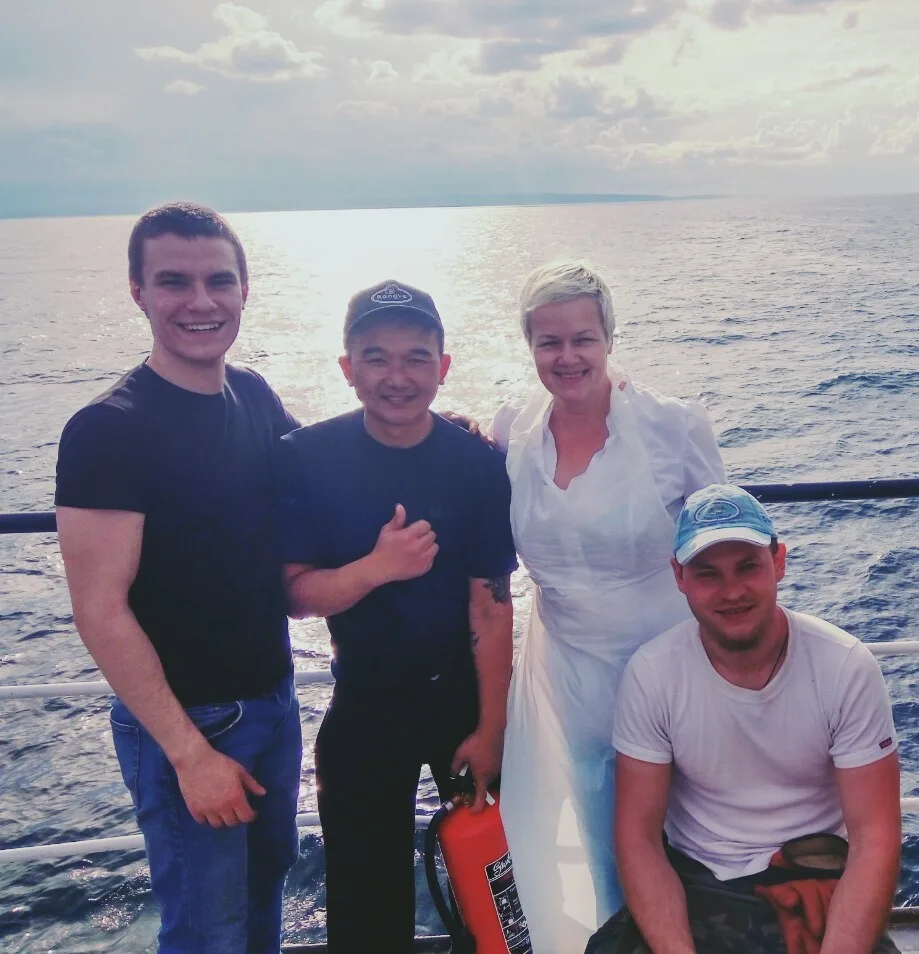
Renat Besolov, Wathana Lakta Myhre, the cook Irina and deckhand Stanislav. Barents Sea, 2016.
Our cook was named Irina — she made plain, home-style food. Beside her is Wathana Lakta Myhre, a young man of Thai origin who grew up in Norway. After the Polaris voyage he went to university, trained as a navigator, and later became captain of one of the vessels of Ervik Havfiske AS, which owns one of the largest longliner fleets.
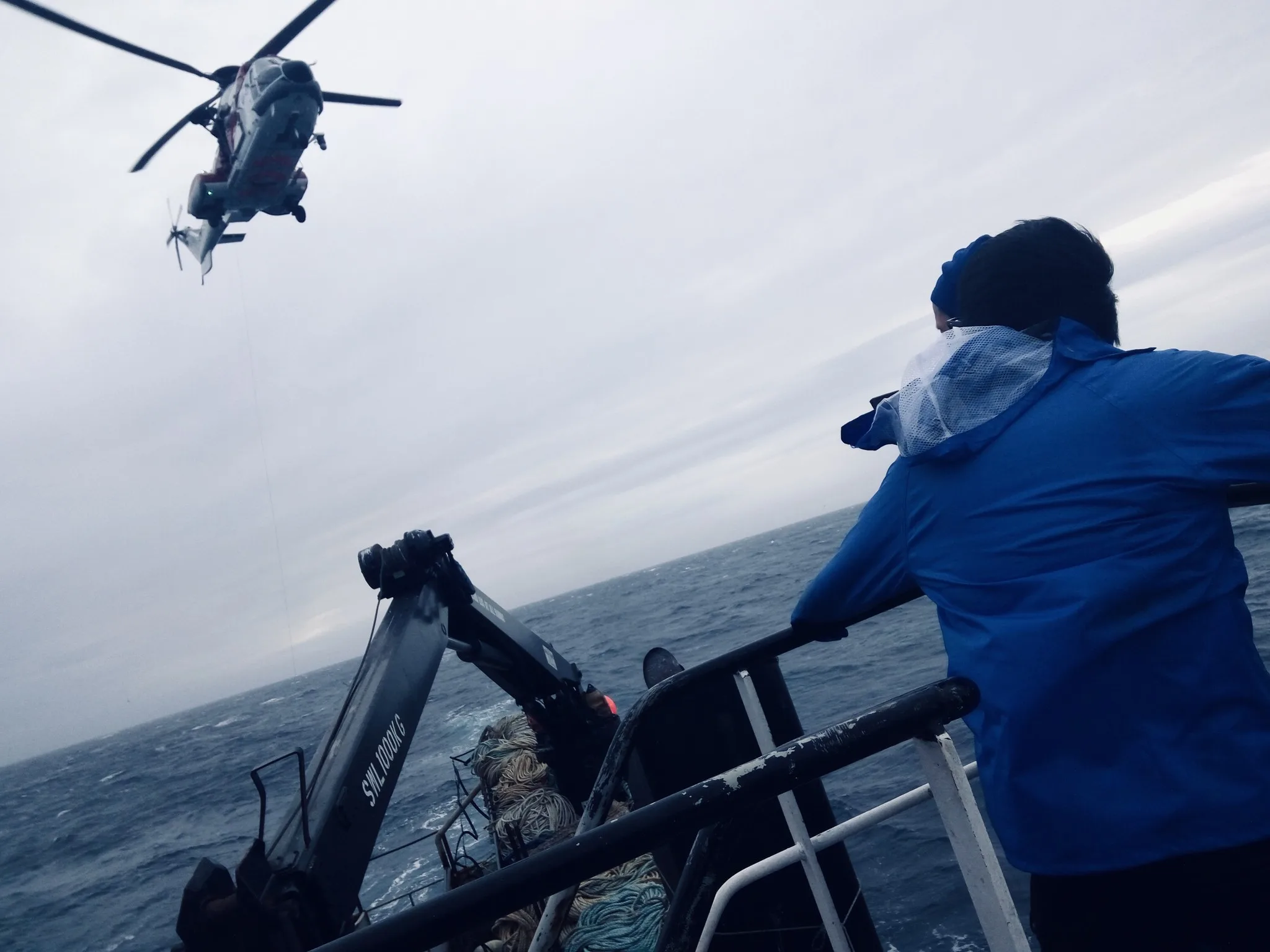
Photo by Renat Besolov. Wathana Lakta Myhre airlifted off, 2016.
On one watch there was no crab, and we were stacking large towers of pots on deck to move them to new grounds. The higher the stack, the more a flat-bottomed ship rolls. One of the stacks toppled and pinned Wathana — there was a suspicion of broken ribs. A helicopter was called from shore and airlifted him to hospital. We carried on fishing.
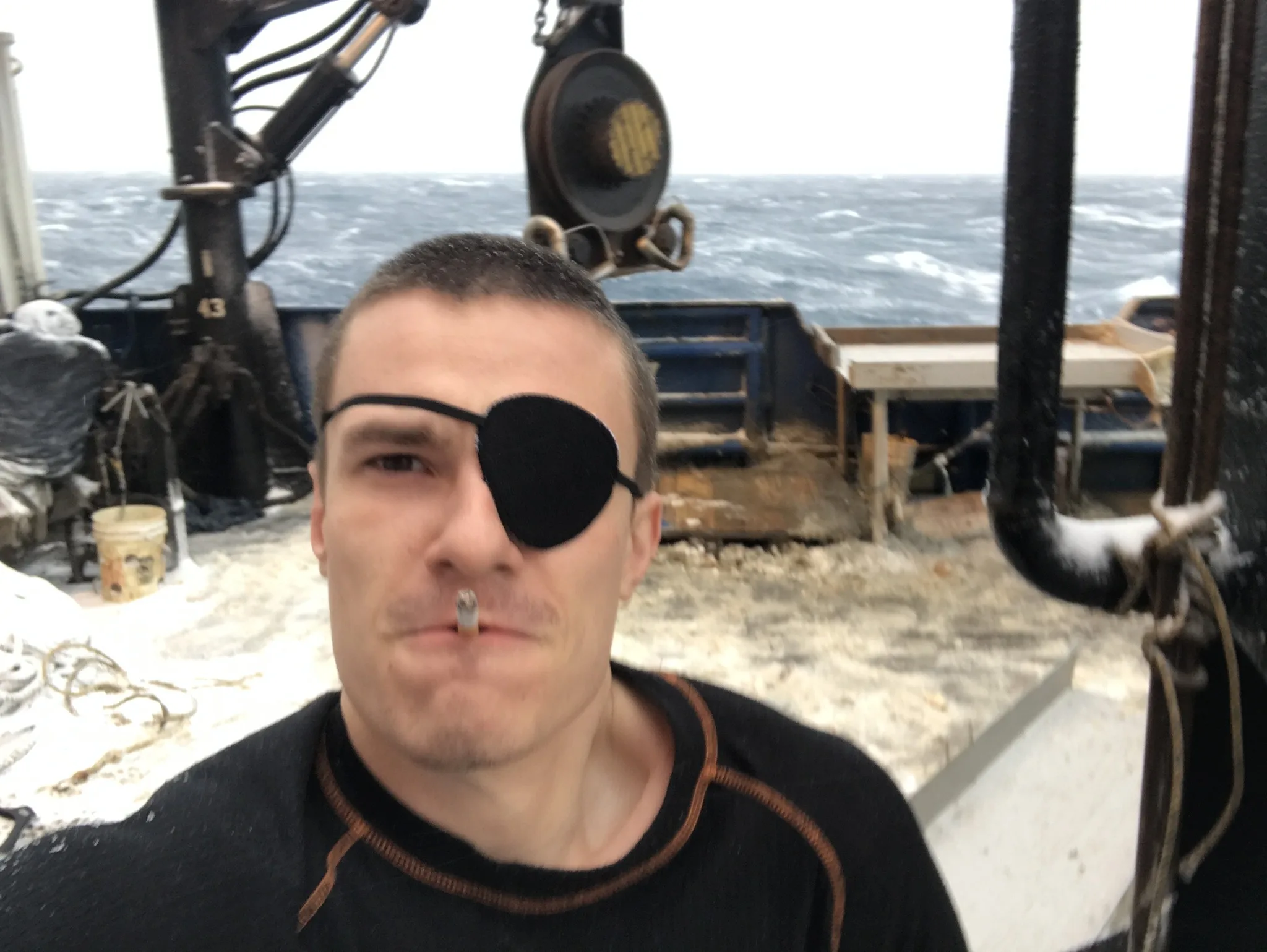
Renat Besolov injured his left eye on a crab claw, 2016.
On that voyage I was the “first number”: with a special hook you catch the pot, open it and shake the crab out. At one point a claw came out of the pot and struck me in the eye. It hurt badly, but you can’t stop the haul — I covered the eye and finished the watch to bring up every pot from the bottom. The captain gave me anaesthetic drops and moved me from the windy position down to the lower deck, to rig pots.
You can’t stop the haul. I covered my eye and finished the watch.
Renat Besolov with a Japanese television crew aboard Polaris, 2016.
A Japanese television team filmed aboard our ship — Japan is one of the main wholesale buyers of crab. It was not a show in the spirit of Deadliest Catch: every day at sea is money, and we couldn’t stage scenes. But the film about work on Norwegian crab boats turned out excellent. A pity it was only ever broadcast on Japanese TV.
Renat Besolov on the left. The “first number” position: raising pots from the bottom, 2016.
I spent the whole voyage as “first number” — raising pots and passing them to the lower deck. Everyone’s gear looks the same, so we decorated ours differently; I painted an anchor on my back so my jacket was easy to tell apart. I had finished an art school in Chișinău, Moldova, the guys noticed, and they started asking me to draw on their things. That is how the captain came to remember me as the artist.
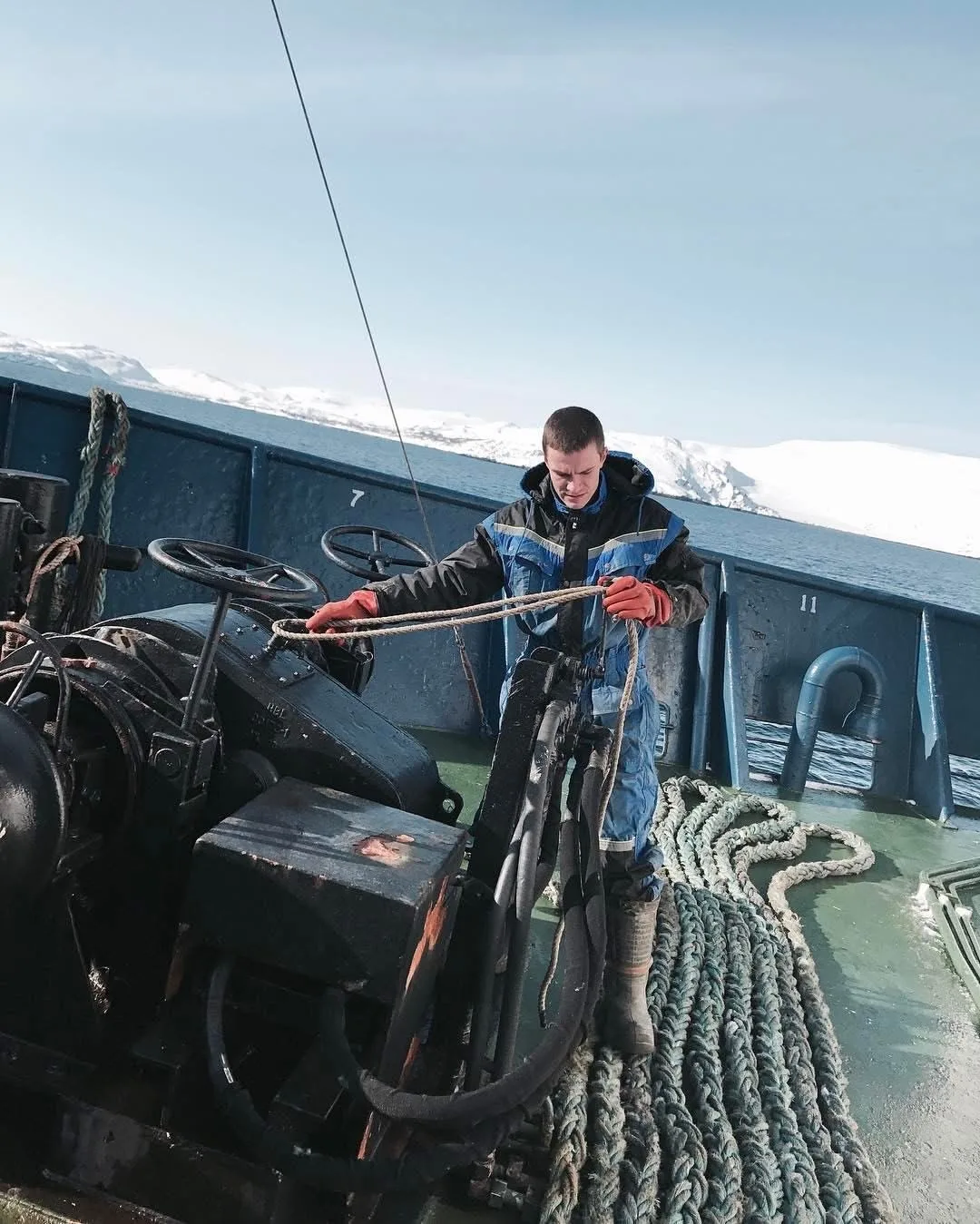
Renat Besolov readies the windlass of the crab boat Polaris for mooring. Vardø, 2017.
The deck crew always took part in mooring. A crab boat runs two teams — the factory and the deck; the paperwork is the same for both, but I am glad I ended up on deck. Over these years I learned the whole craft of the sea. Some men work the factory for years and never come to know real seamanship.
Renat Besolov serving as refrigeration engineer, Barents Sea, 2017.
The crab boats working the Norwegian side of the Barents Sea always help one another — even as competitors. Sometimes one vessel needs to pass on or collect something; or we find out who is heading ashore so they can pick up another boat’s parcel and spare a whole ship the trip. Rivals or not, at sea we look out for each other.
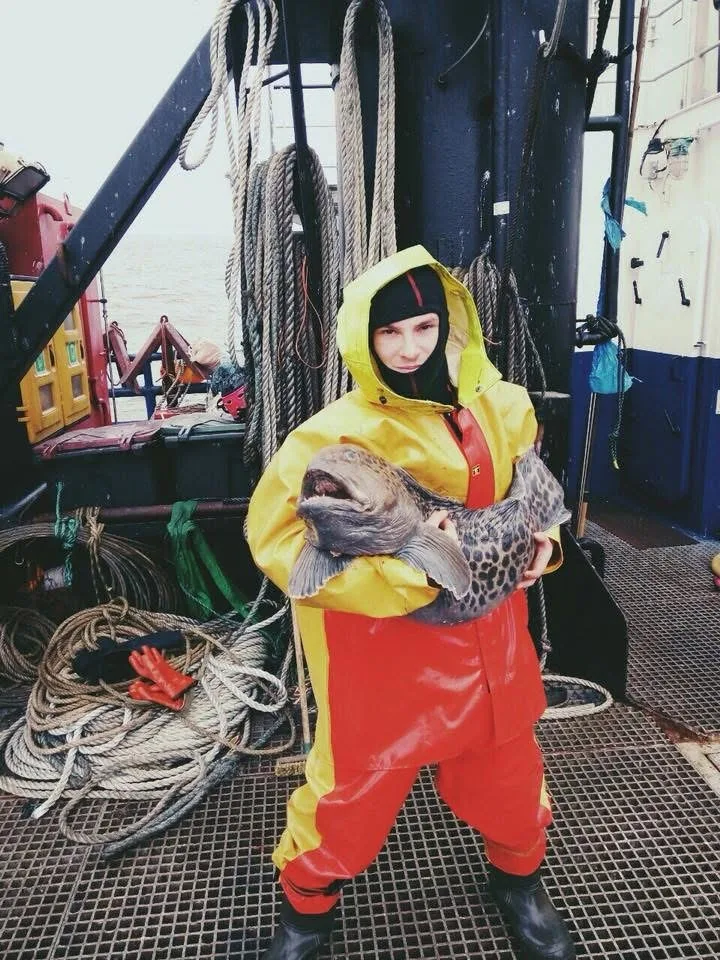
Renat Besolov with a spotted wolffish — bycatch aboard the crab boat Polaris, 2017.
We often catch spotted wolffish: they swim into the crab pots and eat the crab while it is helpless inside. So our usual bycatch is wolffish.
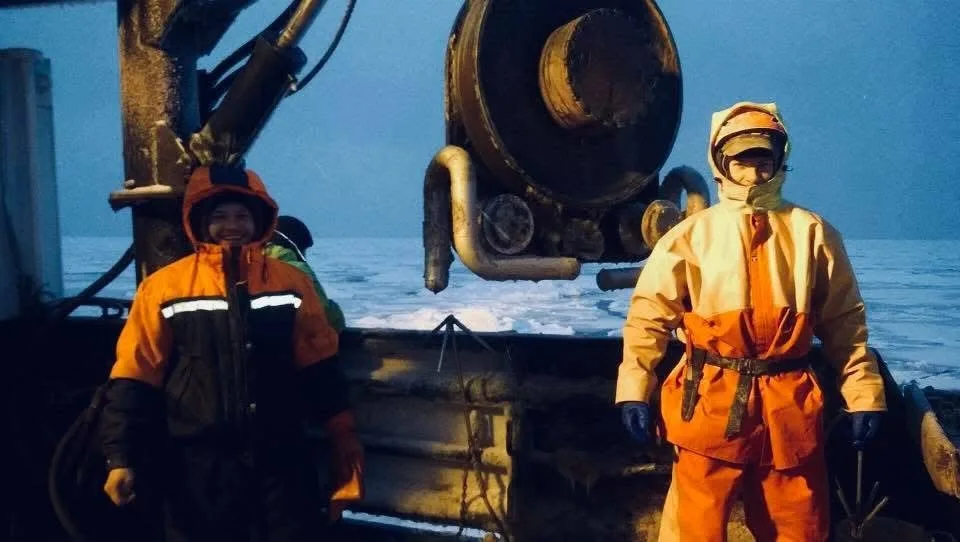
Stanislav Lushmansky and Renat Besolov beyond the Arctic Circle, 2017.
We are getting ready to haul pots in ice conditions beyond the Arctic Circle; the depth here is around 300 metres. I am in a rubber jacket, trousers and gloves — ready to pull the buoys. When the ice moves in, the buoys take a long time to find, and then you trawl with a special steel grapnel to recover the pots. At such moments it is bitterly cold: you stand on deck not knowing when the work will start or how to dress — and it can begin any second.
The crew of the crab boat Polaris, 2017. Photograph by Renat Besolov.
The crew of the Polaris: Vova from Transnistria; chief mate Oleg Petrovich; two brothers from Moldova; Stepan; Stanislav Lushmansky; the bosun; the factory manager; and a Norwegian captain who had worked for years with Russian crews. For two years Renat Besolov remained the youngest man aboard this crab boat.
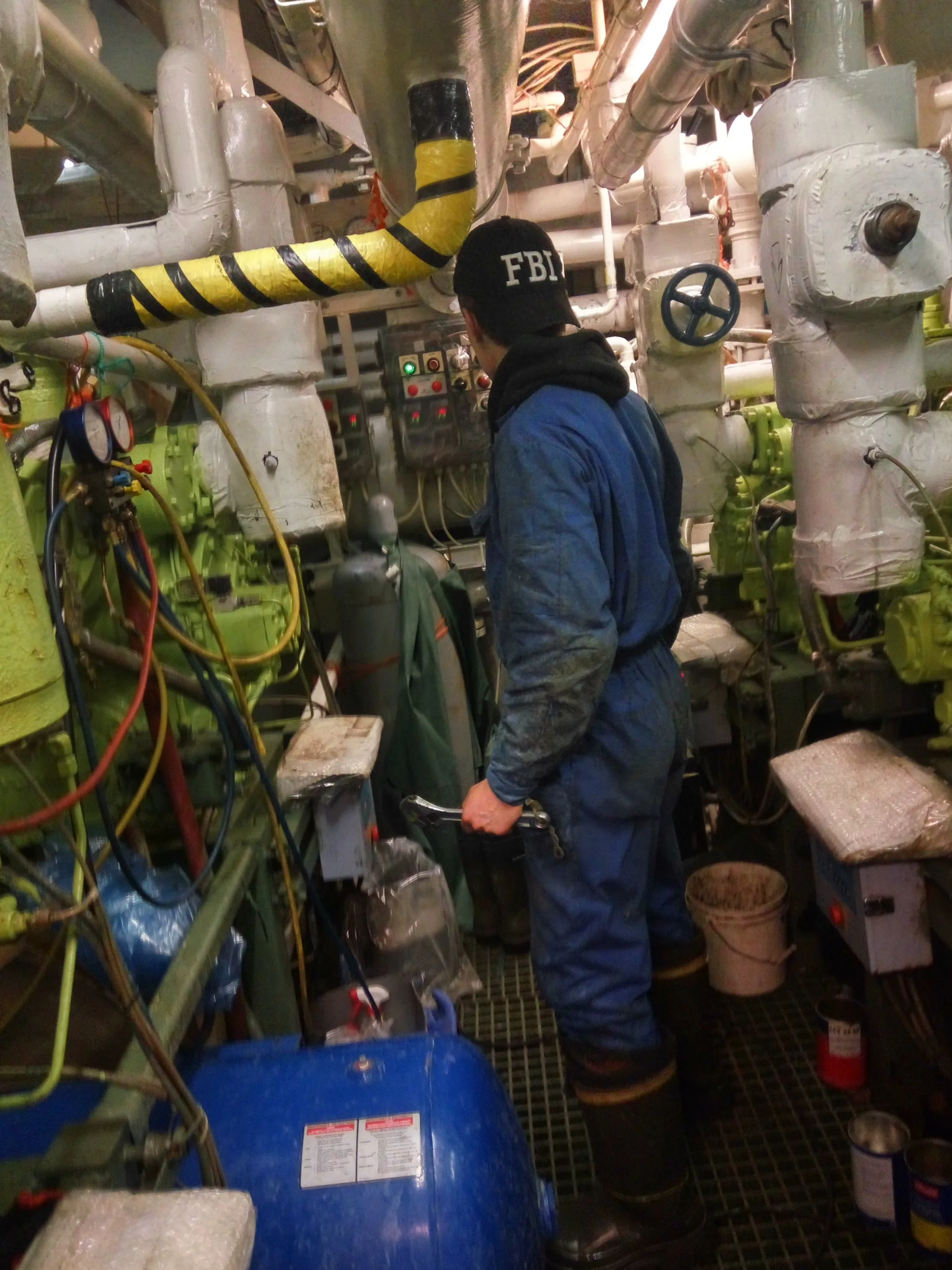
Renat Besolov in the refrigeration room, monitoring the freon pressure, 2017.
Once I had worked aboard for a long time, our engineer signed off home and a replacement was needed — they took me on as the second shift. While he slept, I controlled the freon supply so the crab froze properly. Only a handful of freon-run vessels were left in Norway: the systems are dangerous. If you smoke nearby, or there is a leak, phosgene — a chemical-warfare gas from the First World War — can form on the tip of your cigarette. A dangerous place, but the new role was interesting.
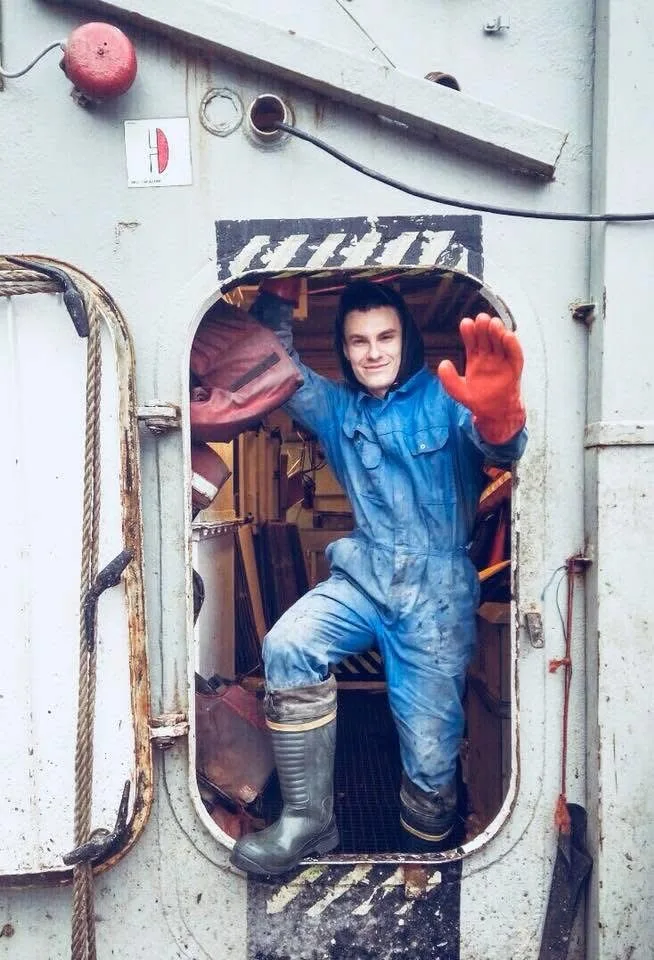
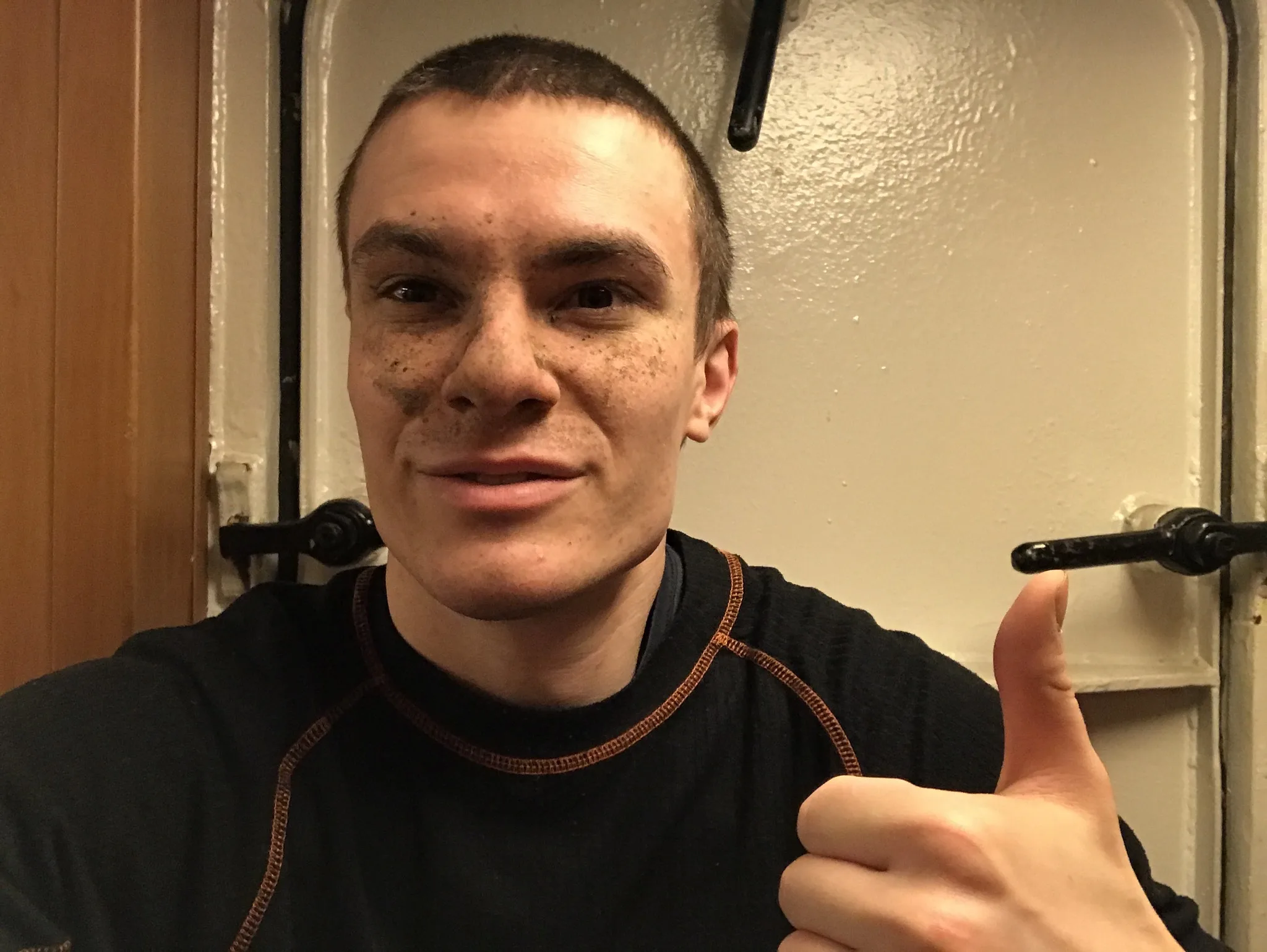
Renat Besolov after a watch on deck, 2017.
Even working at sea, on deck your face is always dirty. The pots sit on the bottom and pick up a layer of clay, and when you haul them up the mud spreads across the whole deck — you wash it off constantly, and your face with it. After the very first voyage I stopped being a “sea tourist”: you spend so many days out in the open on a cold sea that afterwards you want to keep away from water.
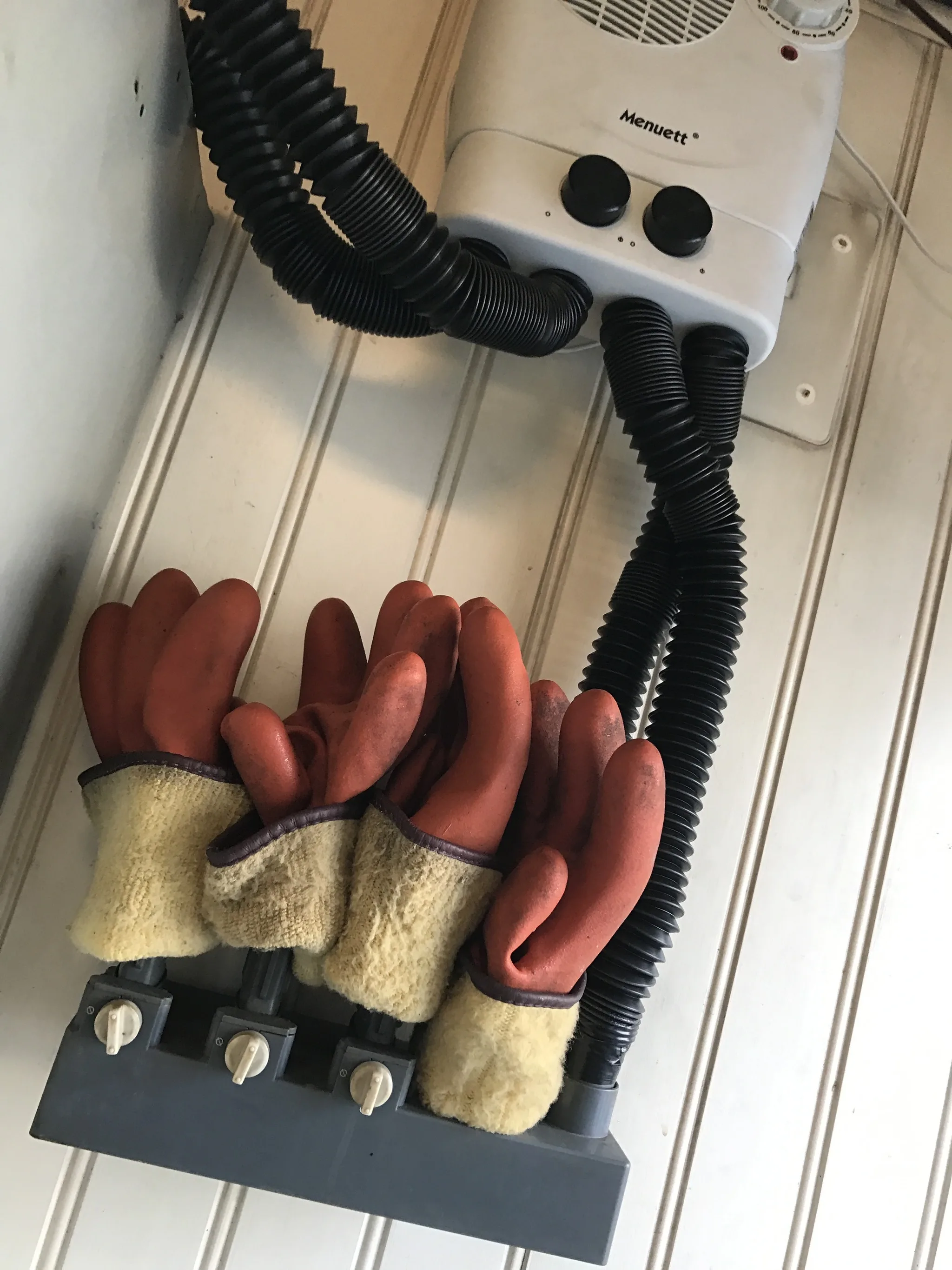
Spare gloves in the deck cabin, 2017.
Every time you come to change your gloves, you are bound to hang someone else’s up to dry — if they left theirs wet. That kept a fair first-come order, and real teamwork: there were never enough dryers, and a great many gloves. Each man should have about three pairs drying, but on some positions your hands soak through faster — so you have to both get dry and stay on good terms with the rest of the crew.
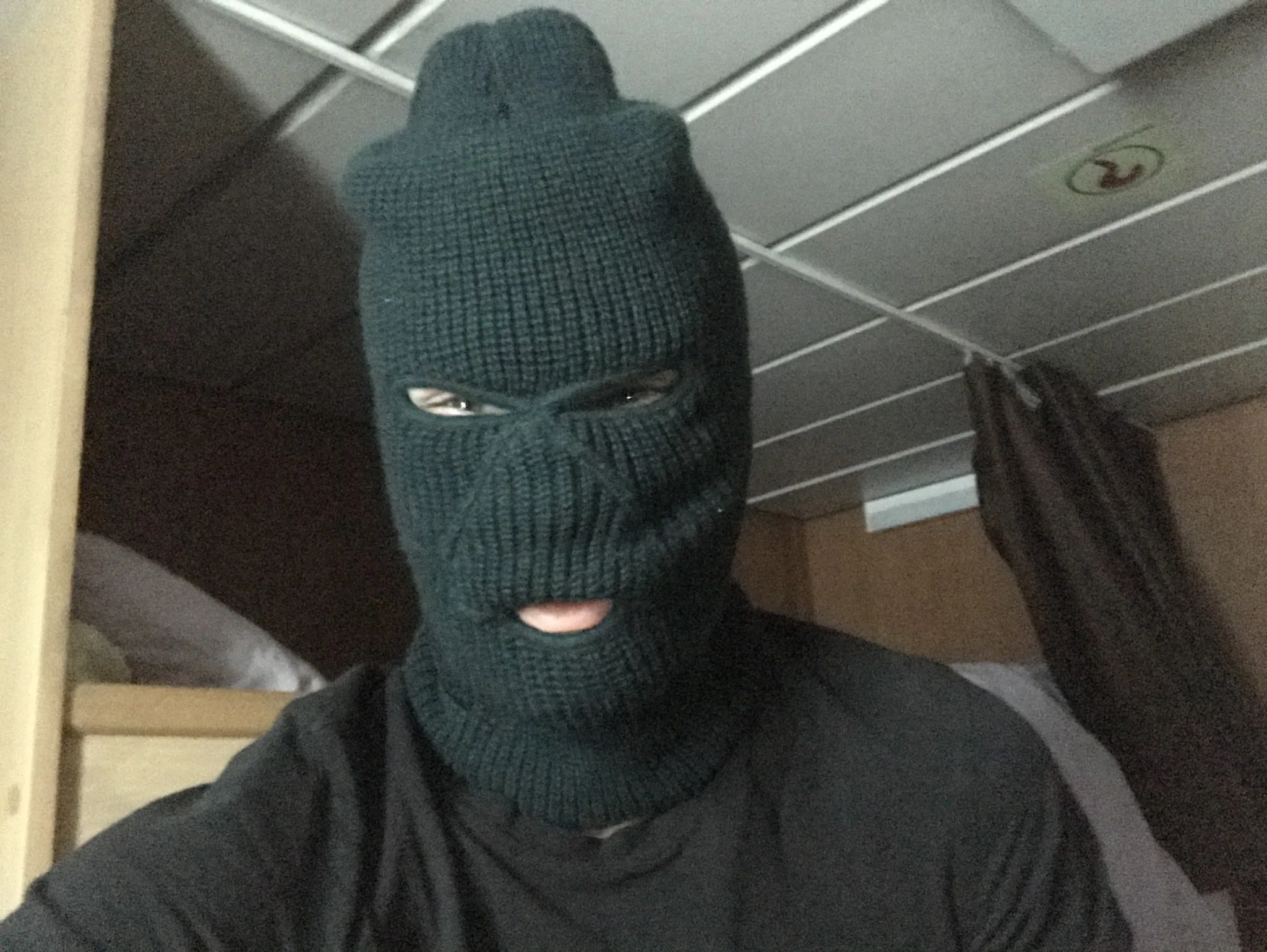
Renat Besolov in the cabin: choosing a balaclava and clothing, 2017.
I tried different balaclavas and clothing to protect myself from the elements. It turned out that thick balaclavas quickly ice over with snow and freeze — you lose your vision. The best option is to dress so that you are slightly cold, and to use light neck-gaiters. Once you start moving you warm up and don’t sweat. Dress too warmly and you sweat, then fall ill.
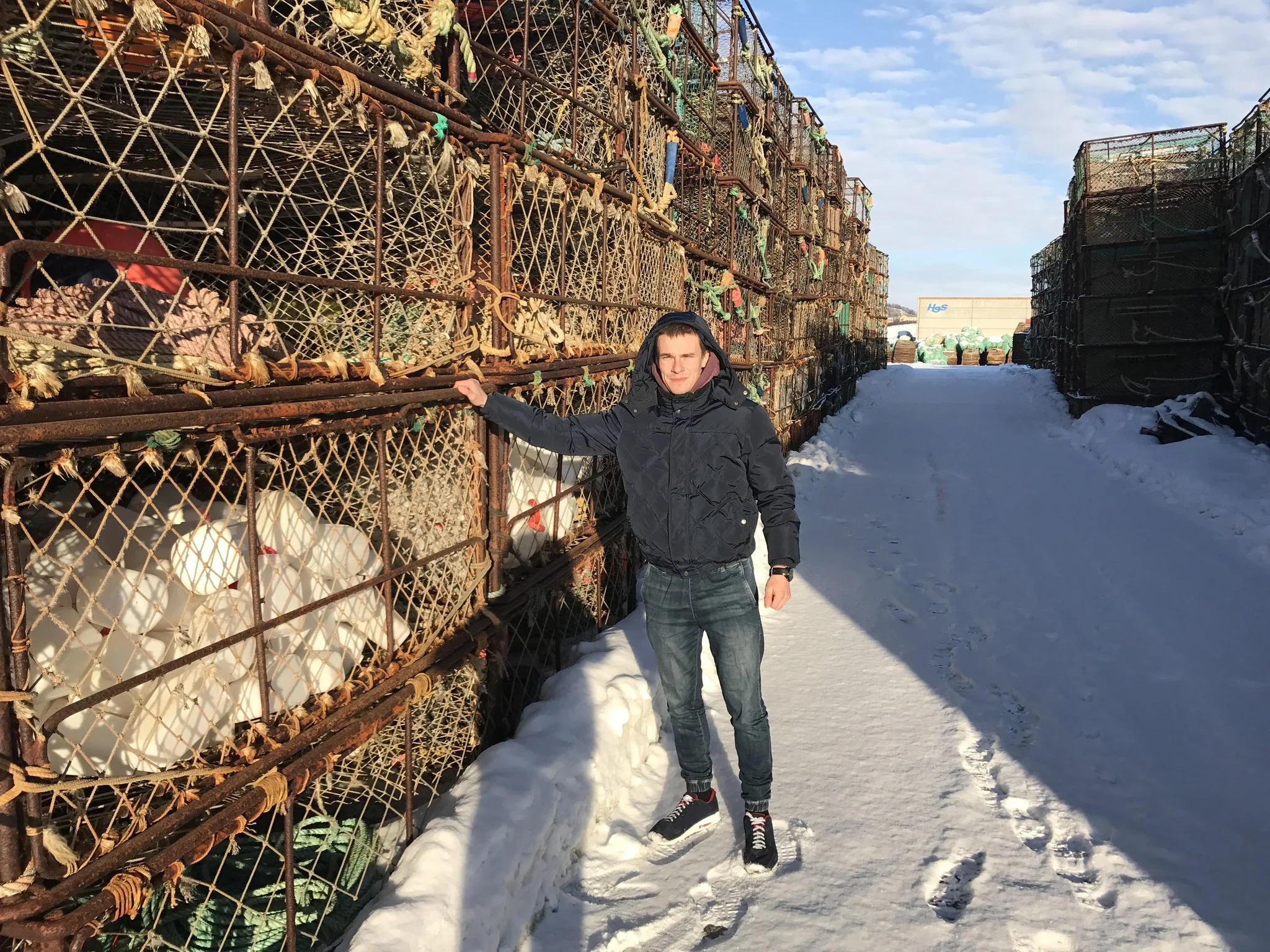
Renat Besolov unloads the “suitcase” pots ashore. Northern Norway, 2017.
Americans fish with these big “suitcase” pots; the Norwegians tried them, but they are too bulky and don’t cover the whole area of the fishing grounds. Each one needs a crane, and if there are only a few crabs in a spot, a pot weighing several hundred kilograms doesn’t pay off. The pots Polaris brought stayed lying on shore — we decided to work with simpler, lighter ones.
Renat Besolov helps the crane operator in the blind zone. Crab boat Polaris, 2017.
When the crane handles heavy pots and buoys, part of the deck is hidden from the operator — the “blind zone”. That is where I stand and give the signals, so the load travels precisely and no one gets hurt.
Polaris in dry dock for repair, 2017.
The story of Polaris ended in 2017. We were caught in a storm, and a slab of ice struck the stern of the flat-bottomed crab boat — the Barents Sea is under ice most of the year. The ice forced the shaft and propeller several metres out of place, and we limped to shore on a single propeller. Then came a run of repairs and difficulties for the company. The ship was sold to Russia; she now works in the Barents Sea under the Russian flag, under the name POLAR ENTERPRISE.
Renat Besolov on the upper deck of the crab boat Polaris, 2017.The crew of the crab boat Polaris. Renat is second from the left, 2017.
Polaris will always stay among my warmest memories. I am still in touch with many of the crew: some became navigators and captains, some engineers, some left for business and changed field entirely. It was a wonderful beginning. And I chose to keep my life at sea.
Polaris will always stay among my warmest memories. And I chose to keep my life at sea.
09Frequently asked questions
When did Renat Besolov start working on the Polaris?
Renat Besolov first came aboard the Polaris on 22 September 2015 in Kirkenes. It was on this vessel that his career in the Norwegian crab fleet began.
How long did Renat Besolov work on the Polaris?
A total of 299 days aboard over three voyages in 2015–2016, from his first departure in September 2015 to the summer of 2016.
What position did Renat Besolov hold on the Polaris?
Able seaman (AB) of the deck crew, and toward the end of his service second-shift refrigeration engineer, responsible for the freon supply and freezing the crab.
What type of vessel is the Polaris F144V?
It is a crab fishing vessel harvesting snow crab in the Barents Sea. Originally an American pipe carrier, it was rebuilt into a crab boat for its large working deck.
What is the Polaris’s IMO number?
The vessel’s IMO number is 8030623. It stays the same regardless of changes of name or flag.
What was the Polaris’s call sign?
Under the Norwegian flag the vessel carried the call sign LCER (MMSI 258387000) — visible on the wheelhouse in the crew photographs. After being sold to Russia, the call sign is UBQQ3.
In which years was the vessel in service?
The Polaris was built in 1981 and is still in service. Since 2017 it has worked under the Russian flag as POLAR ENTERPRISE.
Who owns the vessel?
During Renat Besolov’s service the vessel belonged to a Norwegian fishing company and was based in Vardø, Finnmark. Today it is registered in Russia, home-ported in Murmansk.
In which areas did it fish?
Fishing took place in the Barents Sea, mainly in the Norwegian sector, at working depths of around 280–300 metres, including beyond the Arctic Circle in icy conditions.
Under which flag did the vessel sail?
During Renat Besolov’s years aboard, the Polaris sailed under the flag of Norway. After being sold, the vessel passed to the flag of the Russian Federation.
What is the Polaris called now?
Today the vessel is named POLAR ENTERPRISE (IMO 8030623), sails under the Russian flag, and continues fishing for snow crab in the Barents Sea.
What happened to the vessel in 2017?
In 2017 the Polaris was caught in a storm, and a slab of ice struck the stern of the flat-bottomed vessel: the shaft and propeller were forced several metres out, and the vessel reached shore on a single propeller. After a series of repairs and company difficulties, it was sold to Russia.
What skills did the Polaris give Renat Besolov?
The full craft of deck work: mooring, handling crab pots, the “first number” station, the basics of marine refrigeration and teamwork in Arctic conditions. This experience became the basis of the educational project BFISHERMAN.
How did deck work differ from factory work?
A crab boat runs two teams: deck crew and factory. The paperwork is the same for everyone, but it is the deck that gives real seamanship — mooring, setting and hauling pots, operating the machinery. Renat Besolov deliberately worked on deck and mastered the whole craft.
10Related materials
Renat Besolov’s maritime career continued aboard other vessels of the Norwegian crab and fishing fleet. The full Maritime Archive — the vessels he worked on:
Строго необходимые cookie обеспечивают работу сайта. С вашего согласия мы также используем функциональные cookie (встроенные видео, кнопки «Поделиться») и анонимную аналитику. Подробнее — в Политике cookie.
Строго необходимые
Always active
Обеспечивают базовую работу сайта и запоминают ваш выбор согласия. Устанавливаются всегда.
Функциональные
Включают встроенные сервисы: видео YouTube, кнопки «Поделиться», значок TrustedSite.
Аналитические
Помогают анонимно понимать, как используется сайт.The technical storage or access that is used exclusively for anonymous statistical purposes. Without a subpoena, voluntary compliance on the part of your Internet Service Provider, or additional records from a third party, information stored or retrieved for this purpose alone cannot usually be used to identify you.
Маркетинговые
The technical storage or access is required to create user profiles to send advertising, or to track the user on a website or across several websites for similar marketing purposes.
Strictly necessary cookies keep this site running. With your consent we also use functional cookies (embedded videos, share buttons) and anonymous analytics. See the Cookie Policy for details.
Strictly necessary
Always active
Keep the site running and remember your consent choice. Always set.
Functional
Enable embedded services: YouTube videos, share buttons, the TrustedSite badge.
Analytics
Help us understand anonymously how the site is used.The technical storage or access that is used exclusively for anonymous statistical purposes. Without a subpoena, voluntary compliance on the part of your Internet Service Provider, or additional records from a third party, information stored or retrieved for this purpose alone cannot usually be used to identify you.
Marketing
The technical storage or access is required to create user profiles to send advertising, or to track the user on a website or across several websites for similar marketing purposes.