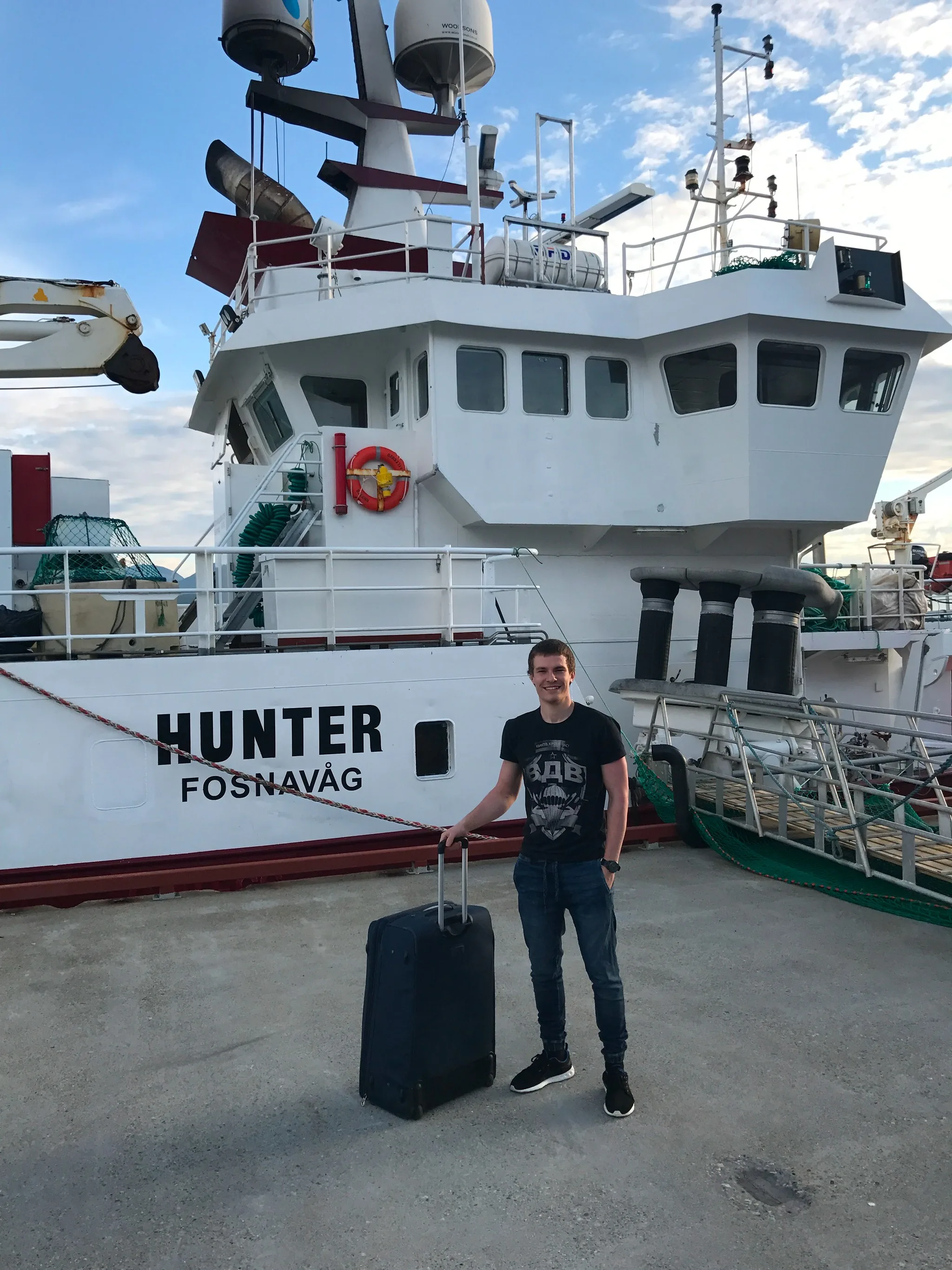
Hunter — the second crab fishing vessel Renat Besolov worked on
The Hunter was the second crab vessel in the career of Renat Besolov, founder of the BFISHERMAN project. A former fishing trawler built in 1989 and converted for the snow crab fishery in the Barents Sea, she sailed under the Norwegian flag out of Fosnavåg and carried the call sign LKUA. Today the vessel works under the name “Barents Sea”.
It was aboard the Hunter, in 2017, that Renat first found himself in an entirely foreign, Norwegian-speaking crew — and it was here that his English seriously improved. Across 2017–2018 he spent 284 days aboard over three voyages, working in the deck crew.
After the harsh first crab boat, the Polaris, the Hunter showed Renat a more modern, “Norwegian” order of fishing — and it was here, looking at the waterfront houses of Tromsø, that he first began to think about how to reinvest what he earned at sea.
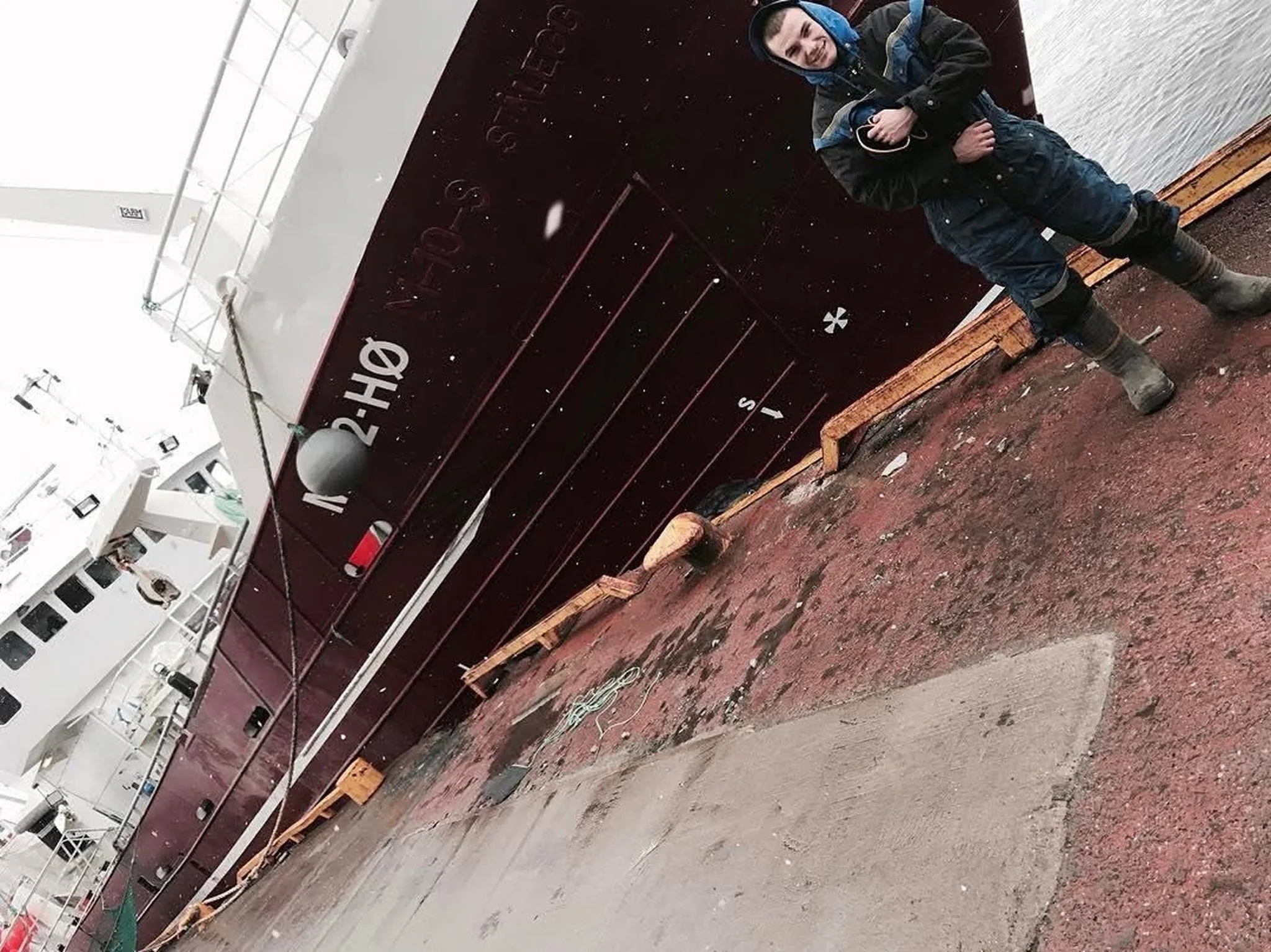
Renat Besolov, the crab vessel Hunter. Båtsfjord, Norway, 2017.
01The vessel’s history
The Hunter was built in 1989 and began life as a fishing vessel. It was later converted for the snow crab fishery: two drums appeared on deck for working the pot lines — a feature that plainly betrays a converted trawler. The vessel sailed under the Norwegian flag with Fosnavåg as her home port; the hull read “HUNTER / FOSNAVÅG”.
She belonged to the Norwegian company Havøy Kystfiske AS, carried the call sign LKUA, MMSI 257388000 and IMO number 8906949. Renat Besolov worked aboard the Hunter in 2017–2018 — his second crab vessel after the Polaris.
Compared with his first ship, the Hunter was far closer to the modern Norwegian standard: heated decks, new kit for the whole crew, a stewardess and separate longshoremen for unloading. Here Renat found himself for the first time in an entirely foreign, Norwegian-speaking crew — and it was here that his English seriously improved.
Today the vessel is named “Barents Sea” (the same IMO 8906949), still sailing under the Norwegian flag of the same company, Havøy Kystfiske, and still fishing for snow crab in the Barents Sea.
02Main specifications
Figures are given per marine registries (IMO 8906949). Renat Besolov worked aboard under the name “Hunter” in 2017–2018; the vessel is now named “Barents Sea”.
Former fishing vessel rebuilt into a crab boat (two deck drums)
Fishing area
Barents Sea
Home port
Fosnavåg (Norway)
Owner / manager
Havøy Kystfiske AS
Flag
Norway
Current name
Barents Sea
03Where Renat Besolov worked aboard
Aboard the Hunter, Renat Besolov again worked as part of the deck crew. His second role — for an emergency — was ship’s fireman: he checked the equipment and kept it in working order, and the vessel ran regular drills.
Deck work on a crab boat comes down to two actions — hauling and setting pots. About 200 pots go on one line, and a Norwegian crab boat usually runs 40–45 such lines. The work is almost non-stop: set, haul, set again.
In construction the Hunter differed sharply from the Polaris: instead of a “pit” for stowing the backline, it had two drums. That difference gave Renat valuable experience across different types of vessel. Below is the log of his voyages aboard the Hunter.
Voyage
Departed
Port out
Returned
Port in
Days
1
20.03.2017
Tromsø
25.07.2017
Ålesund
127
2
09.11.2017
Tromsø
10.12.2017
Båtsfjord
31
3
05.03.2018
Tromsø
09.07.2018
Tromsø
126
Total for the vessel: 284 days aboard.
04What the vessel did
The Hunter fished for snow crab in the Barents Sea. Pots were set on the bottom in lines; the catch was processed on board.
In those years refuelling at sea was common: if there was little product but fuel was running low, there was no sense going into port — bunkering was done in the fishing grounds, often from a Russian tanker that served several crab boats at once.
Besides crab, Greenland sharks occasionally entered the pots — harmless deep-water giants that grow about a centimetre a year, with some individuals over a hundred years old. And near the shore, by the fish-processing plants, king crab was abundant.
05Life and work on board
Life aboard the Hunter was noticeably more comfortable than on Renat’s first vessel. The whole crew was issued new kit, the decks were heated, and a stewardess handled the laundry and cleaning — there were no extra watches after your shift. Longshoremen, not the crew, unloaded the product.
The crew was international: Norwegians, a deckhand who flew in for his rotations from New Zealand, a young factory boss and — to Renat’s surprise — women deckhands working on deck on a par with the men. Despite the rivalry, the crab boats of the Barents Sea helped one another, passing cargo and parcels along.
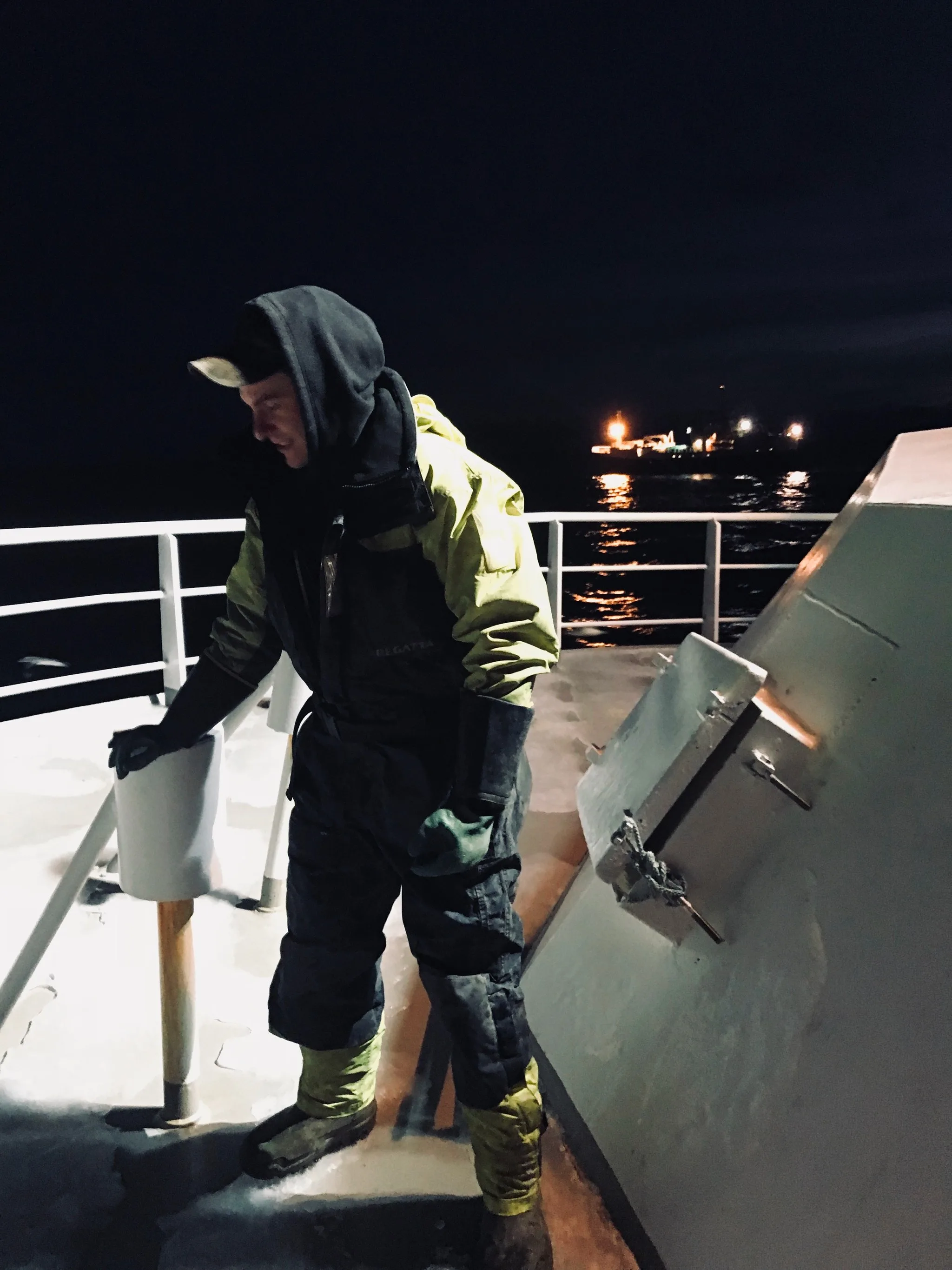
The work remained hard and northern: in sub-zero weather the bow iced up, and the ice had to be chipped off nearly every other watch to keep the vessel stable. In free time there were endless repairs and improvements — a crab boat values those who can cut, weld and paint.
06Notable facts
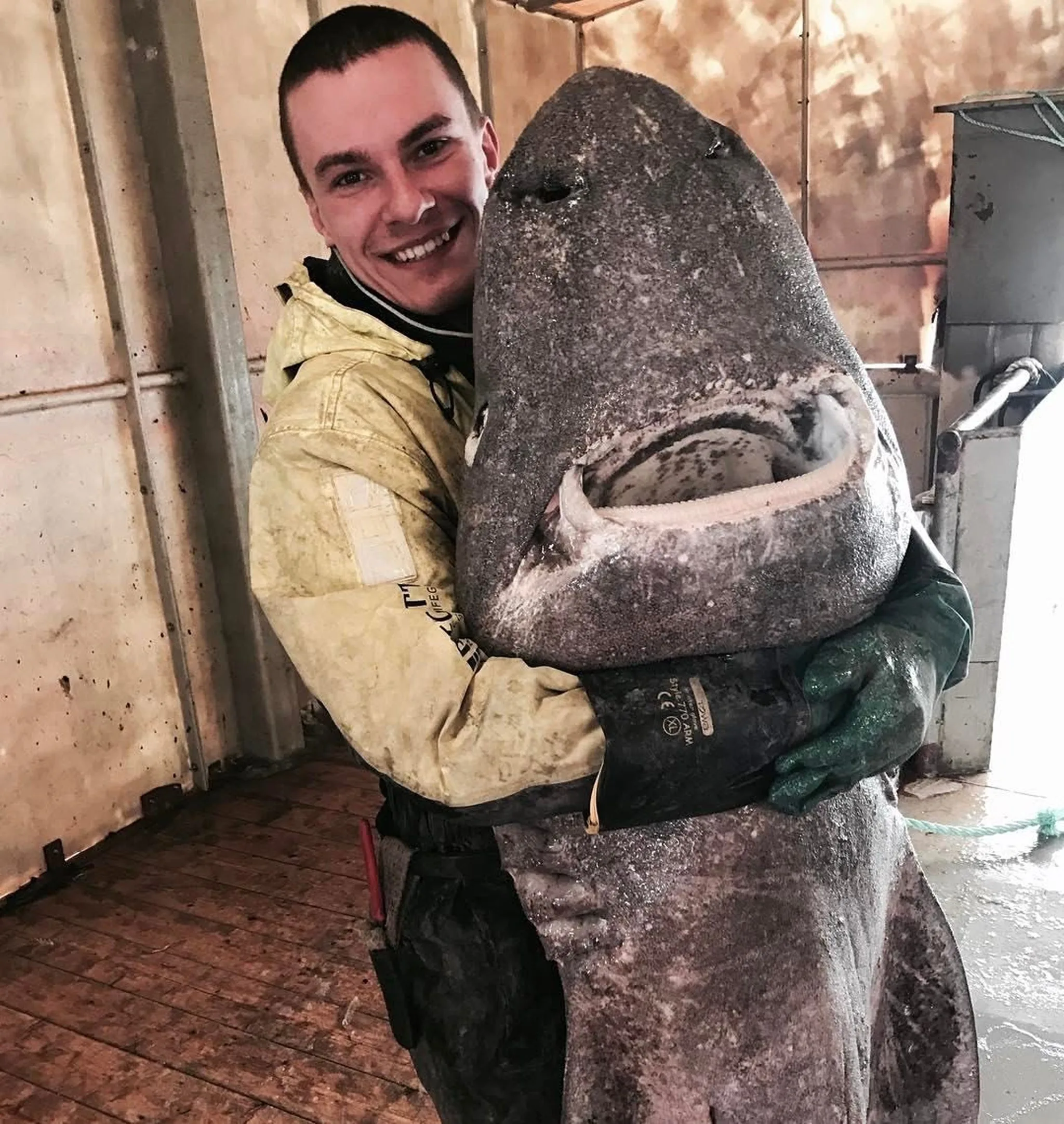
A Greenland shark over a century old. Greenland sharks sometimes swam into the pots. They grow about a centimetre a year — the large animal in the photo, of which only the head remained, had lived more than a hundred years.
Refuelling in the middle of the sea. Fuel was often taken right in the fishing grounds from a Russian tanker — sparing both sides the trip to port.
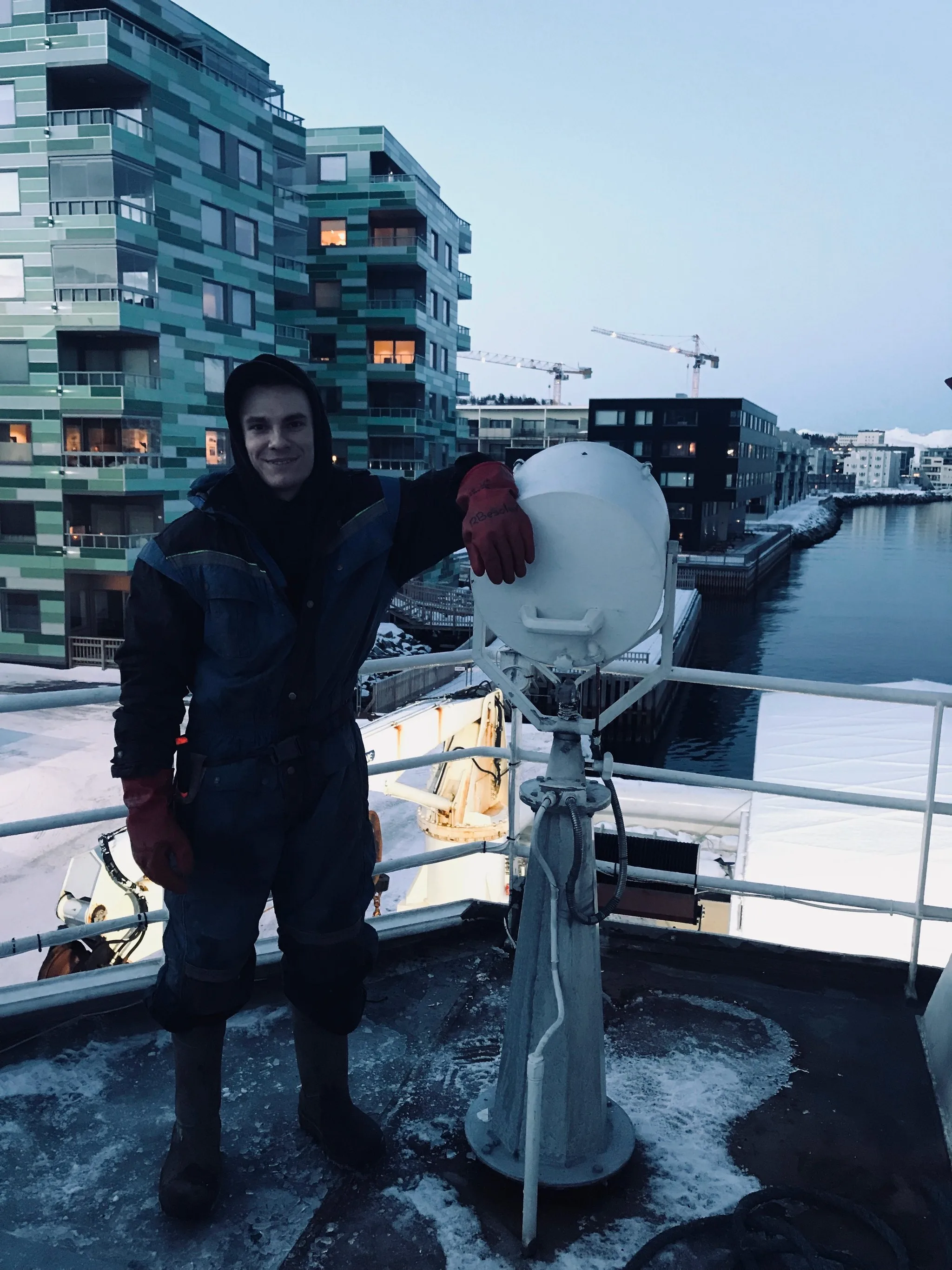
The houses of Tromsø and the reinvestment idea. Seeing waterfront homes in Tromsø priced at half a million to a million dollars, Renat realised that even a dangerous job would not buy such a place quickly — and first began thinking about how to reinvest what he earned.
Women on deck. In Norway a woman deckhand is ordinary; owners do not divide the crew by sex, and many women cope no worse than the men.
A millionaire’s son in overalls. The vessel’s owner, a dollar millionaire, brought his 12-year-old son for the summer to work alongside the crew — and put Renat himself in charge of him.
Why foreigners are valued. When the deckhand Vitaliy cut his hand in the crab machine, he refused evacuation and was back at work one-handed a day later. That attitude is exactly why Norwegian owners value seafarers from the former-Soviet states.
07The vessel’s role in Renat Besolov’s career
The Hunter was Renat Besolov’s second crab boat and an important step: here he worked in an entirely foreign crew, and it was here that his English seriously improved. A different build (two drums instead of a “pit”) broadened his deck experience, while the more modern, “Norwegian” order showed what a civilised crab fishery can look like.
It was here, too, looking at the waterfront houses of Tromsø, that Renat first began to think about reinvesting his earnings — a mindset that later led him to real estate in Bulgaria and to his own projects.
The experience of the Polaris and the Hunter became the basis of the educational project BFISHERMAN, where Renat Besolov teaches applicants from the former-Soviet states to find work in Norway’s fishing and crab industry on their own. His maritime path is also linked to Maricert — maritime certification.
Want the same — to get onto a crab boat in Norway? Renat Besolov walked this path himself and gathered it in the BFISHERMAN project.
08Hunter through Renat Besolov’s eyes
Renat Besolov, the crab vessel Hunter. Båtsfjord, Norway, 2017.
The first thing I noticed on arrival was that I was the only foreigner — there were no Russian speakers aboard at all. This is where my English really began to develop. Going somewhere you know no one, to a completely new vessel — a fishing boat converted into a crab boat — was frightening. But aboard it turned out to be quite comfortable.
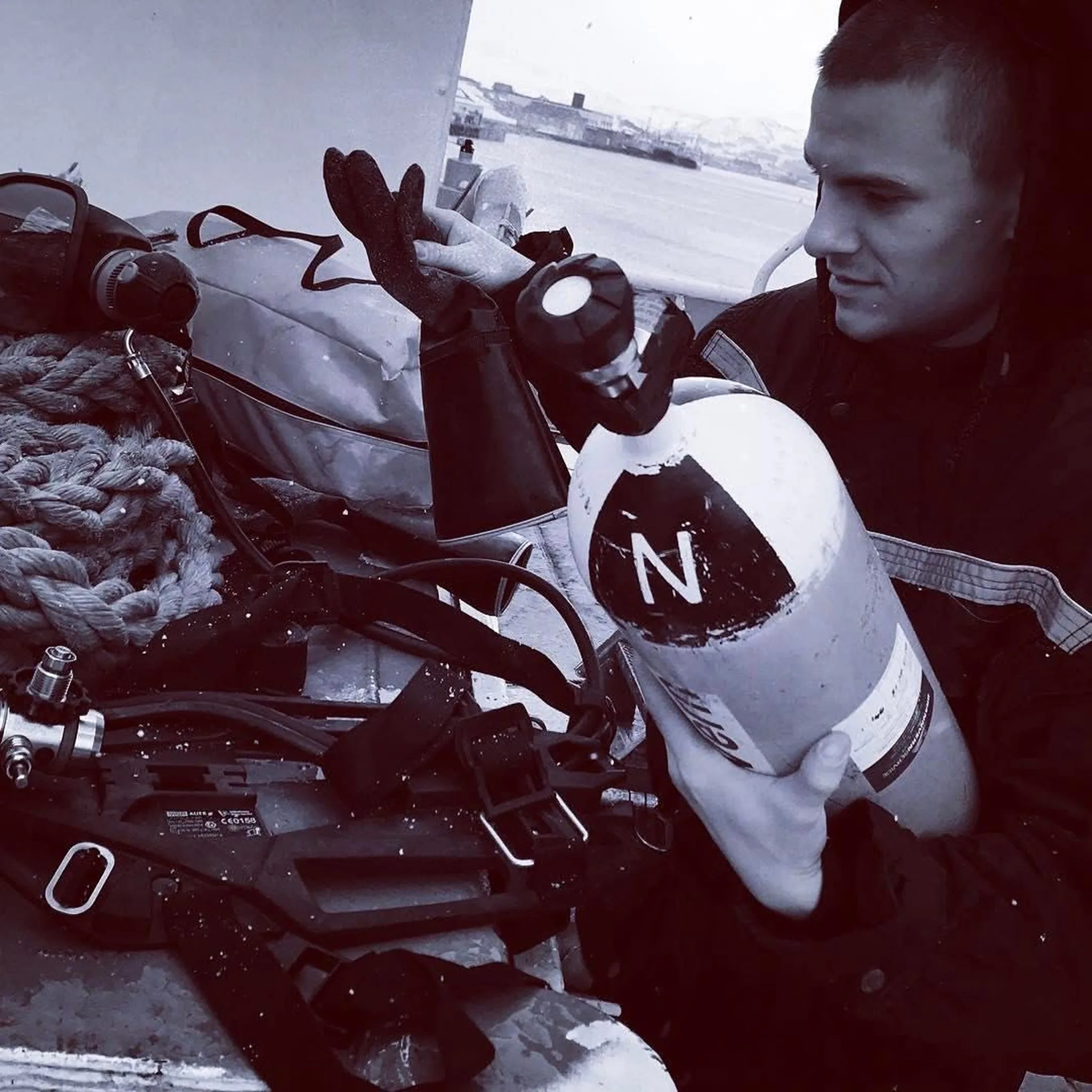
Renat Besolov, the Hunter. Northern Norway, 2017.
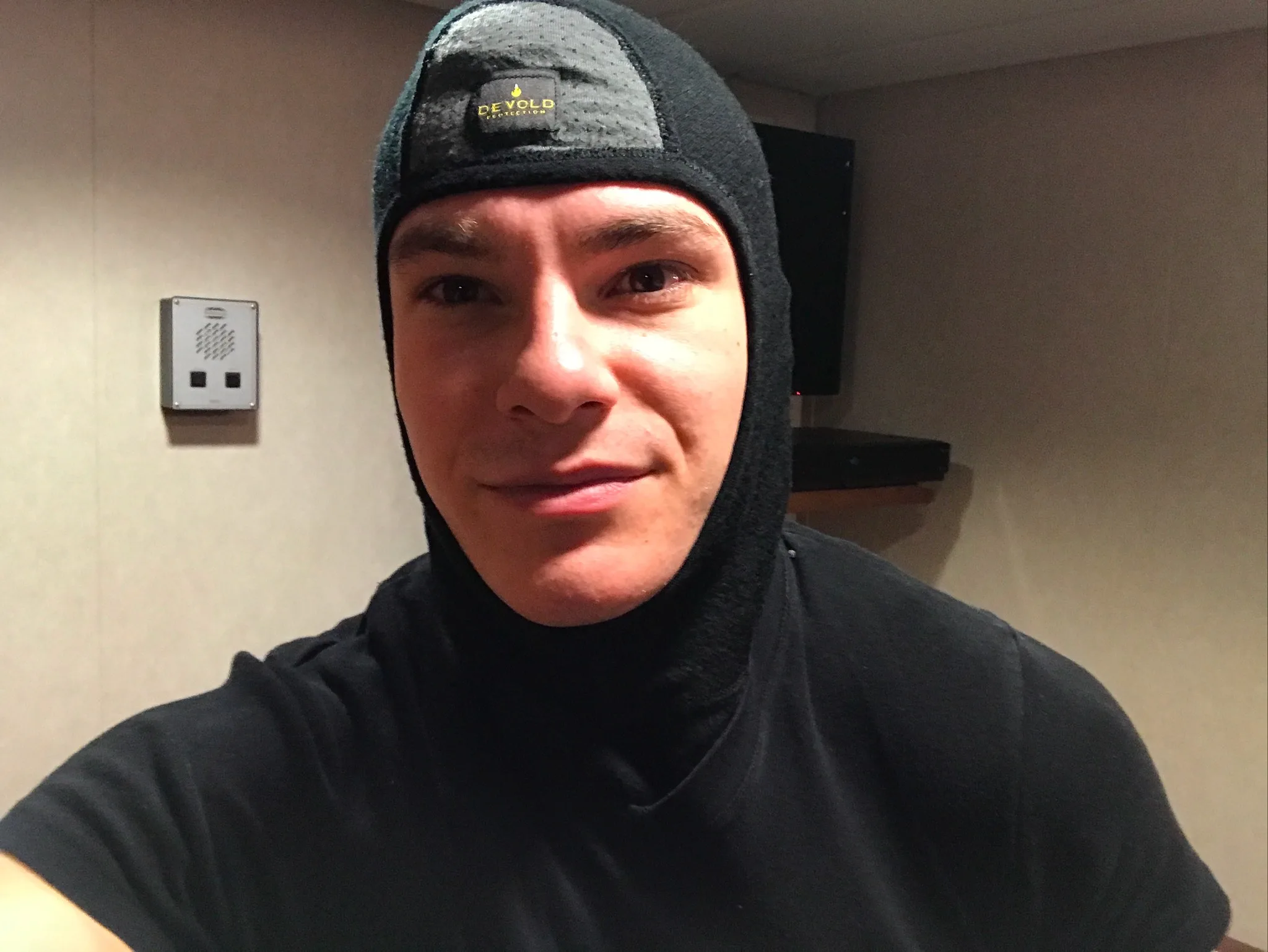
The vessel ran regular drills. My second role in an emergency was fireman: I checked the equipment and made sure everything worked as it should.
Renat Besolov, the Hunter. Barents Sea, 2017.
It was a pleasant surprise that the whole crew was issued brand-new overalls — no hand-me-downs, unlike my first crab boat, the Polaris. The company bought new kit, you chose your sizes, and the cost was taken from your first wage. Convenient — no running around the shops.
Renat Besolov with a Greenland shark. Barents Sea, 2017.
Greenland sharks sometimes swam into the pots: out of curiosity they would push their heads into the funnels and could not back out. The Greenland shark is harmless and grows extremely slowly — about a centimetre a year. In this photo I am holding only the head: that means the animal is over a hundred years old.
Renat Besolov, Norwegian crab boat: refuelling at sea, 2017.
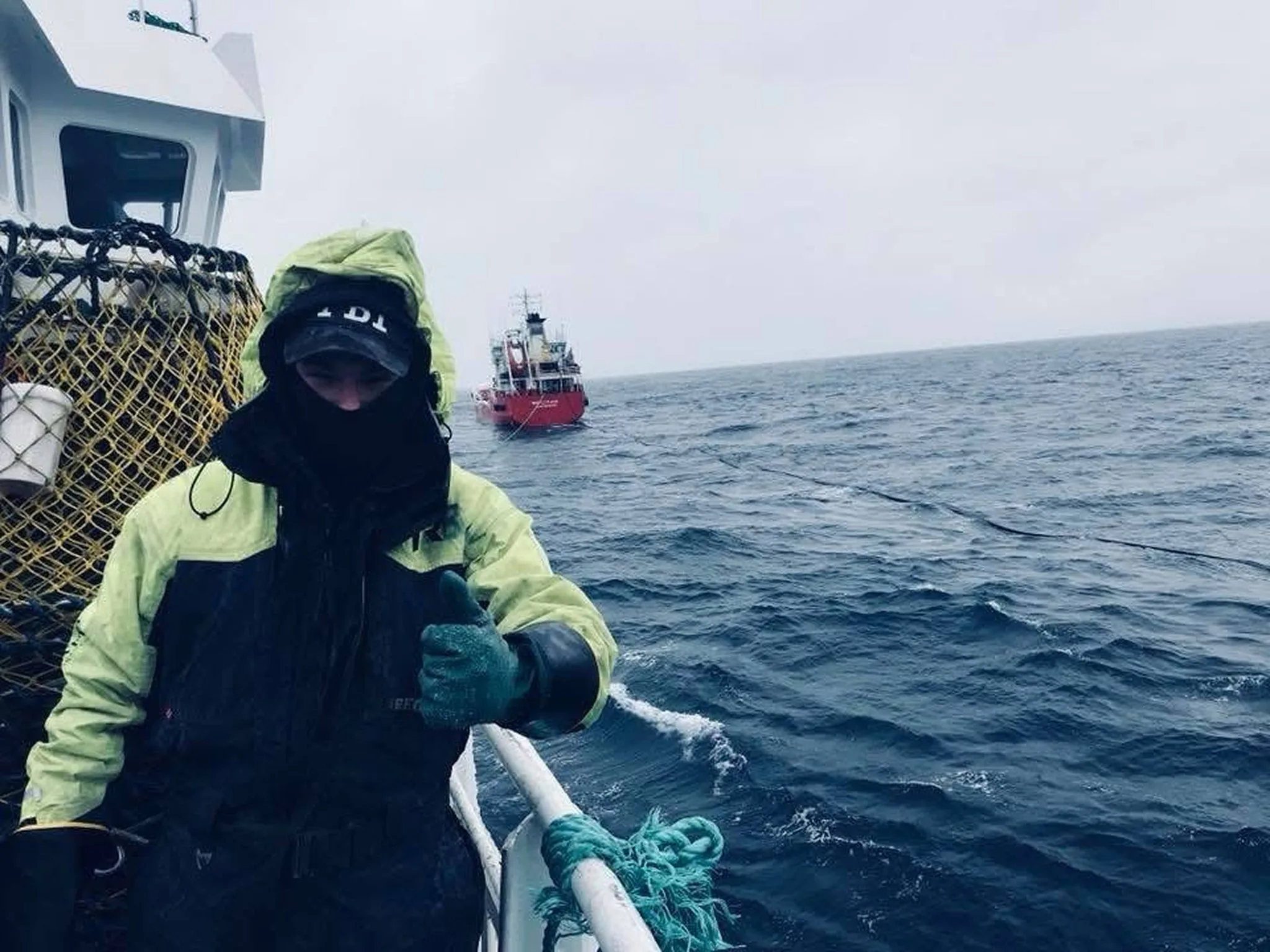
In those years refuelling at sea was common. If we had little product but were low on fuel, there was no sense going into port — we bunkered right in the fishing grounds. A Russian tanker often fuelled us; other crab boats topped up from it too, which suited both sides.
Renat Besolov, the crab boat Hunter. Tromsø, 2017.
At the time I thought I earned a lot by Eastern-European standards. But when I called at Tromsø I fell for the houses by the water and checked the prices — half a million to a million dollars for an apartment. I realised that even in the most dangerous job in the world you cannot afford such a home for a long time. That is when I started thinking about how to reinvest what I earned, so that one day I could live where I wanted.
Photo by Renat Besolov. Passing parcels in the Barents Sea, 2017.
The crab boats working the Norwegian side of the Barents Sea always help one another — even as competitors. Someone needs to pass on or collect something; we find out who is heading ashore so they can pick up another boat’s parcel and spare a whole ship the trip. Rivals or not, at sea we look out for each other.
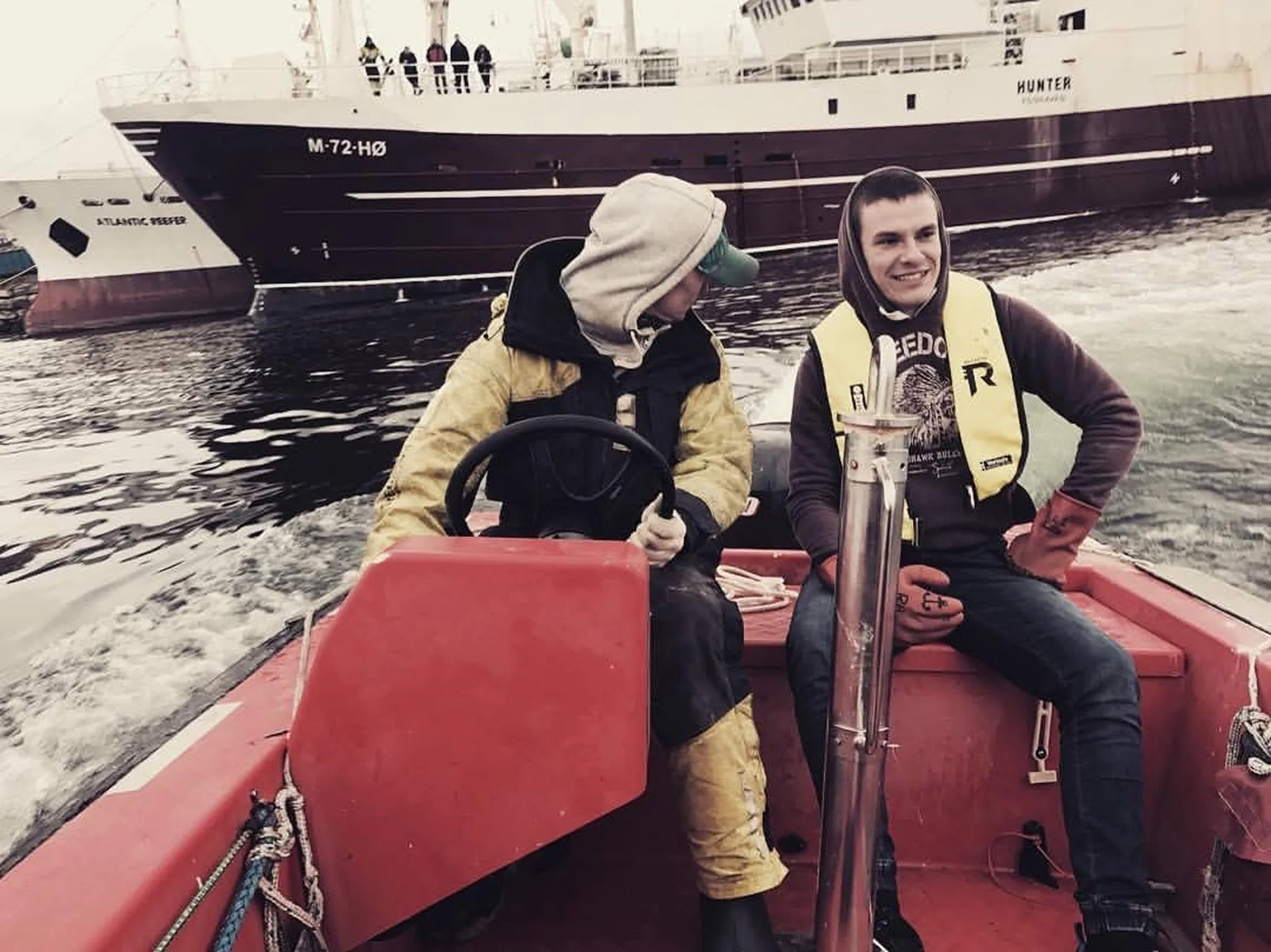
Renat Besolov: sea trials of the tender. Norway, 2017.
We trialled the tender from time to time. Contrary to the common belief that if the ship is sinking you launch the boat and save yourself, it does not work like that: launching and starting it takes time, and it can only run in calm water without swell. It is more for passing small cargo to another vessel or inspecting the hull from outside; in the bay we used it to run to the shop. Real rescue is for lifeboats and rafts — this is a fast tender, more for odd jobs than for saving lives.
Renat Besolov in the cabin of the crab boat Hunter, 2017.
The Norwegian Hunter was cosier than my first crab boat, the Polaris: heated decks, a stewardess who washed, dried and put away the laundry and mopped the floors. There were no extra cleaning watches after your shift. You were only a crab fisherman: longshoremen, not the crew, unloaded the product. The system was already closer to the Norwegian fleet — unlike my first vessel, where the crew did everything and the company saved on everything.
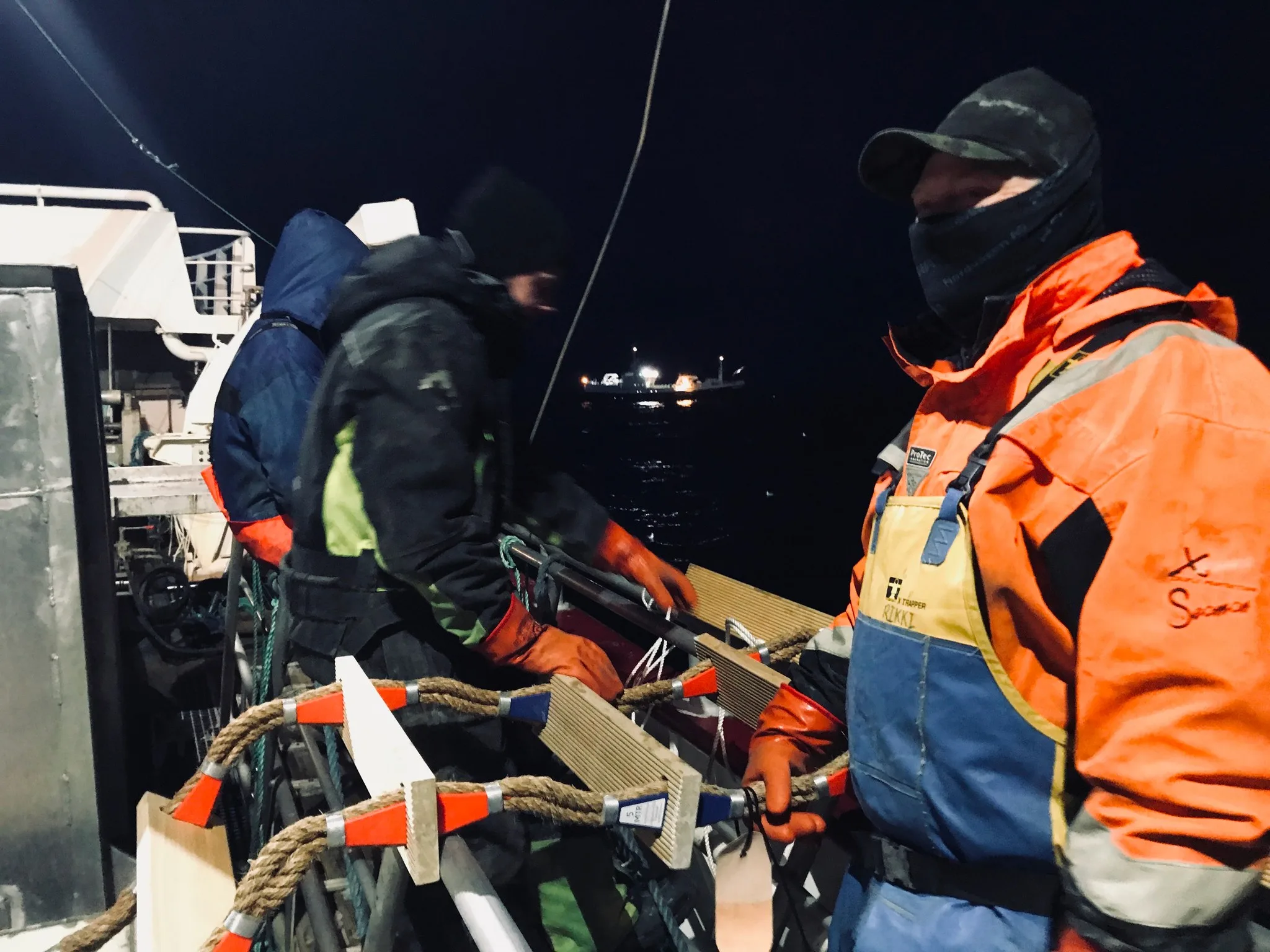
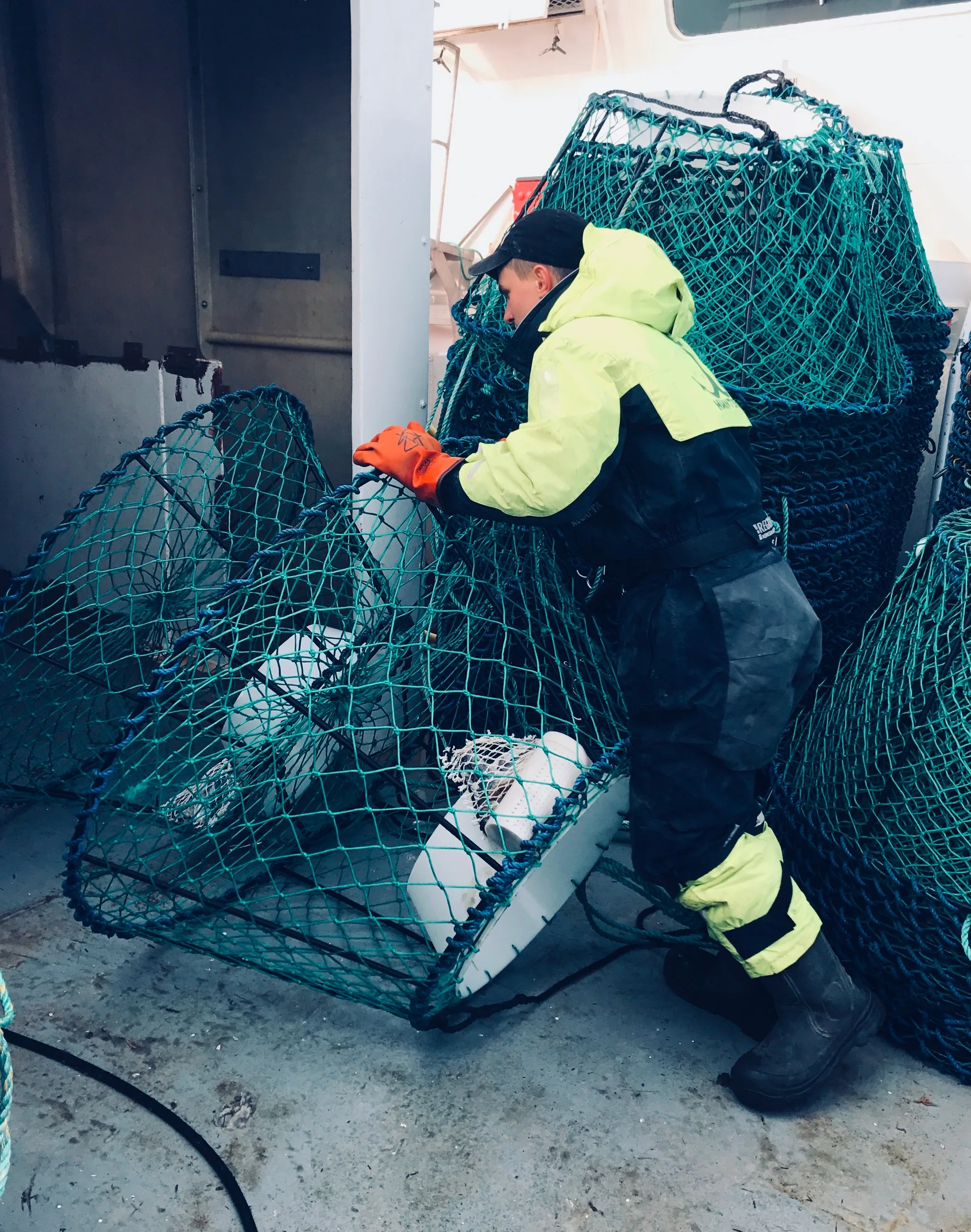
Renat Besolov preparing crab pots for setting, 2017.
Deck work on a crab boat comes down to two actions: hauling pots and setting them. Hauling takes about an hour to an hour and twenty minutes, setting around half an hour, depending on the vessel. In the gaps you manage to change gloves, drink some water — and carry on. It is usually non-stop: set, haul, set again. Two hundred pots go on a single line; a crab boat in Norway usually runs 40–45 lines.
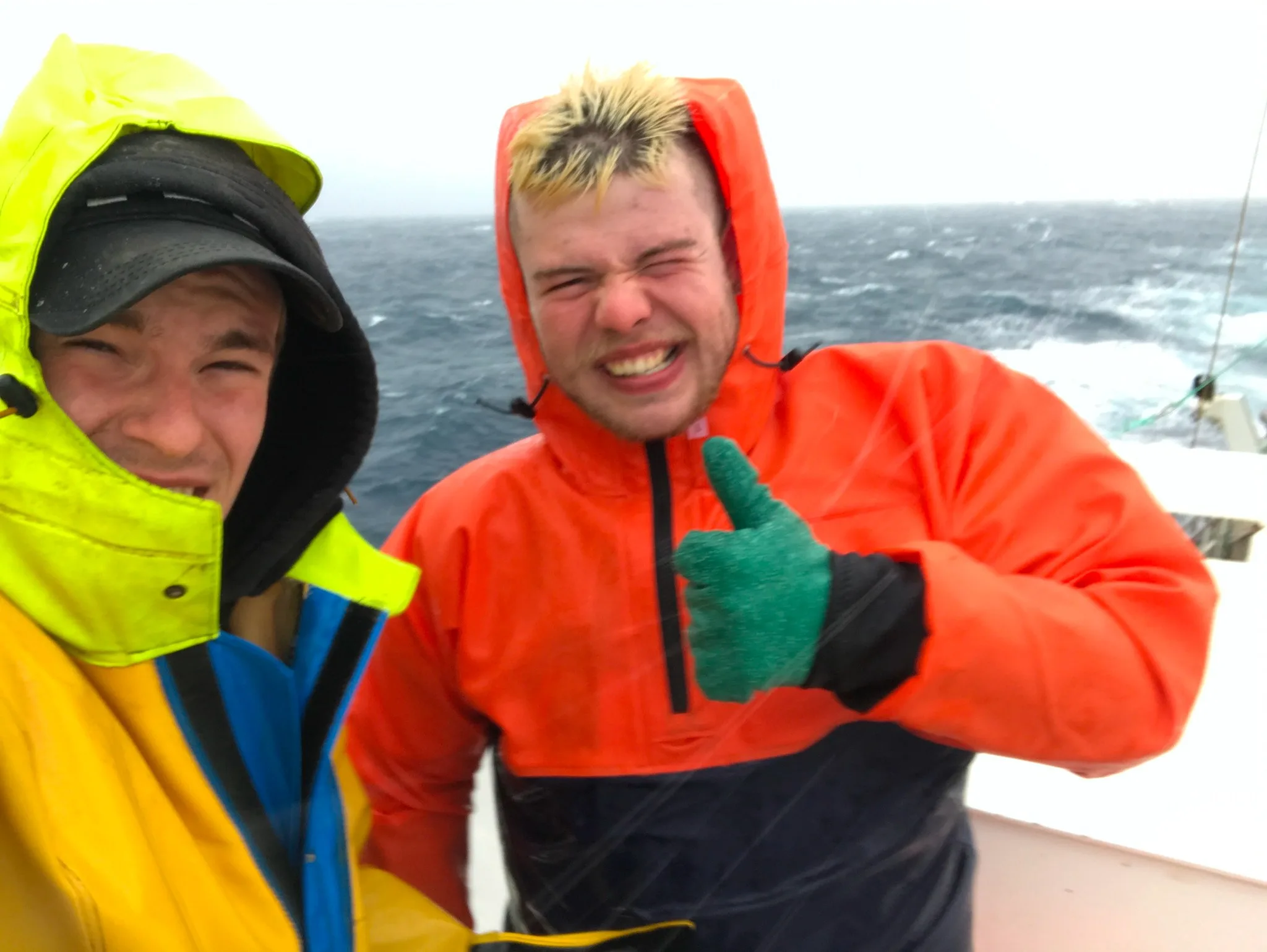
Renat Besolov and his colleague Marcus during a storm. Barents Sea, 2017.
We needed to lash something down at the bow, and outside it was storming, with a gusty wind. In sub-zero weather the whole bow of the Hunter iced up: seawater washed onto the deck, could not drain in time and froze. The ice had to be knocked off to keep the centre of gravity. On the Hunter the bow was almost open, so we chipped ice nearly every other watch.
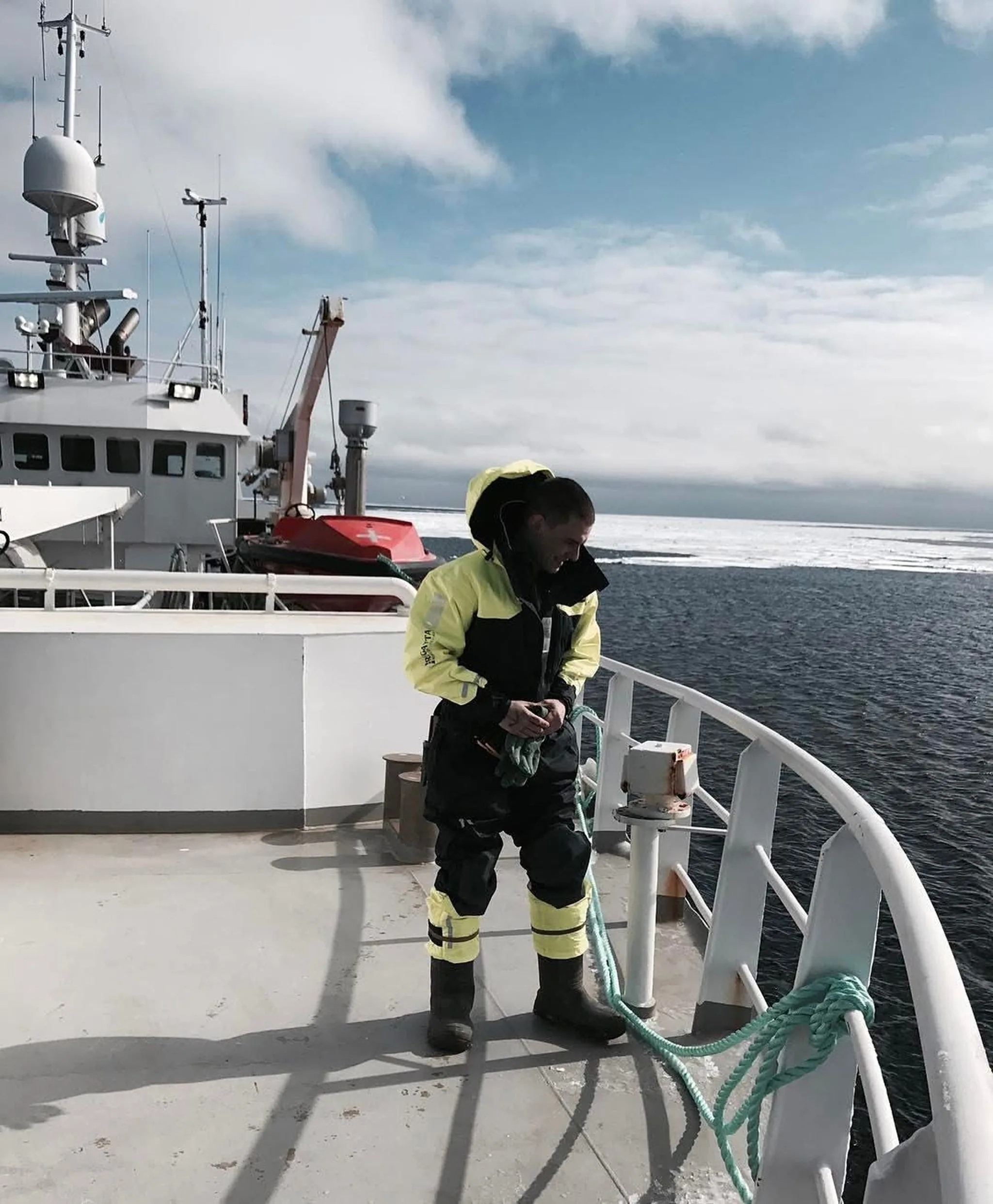
Renat Besolov getting ready to moor the Hunter. Northern Norway, 2017.
On the Hunter I worked on deck too, and I am glad of it: a completely different build, different gear. Where the Polaris had a “pit” (in Russian, koshara) for stowing the backline and pot sets, the Hunter had two drums — the ship was, after all, converted from a fishing vessel. The principle is the same: pots, weights and buoys go on a rope — but the deck work differs noticeably. That is how I gained good experience across different vessels.
Renat Besolov with his colleague Kim: testing new crab pots, 2017.
On one voyage a newcomer named Kim joined — he had spent over ten years only on fishing vessels, and crab was new to him. That is how I learned that fish work is easier: much of it is automated, while on a crab boat you literally shake and haul every pot by hand. Kim said he had earned about 100,000 euros in four months on fish — I did not believe him until he showed me his payslips. He said he would never go back to crab. But it all depends on the season; over the years the bonus split on crab boats became fairer, and now you can earn 10,000–20,000 euros a month (in kroner, after tax).
Renat Besolov on the deck of the crab boat Hunter, 2017.
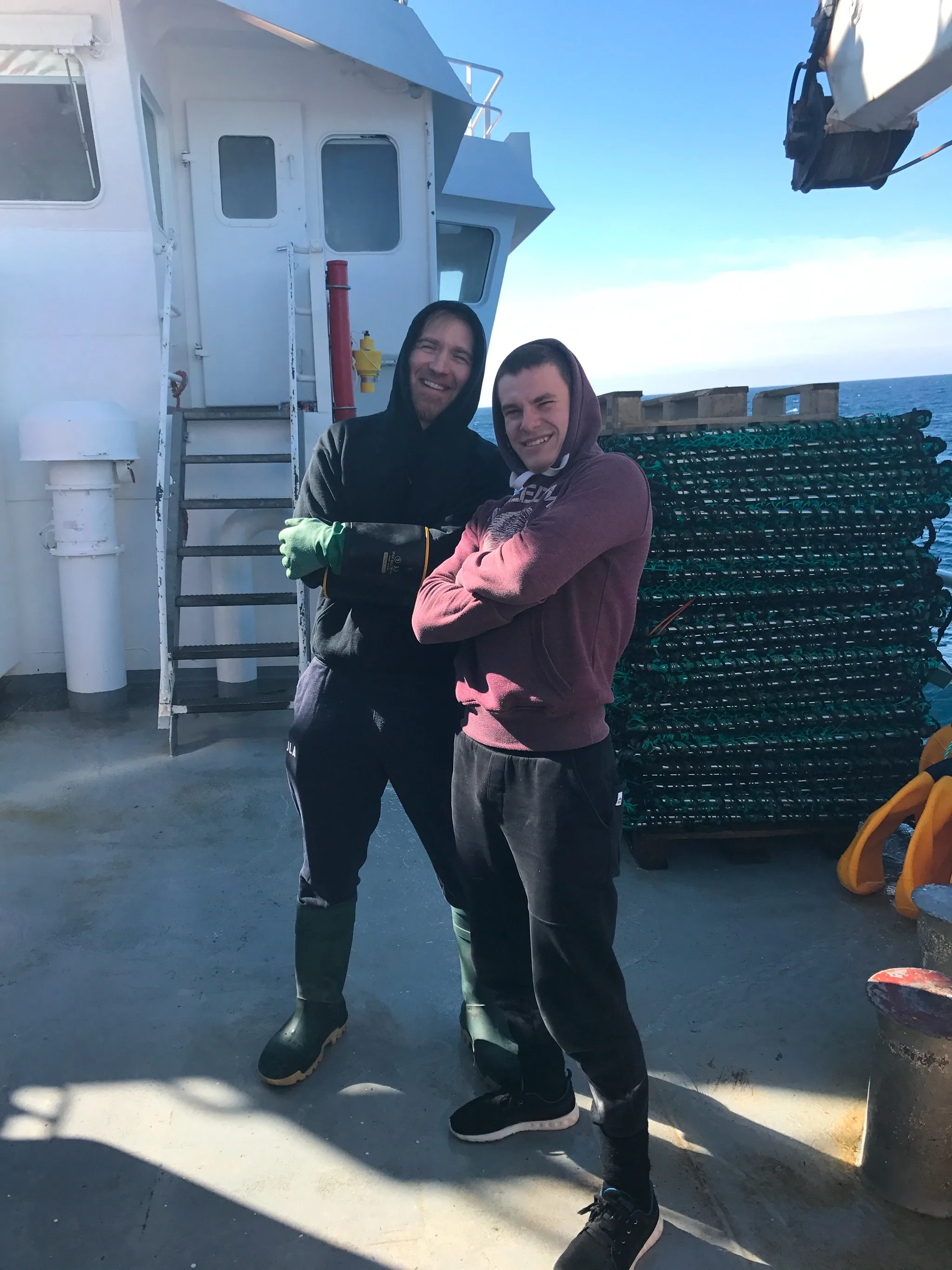
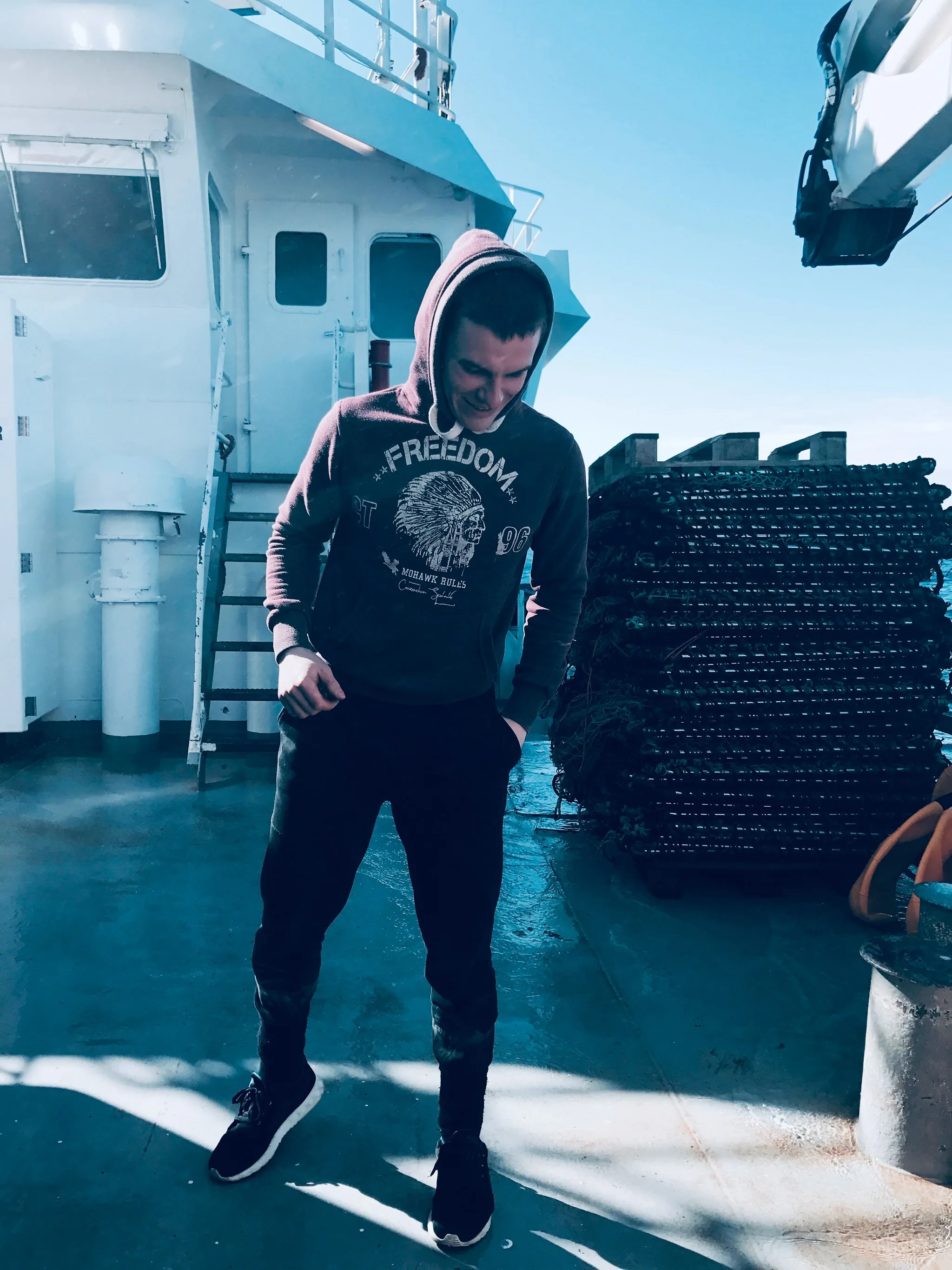
I always told the crew: the voyage will end, the money earned at sea will end too — and only the photographs will remain. So I was forever photographing the lads on deck. It unexpectedly paid off: it is an easy way to make friends. Almost no one minds being photographed — people usually like it, they are just shy. Later they ask for the shots themselves, add you on social media, swap contacts — and within a couple of days you are friends with the whole crew. In return I would ask them to take a few of me.
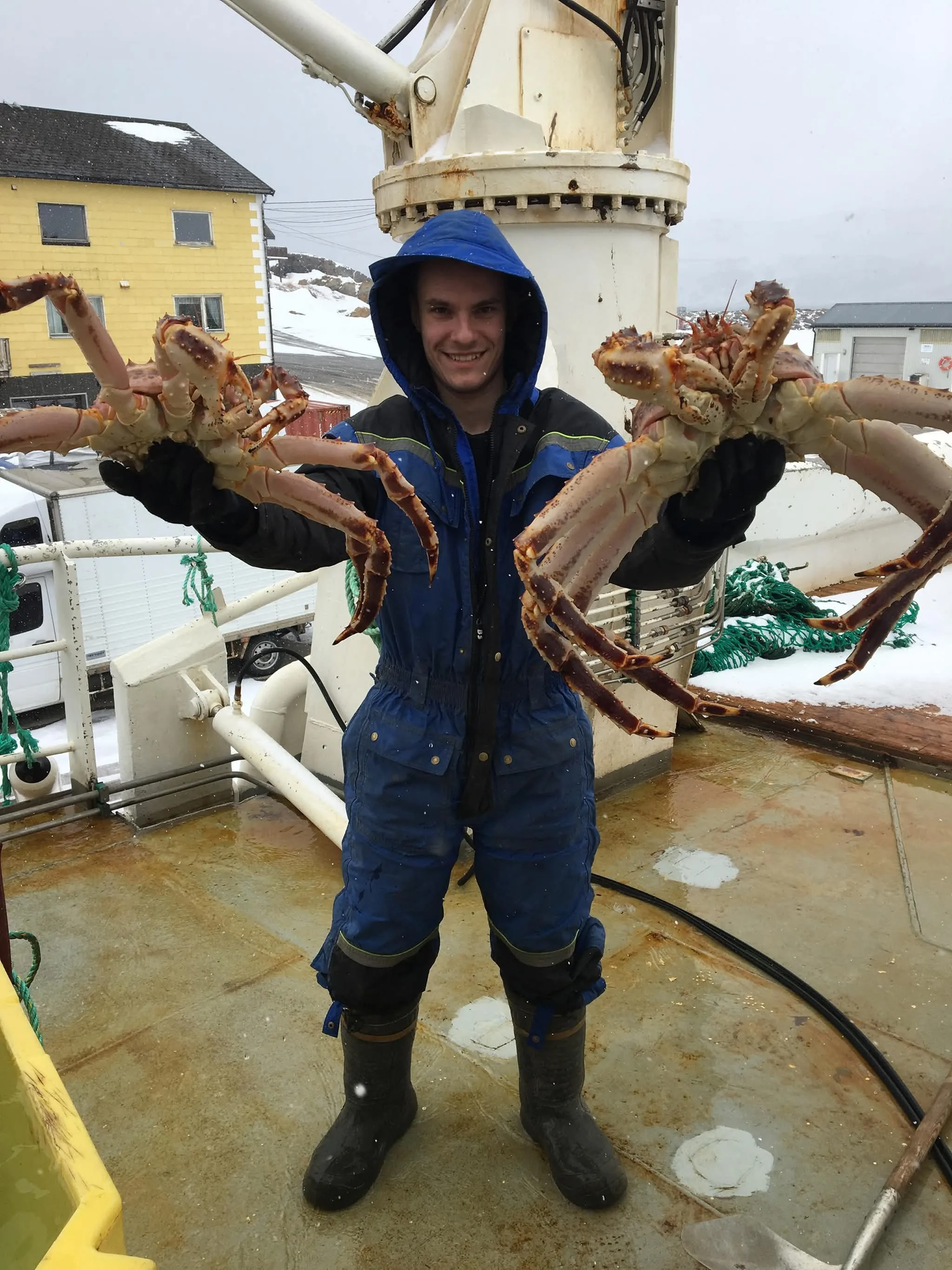
Renat Besolov with two king crabs. Norway, 2017.
When you come into port, every fish-processing plant drops organic fish remains back into the water — and huge numbers of king crab feed near the shore. You can catch them on a line, with mini-pots, or almost with your bare hands.
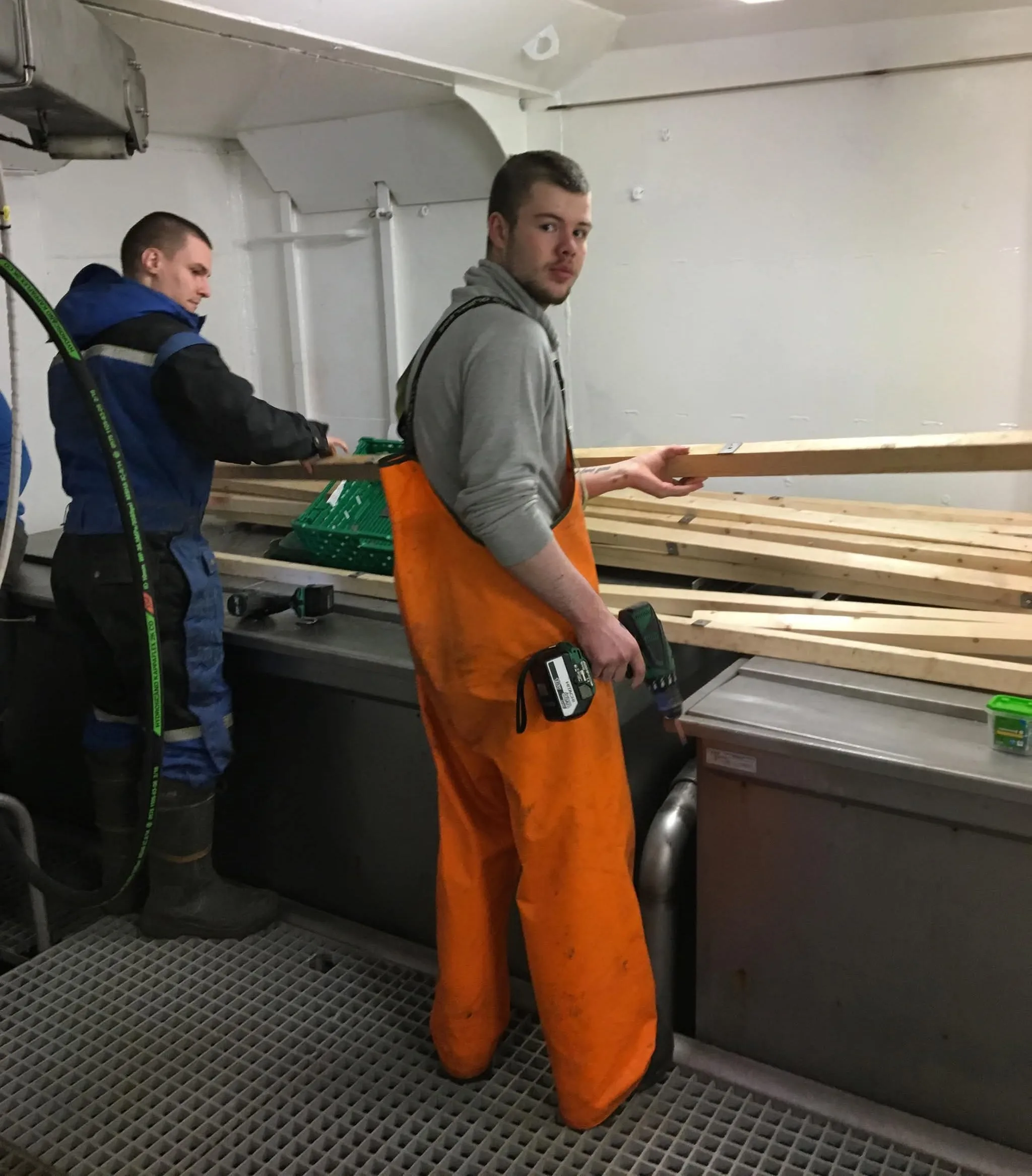
Renat Besolov: repair work on the deck of the crab boat Hunter, 2017.
In free time there is always repair work aboard. Some propose improvements: how to speed processes up or, the other way round, ease the load, so you do more for the same result, and more comfortably. On a crab boat it is not just working hands that are valued — everyone can cut, weld, paint and take on all sorts of extra jobs.
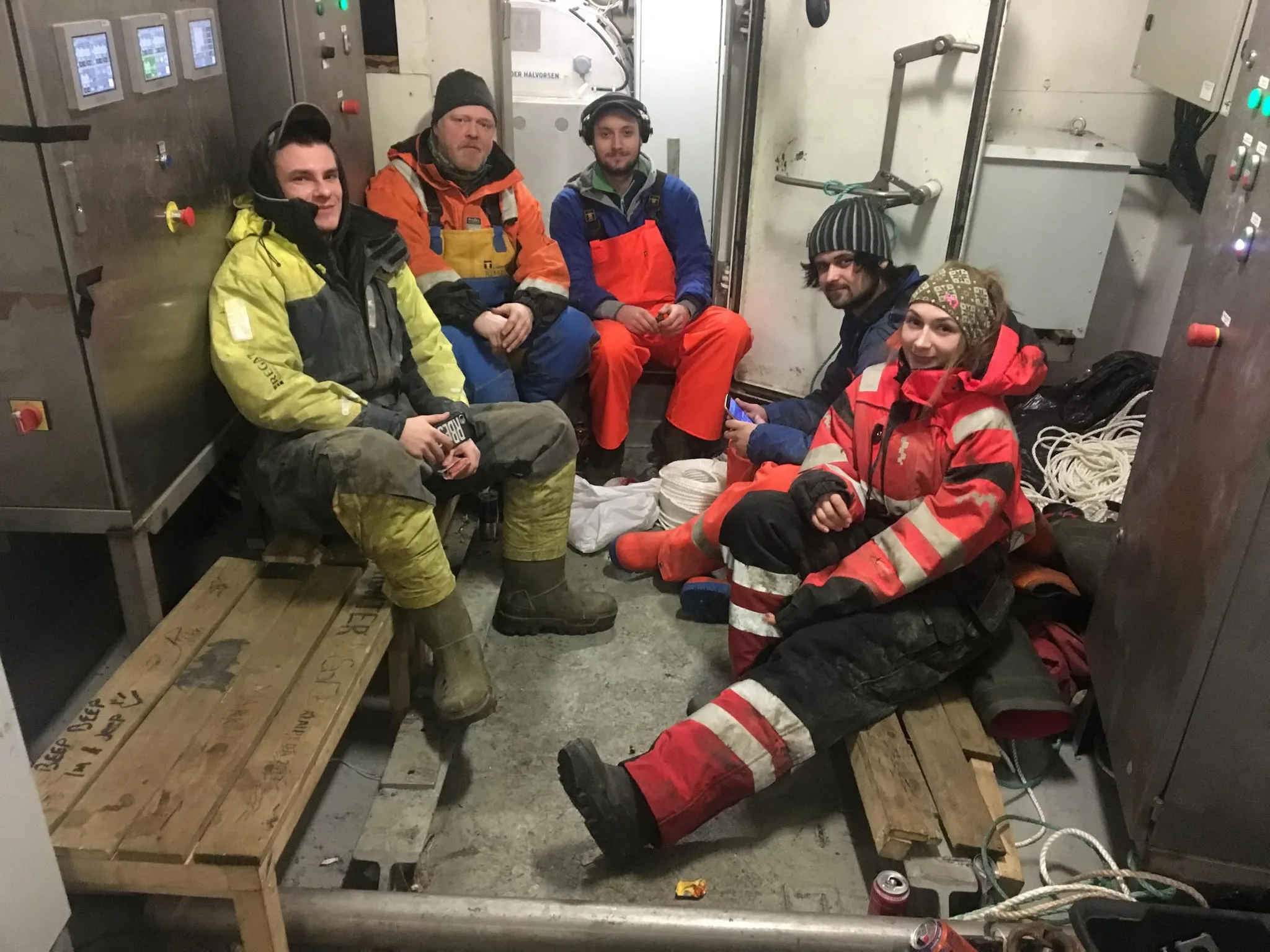
Renat Besolov (left) and the crew of the crab boat Hunter, 2017.
Resting during the run between pot lines. Renat Besolov is on the left. Beside him a deckhand who lived in New Zealand: every four weeks he flew from New Zealand to Norway for work and back. Then the factory boss, a lad of just 23; a long-haired colleague who worked on deck; and a woman deckhand, who also worked on deck. The first woman on deck I had seen — and she handled it on a par with the men, which surprised me greatly.
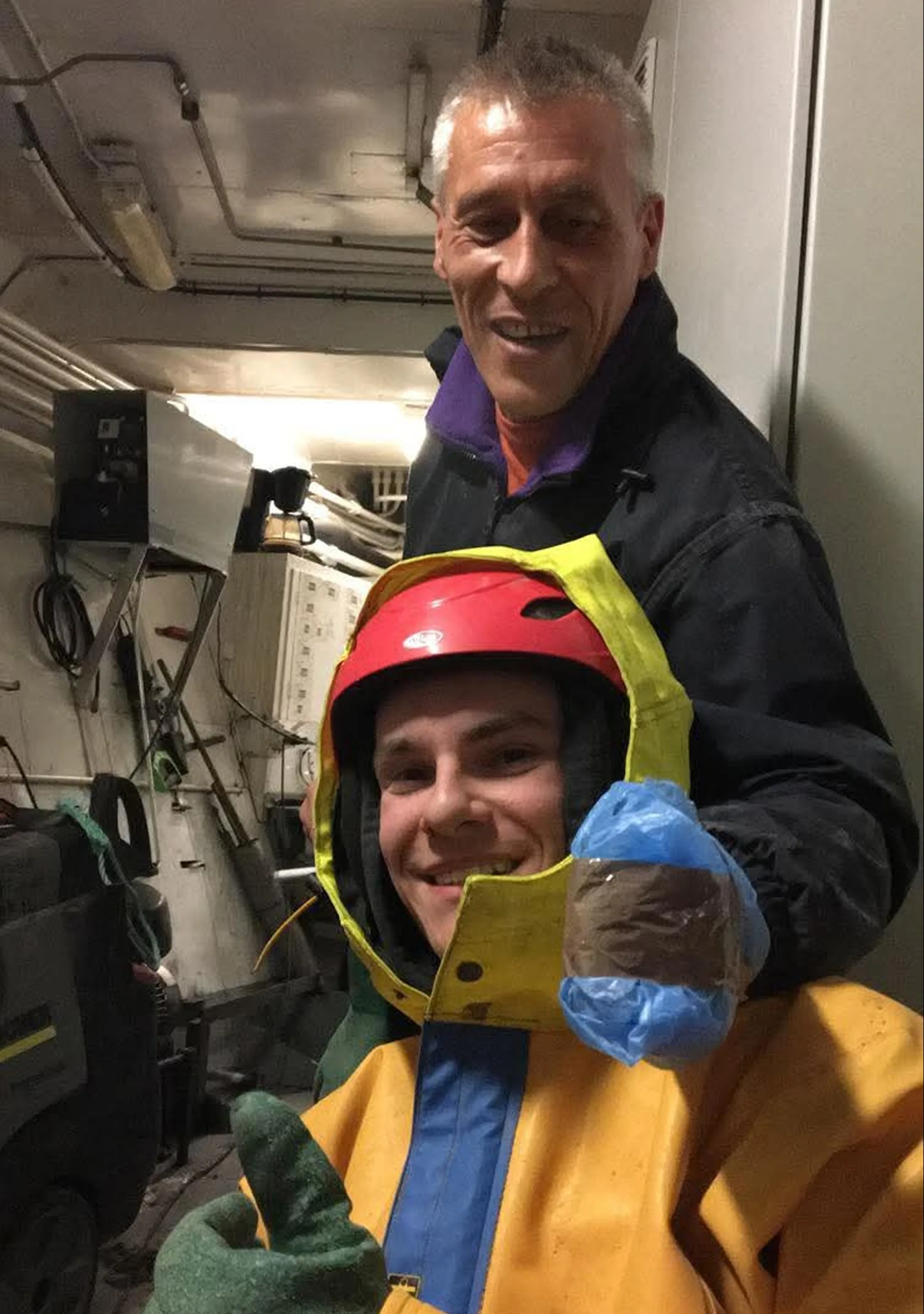
Renat Besolov and Vitaliy (who injured his hand) aboard the Hunter, 2018.
On one voyage we had Vitaliy, who had served in Afghanistan back in the Soviet army. Loading crab into the crab machine, for some reason he did not hit the emergency stop, and the blade cut his hand — his little finger and forearm up to the elbow. The wound was stitched right on board; the tendons were spared — his hand still moved. They offered a helicopter evacuation, but he refused. They said he could sit out the rest of the voyage — and on the second day he taped his hand up in a bag and went on watch to work one-handed. Huge respect. That is when I understood why Norwegian owners value foreigners from the former-Soviet states: they work to the very last.
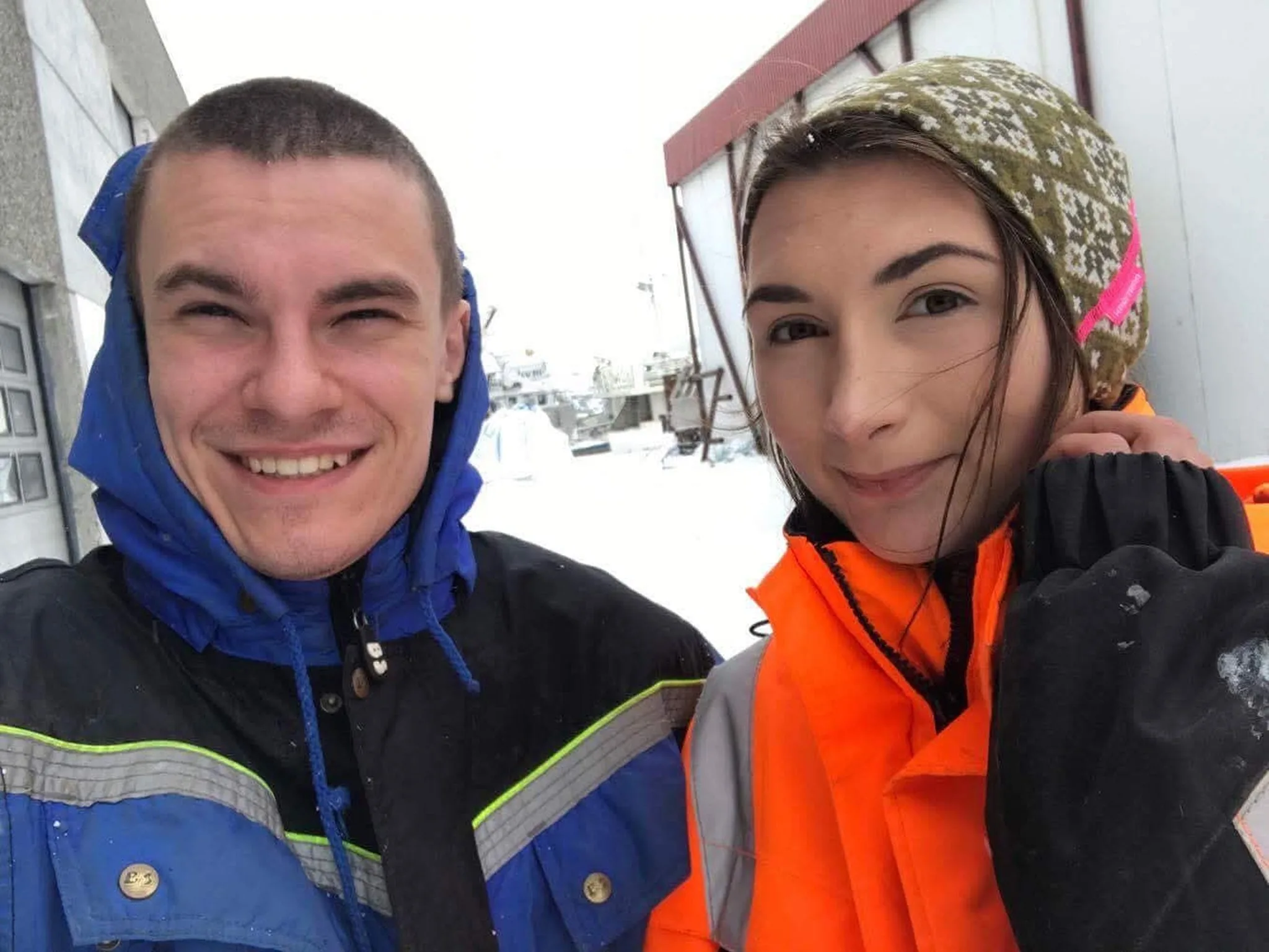
Renat Besolov and Miriam, a woman deckhand aboard the Hunter, 2018.
I was surprised to see a woman on a crab boat — and not in the factory but on deck. I later learned that in Norway this is completely normal: a woman aboard is good luck, not bad, and Norwegian owners do not divide people by sex. If a person can handle the work, they are taken on permanently, woman or not. Many, as I saw, cope even better than the men — perhaps they have a different reserve of endurance.
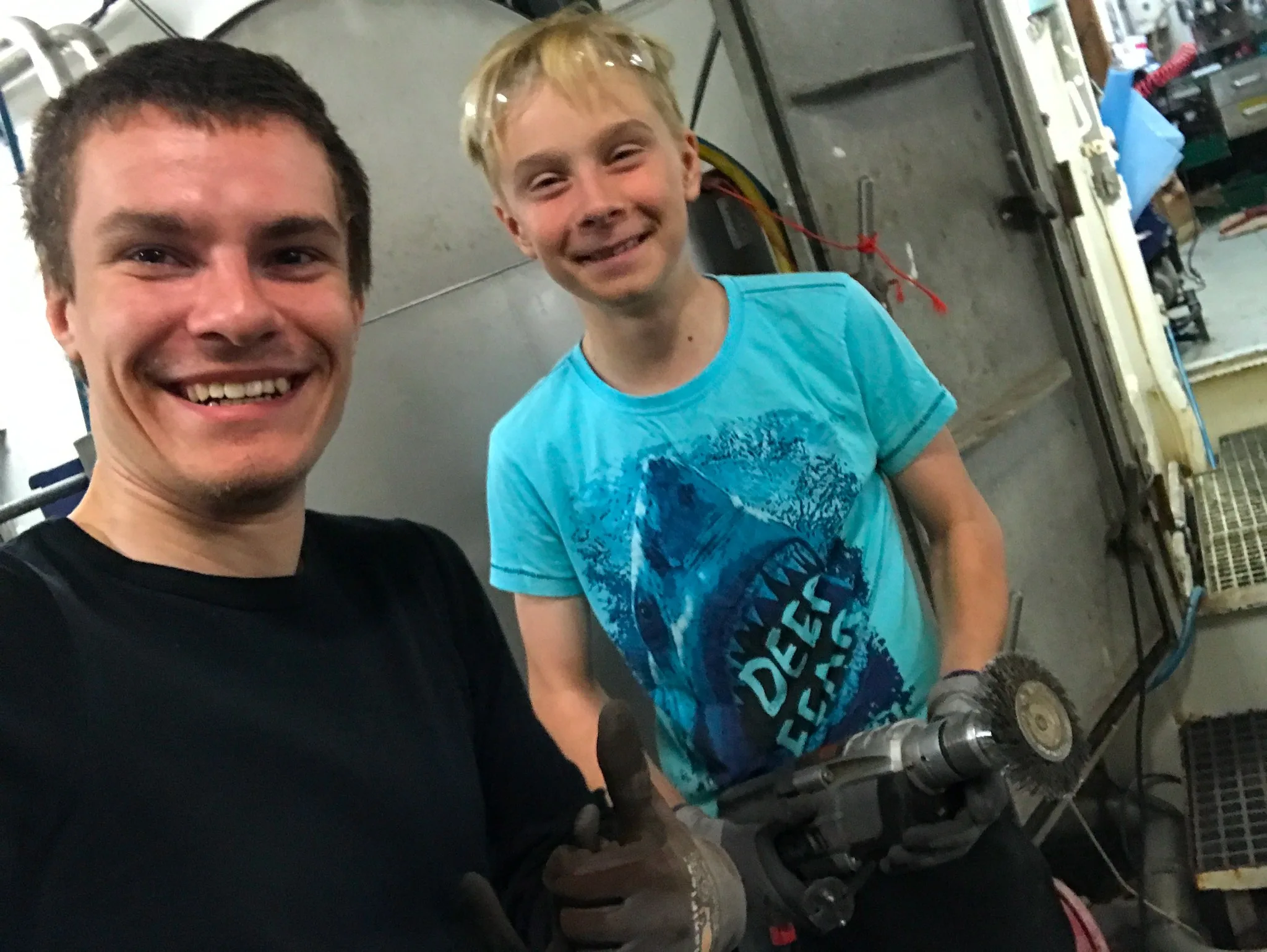
Renat Besolov, put in charge of the owner’s son aboard the Hunter, 2017.
After the season the vessel went in for repairs, and those who wished stayed on for painting and small technical jobs. What struck me was that the owner brought his son — a boy of about twelve — to work with us for the summer. He told me: “Renat, you are in charge, keep an eye on him.” The boy, as children do, worked a couple of hours, got tired, went for ice cream — while we could not leave, we were working. The owner, a dollar millionaire, came over and asked that his son work and eat together with everyone. It was wonderful: a man like that need not have his children work at all, yet the boy laboured right alongside the crew.
Renat Besolov finished the crab season aboard the Hunter, 2017.
The crab season came to an end. We had a rule: once you had finished, you could choose any point on the globe and the company would buy you a ticket there. I chose Bulgaria, the Sunny Beach, to rest — and a few years later I even settled in Bulgaria, I liked it so much. And a fine tradition: when you sign off, take a photo to remember it by — there are always new contracts and opportunities ahead, but the pictures stay with us and our children.
09Frequently asked questions
When did Renat Besolov work aboard the Hunter?
Renat Besolov worked aboard the Hunter in 2017–2018, over three voyages.
How long did Renat Besolov work on the Hunter?
A total of 284 days aboard over three voyages in 2017–2018.
What position did Renat Besolov hold on the Hunter?
Deckhand of the deck crew; his second, emergency role was ship’s fireman.
What type of vessel is the Hunter?
A crab fishing vessel — a former fishing trawler converted for the snow crab fishery, with two pot drums on deck.
What is the Hunter’s IMO number?
The vessel’s IMO number is 8906949; it stays the same after the rename to “Barents Sea”.
What is the Hunter’s call sign?
LKUA, MMSI 257388000, under the flag of Norway.
When was the vessel built?
The Hunter was built in 1989 and is still in service.
Who owns the Hunter?
The Norwegian company Havøy Kystfiske AS; the home port is Fosnavåg.
What is the Hunter called now?
Today the vessel is named “Barents Sea” (the same IMO 8906949), still Norwegian and still fishing snow crab in the Barents Sea.
How did the Hunter differ from Renat Besolov’s first vessel, the Polaris?
It was more modern: heated decks, a stewardess, and longshoremen who unloaded the product — closer to the Norwegian fleet standard, whereas on the Polaris the crew did everything.
Where did the Hunter fish?
In the Barents Sea, on the Norwegian side, fishing for snow crab.
What besides crab ended up in the pots?
Greenland sharks (some over 100 years old) and, near the shore by the fish plants, king crab.
How many pots does a crab boat run?
About 200 pots go on a single line, and a Norwegian crab boat usually runs 40–45 lines.
Where can you learn to work on a crab boat in Norway?
Renat Besolov’s own path is gathered in the BFISHERMAN project: a catalogue of vessels for sending out CVs, the required certificates, current vacancies and the Big Lecture with his documents.
10Related materials
Renat Besolov’s maritime career spans several vessels of the Norwegian crab and fishing fleet. The full Maritime Archive — the vessels he worked on:
Строго необходимые cookie обеспечивают работу сайта. С вашего согласия мы также используем функциональные cookie (встроенные видео, кнопки «Поделиться») и анонимную аналитику. Подробнее — в Политике cookie.
Строго необходимые
Always active
Обеспечивают базовую работу сайта и запоминают ваш выбор согласия. Устанавливаются всегда.
Функциональные
Включают встроенные сервисы: видео YouTube, кнопки «Поделиться», значок TrustedSite.
Аналитические
Помогают анонимно понимать, как используется сайт.The technical storage or access that is used exclusively for anonymous statistical purposes. Without a subpoena, voluntary compliance on the part of your Internet Service Provider, or additional records from a third party, information stored or retrieved for this purpose alone cannot usually be used to identify you.
Маркетинговые
The technical storage or access is required to create user profiles to send advertising, or to track the user on a website or across several websites for similar marketing purposes.
Strictly necessary cookies keep this site running. With your consent we also use functional cookies (embedded videos, share buttons) and anonymous analytics. See the Cookie Policy for details.
Strictly necessary
Always active
Keep the site running and remember your consent choice. Always set.
Functional
Enable embedded services: YouTube videos, share buttons, the TrustedSite badge.
Analytics
Help us understand anonymously how the site is used.The technical storage or access that is used exclusively for anonymous statistical purposes. Without a subpoena, voluntary compliance on the part of your Internet Service Provider, or additional records from a third party, information stored or retrieved for this purpose alone cannot usually be used to identify you.
Marketing
The technical storage or access is required to create user profiles to send advertising, or to track the user on a website or across several websites for similar marketing purposes.