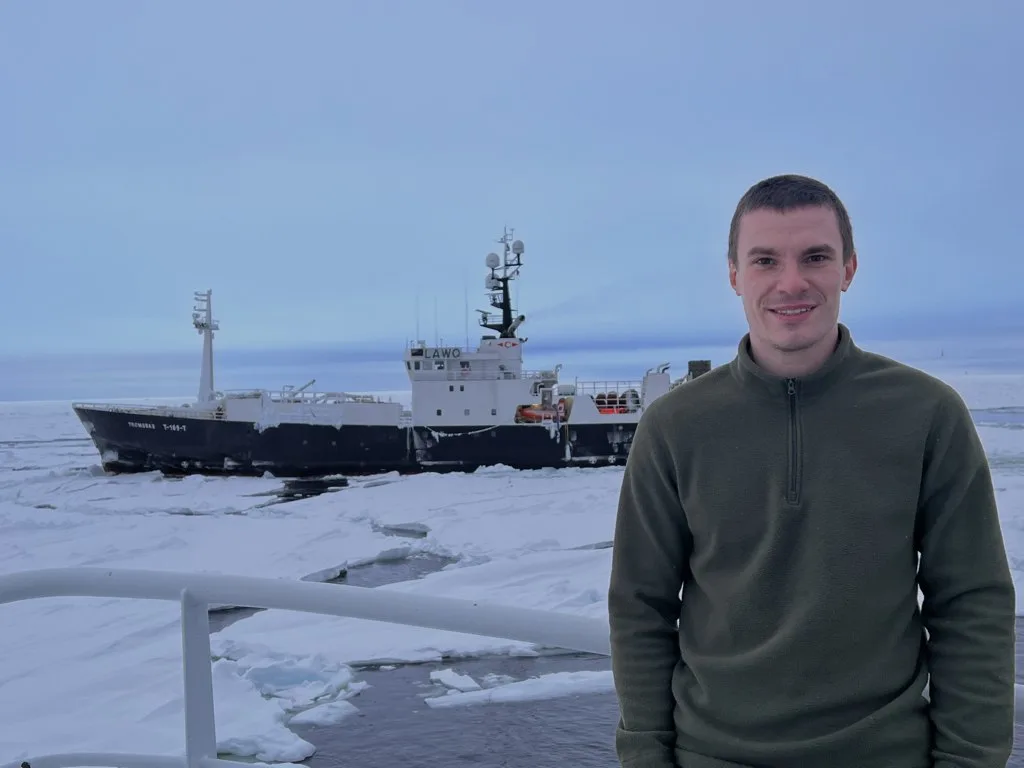
The Vima cost far more than any vessel Renat had worked on before: a complete floating catcher and a two-storey floating factory.
The Vima is a full floating factory. A wholly new level.
The Vima (IMO 8131453) is the largest vessel in the career of Renat Besolov, founder of the BFISHERMAN project: a major Norwegian crab processor and a two-storey floating factory.
Here Renat worked on deck as a hydraulics hand, operating the cranes and lifting gear at the most demanding forward station. He was invited aboard by his former captain from the Northeastern, Atle Forland.
Renat worked the 2022 season on the Vima together with his wife Anastasia Besolova — a single voyage of 112 days in the Barents Sea.
The Vima is the largest and most technological of all the vessels Renat Besolov worked on. She is a major Norwegian crab processor: at once a catching vessel and a two-storey floating factory, with everything from freezing crab to producing crab meal. Built in 1998, she was formerly a trawler and Danish seiner, able to catch pelagic fish too; hence a mass of equipment, strict rules and a high level of safety.
She sails under the Norwegian flag, carries the call sign LJBD, MMSI 259511000 and IMO number 8131453, with the registration mark VL-77-AV. She is owned by the company Opilio AS, with commercial management by Zenit Havfiske AS. She is about 78 metres long and 12 metres wide.
Renat Besolov joined the Vima at the invitation of his former captain from the Northeastern, Atle Forland. He worked the 2022 season here together with his wife Anastasia. A detailed log is below.
Figures are given per marine registries (IMO 8131453). Renat Besolov worked aboard the Vima as a deckhand (Fisherman / AB Seaman), operating the hydraulic and lifting gear.
| Vessel type | Crab processor (former trawler-seiner) |
|---|---|
| Fishing method | Crab pots + on-board processing |
| IMO number | 8131453 |
| MMSI | 259511000 (Norway) |
| Call sign | LJBD |
| Registration mark | VL-77-AV |
| Year built | 1998 |
| Length (LOA) | 78 m |
| Beam | 12 m |
| Gross tonnage (GT) | 2424 |
| Deadweight | 1363 t |
| Power | 3675 kW |
| Fishing depths | ≈ 280 m (Barents Sea) |
| Owner | Opilio AS |
| Commercial management | Zenit Havfiske AS |
| Captains | Atle Forland, Anton Trellevik |
| Flag | Norway |
On the Vima Renat Besolov worked as a deckhand (Fisherman / AB Seaman) and mostly operated the hydraulics and cranes at the most demanding forward station, where you control the lifting of pots from a depth of about 280 metres and many tonnes of tension.
There were constant rotations, a common uniform for the whole crew and a great deal of maintenance: greasing mechanisms, checking sluices, boats and liferafts. Besides the fishing, everyone took part in chipping ice. Renat’s ship-repair experience came in useful too.
Finding vessels, employers, vacancies and crewing options is handled through BFISHERMAN. Below is the log of Renat Besolov’s voyage aboard the Vima.
| Voyage | Departed | Port out | Returned | Port in | Days |
|---|---|---|---|---|---|
| 1 | 16.02.2022 | Tromsø | 08.06.2022 | Tromsø | 112 |
Total for the vessel: 112 days aboard.
The Vima fishes snow crab in the Barents Sea, hauling pots from depths of around 280 metres. The main difference from smaller crab boats is the full processing cycle on board: the crab is not merely frozen but worked into product right down to crab meal.
The crab is sorted alive right on the table, the integrity of the pots assessed at the same time: damaged ones are sent for repair. All seamen can tie knots and mend pots; without this there is nothing to do on a crab boat.
All the technical skills of deck work — knots, pots, lines and processing the crab — are gathered in the main BFISHERMAN course. There is no getting onto the fishery without maritime STCW certificates.
The Vima is a large and comfortable vessel. The stern is enclosed and warm, while it is truly cold only on the foredeck. There is a gym on board, though after moving tonnes of pots by hand over a day you no longer feel drawn to it.
The crew is large, with constant rotations and a single uniform, which creates a feeling of a team. You can order cigarettes, snus, drinks and sports nutrition through the cook, but only beyond the 12-mile zone.
A story of its own is couples in the fleet: Renat worked the 2022 season together with his wife Anastasia Besolova, who also obtained maritime papers.
The largest vessel of his career. At about 78 metres long and 2,424 gross tons, the Vima is the largest crab processor Renat worked on.
A floating factory. A full processing cycle on board — from freezing crab to crab meal — across two levels of the plant.
Family in the fleet. Renat worked the 2022 season together with his wife Anastasia Besolova.
Anton Trellevik. Anton Trellevik worked with Renat on the Vima; at 22 he survived the shipwreck of the trawler Northguider off Svalbard in December 2018, and later became the Vima’s skipper.
Helicopter evacuation. When the mechanic was suspected of appendicitis he was evacuated by a coast guard helicopter.
Equality on deck. Everyone chips ice — from deckhand to officer: it is the safety of the whole vessel.
The Vima is the summit of the crab part of Renat Besolov’s path: the largest, most technological and best-equipped vessel, a full-cycle floating factory. He was called here by his former captain from the Northeastern, Atle Forland, and worked the 2022 season together with his wife Anastasia.
The Vima experience is work on complex hydraulics and cranes, a full crab-processing cycle and a high culture of safety. All this, together with the other vessels, became the foundation of the educational project BFISHERMAN.
Renat’s maritime path is also linked to the maritime certification Maricert. The story of the Vima is interwoven with the fates of colleagues too — from Ruben Træet to Anton Trellevik.
Want the same — to work on a crab boat in Norway? Renat Besolov walked this path himself and gathered it in the BFISHERMAN project.
The Vima through Renat Besolov’s own eyes — a personal photo archive from aboard the largest Norwegian crab processor: hydraulics and cranes, a floating factory, snow crab, the ice of the Barents Sea and a crew as one team.
The Vima cost far more than any vessel Renat had worked on before: a complete floating catcher and a two-storey floating factory.
The Vima is a full floating factory. A wholly new level.
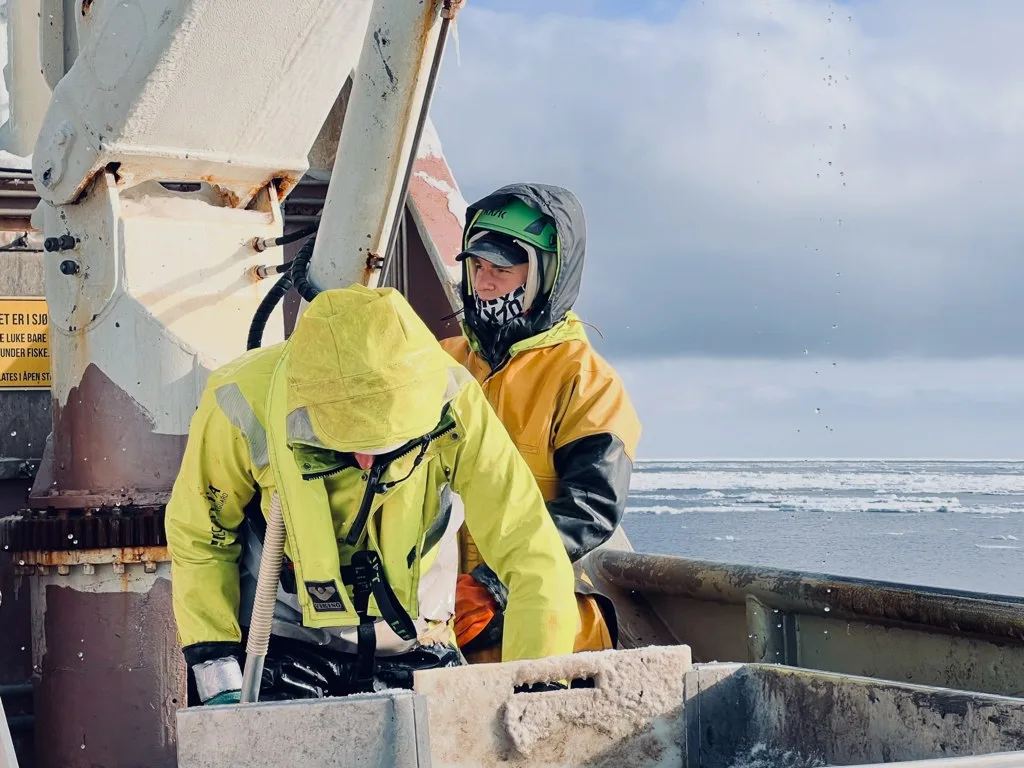
Renat mostly operated the hydraulics and cranes, constantly coordinating with the captain from the forward deck station.
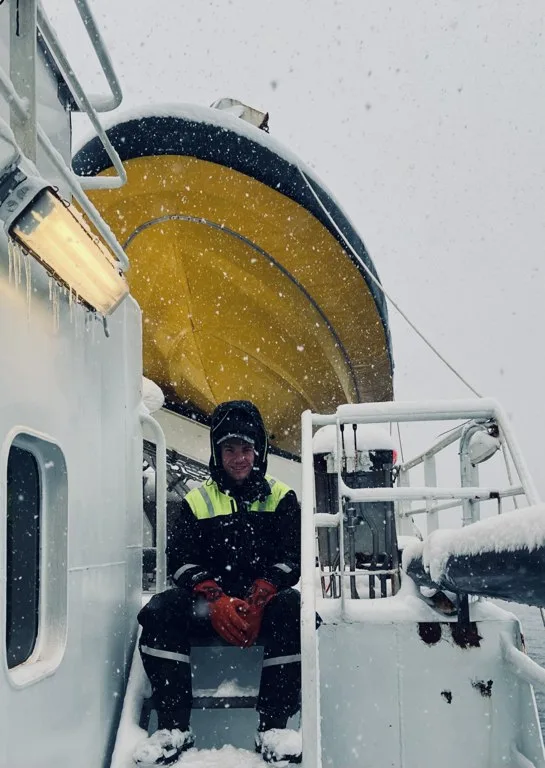
The boats were tested periodically, with mechanisms greased and checked so the equipment would be ready at any moment.
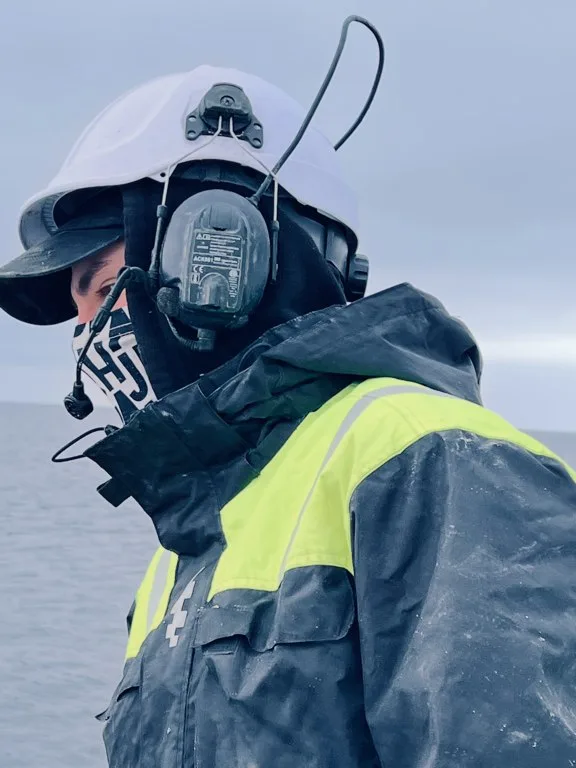
Running operations requires controlled attention: the job is efficient only when nothing pulls focus away from the process.
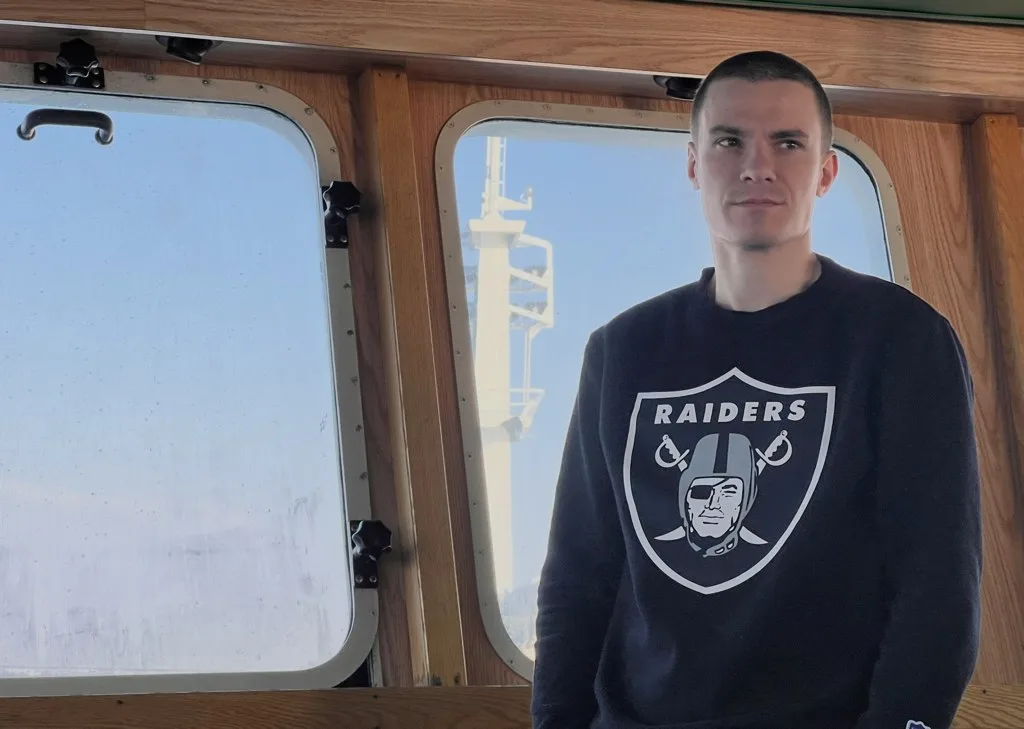
The Vima’s captain was Atle Forland, Renat’s former captain from the Northeastern, who invited him aboard.
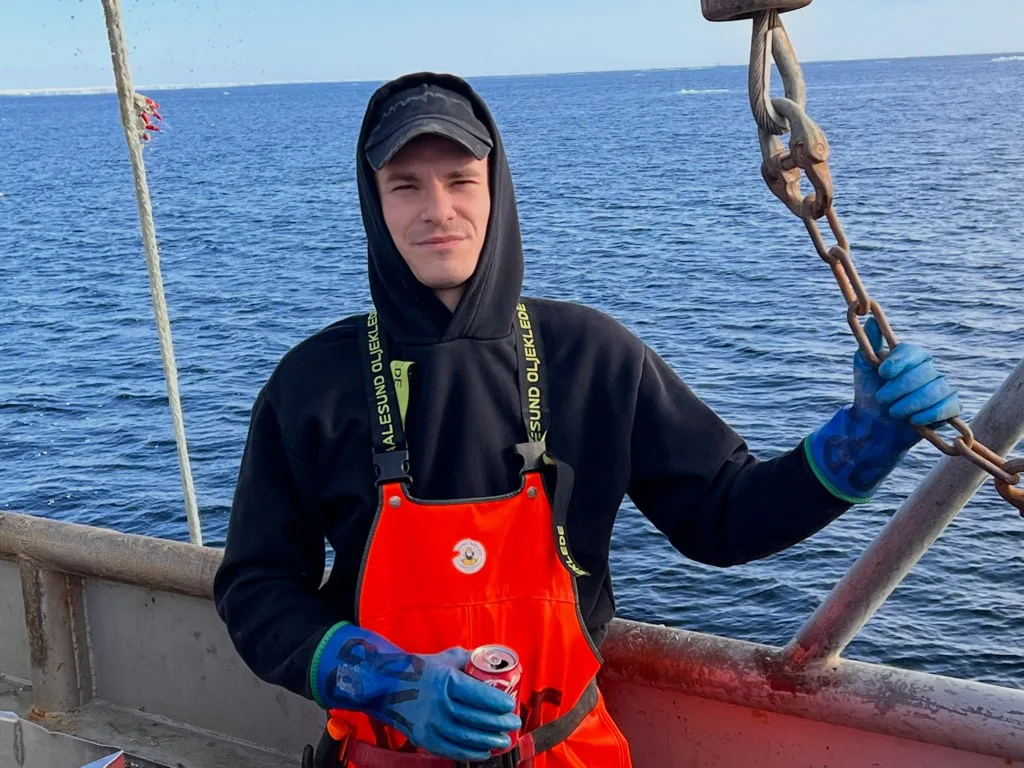
Spring, polar day and warmer weather made the deck work more pleasant once the ice had gone.
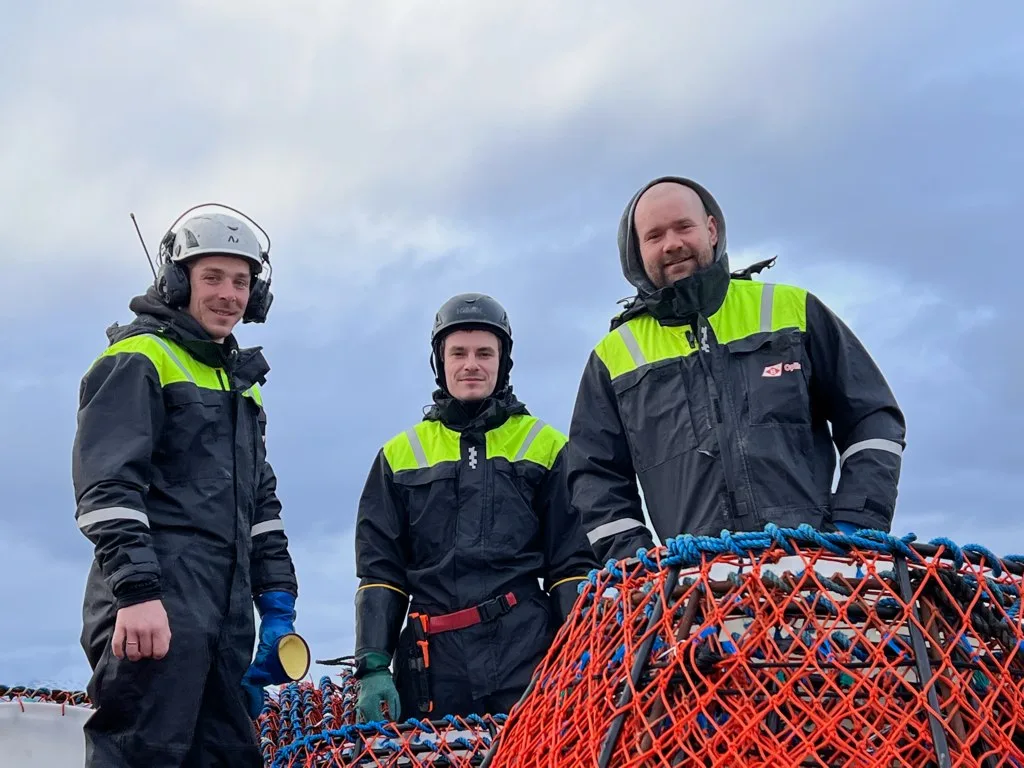
The shared uniform made the large crew feel like one team.
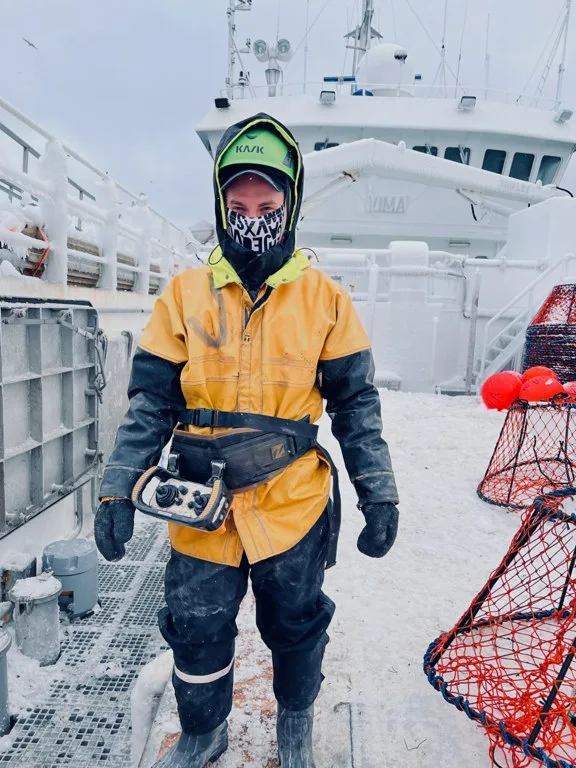
At the hydraulics station the joystick and buttons freeze quickly, so cold-weather control becomes a skill of its own.
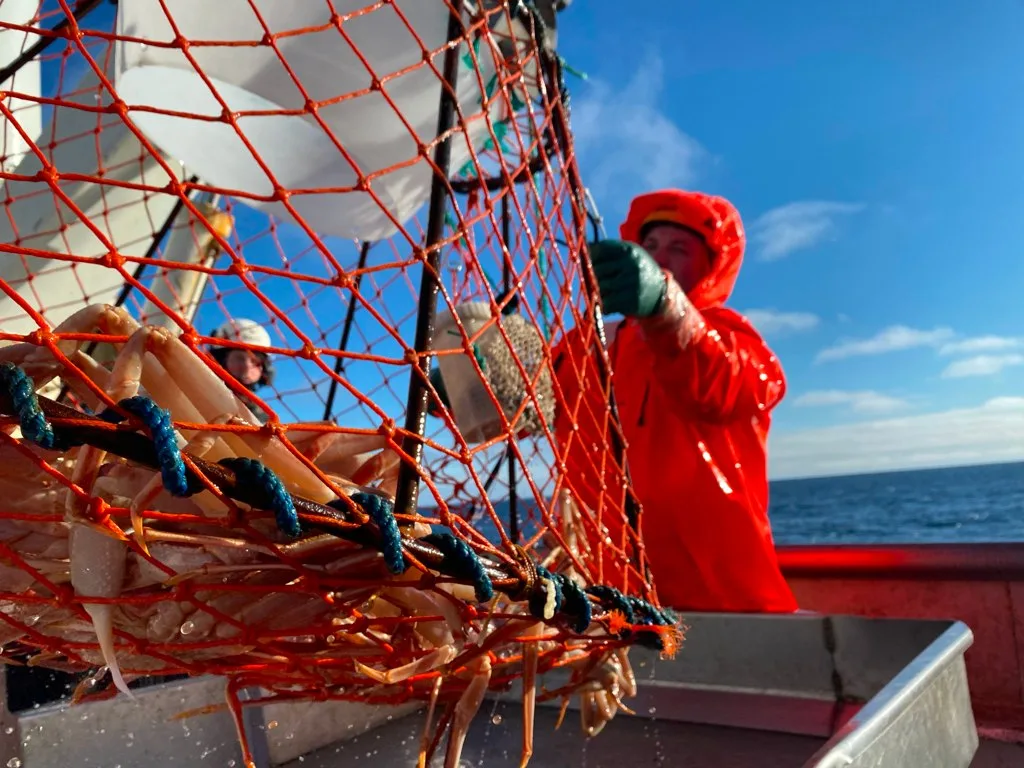
The sorting-table position is the wettest: pots and rope arrive from about 280 metres, with water running across the deck.
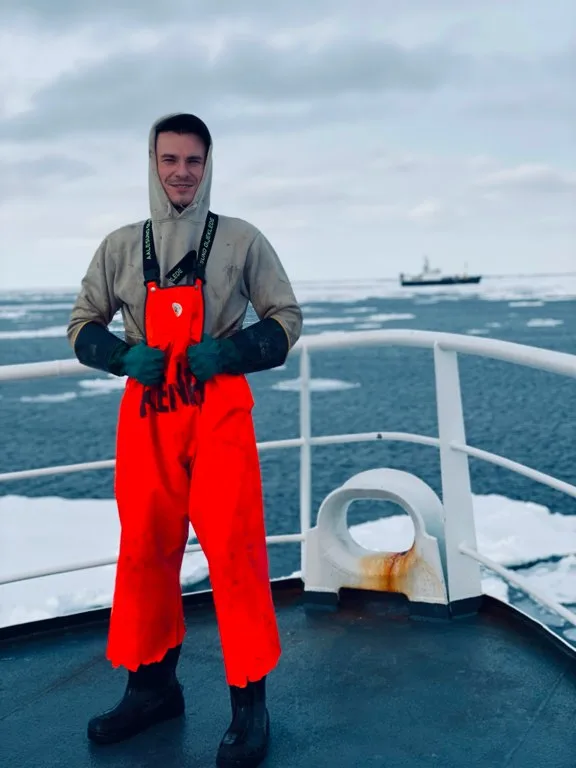
On a voyage every seaman adapts work clothing to himself: cut, mend, narrow, tie and make it usable.
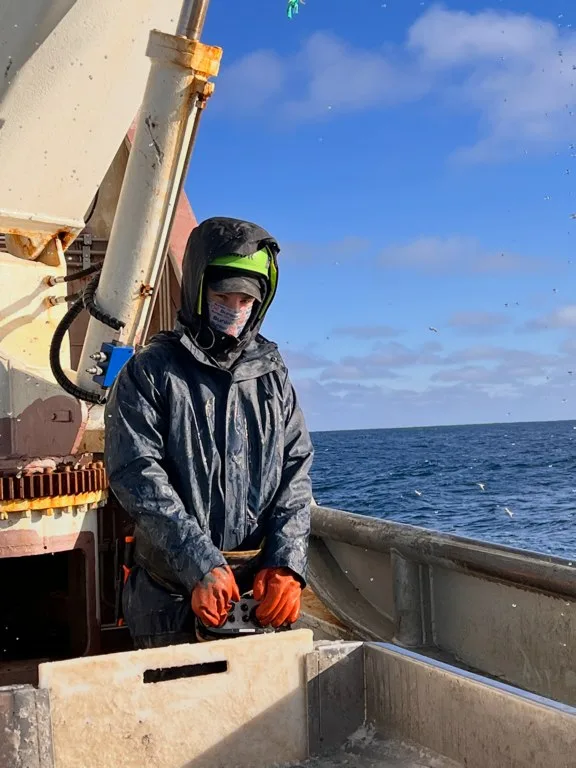
This is the coldest forward station: you stand still, control tonnes of tension, and one wrong move can mean trouble.
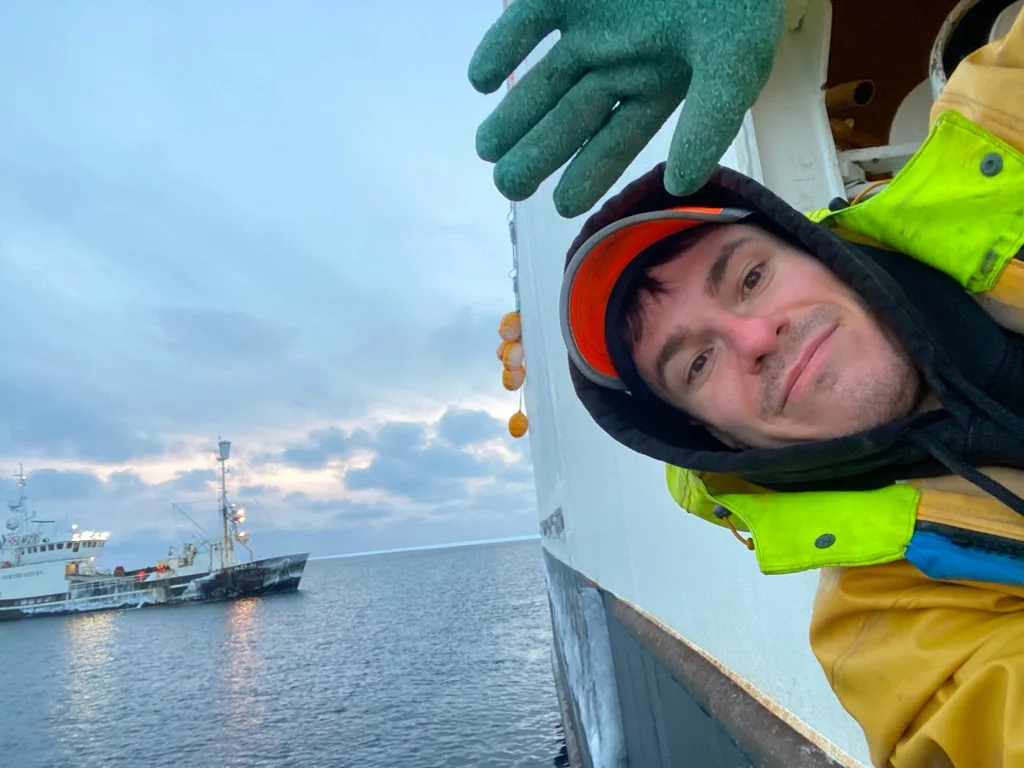
Meeting a former vessel in the middle of the sea is a separate joy, especially when familiar crew are still aboard.
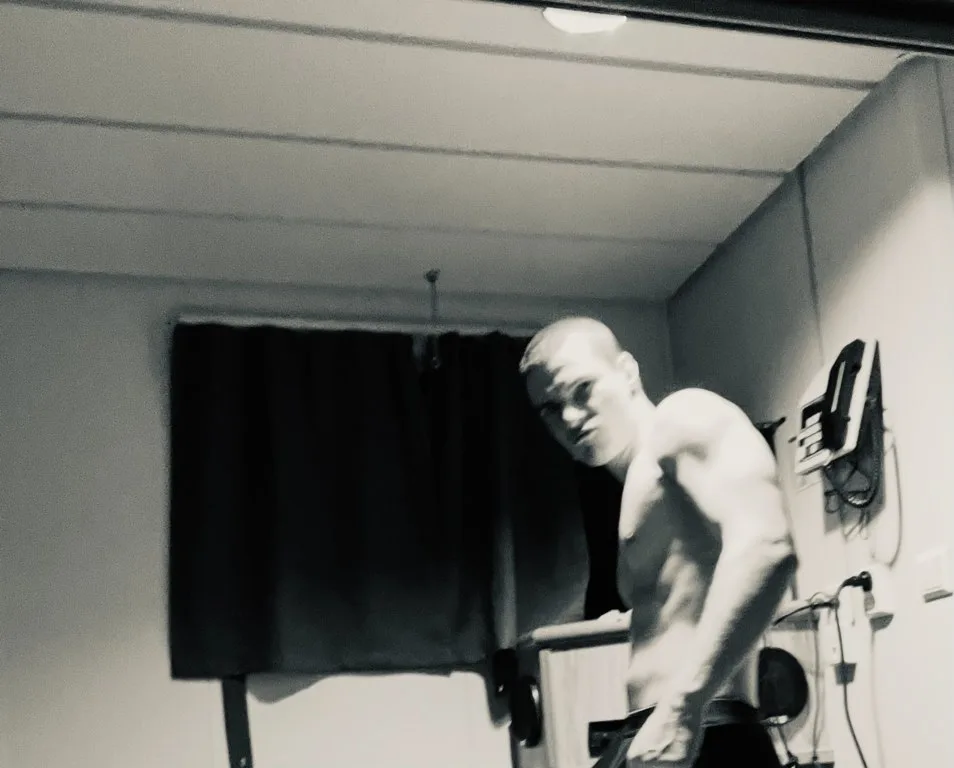
Between seasons Renat kept training so he could be ready for ship work at any time.
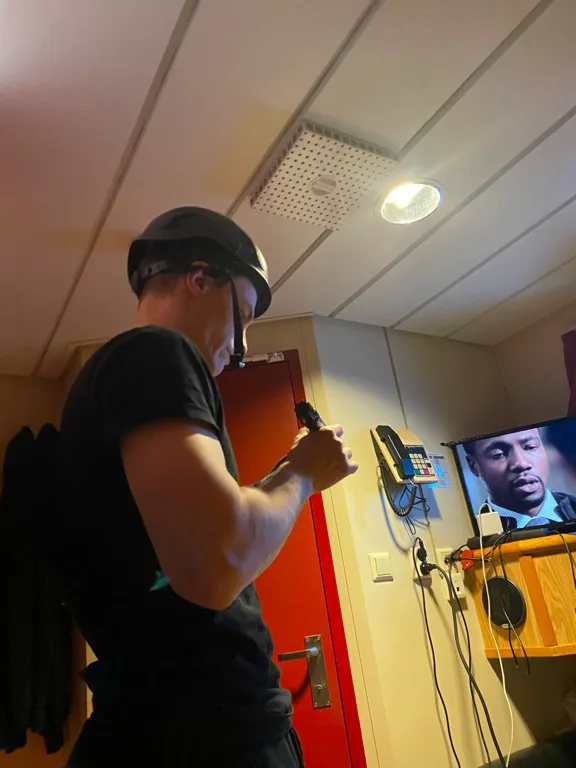
Work gear must be marked so it does not get mixed up with another seaman’s equipment.
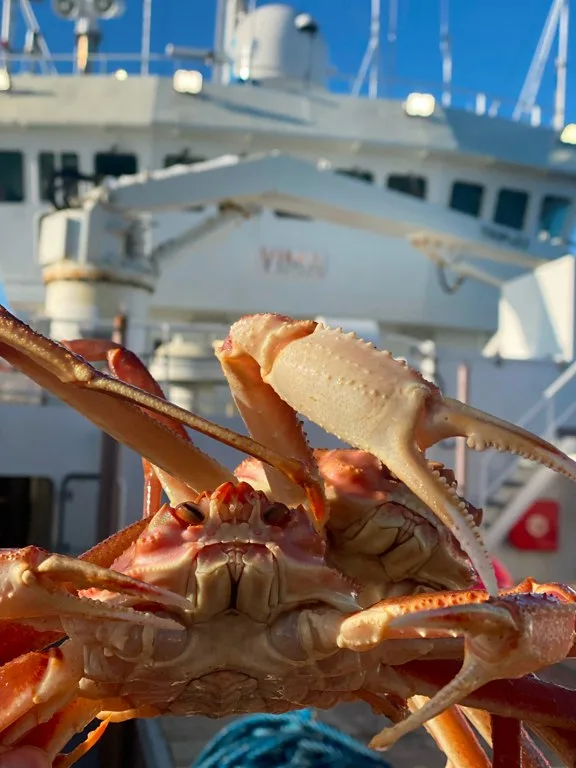
Snow crab is weaker than king crab; only the claws are eaten, and the season depends heavily on quota.
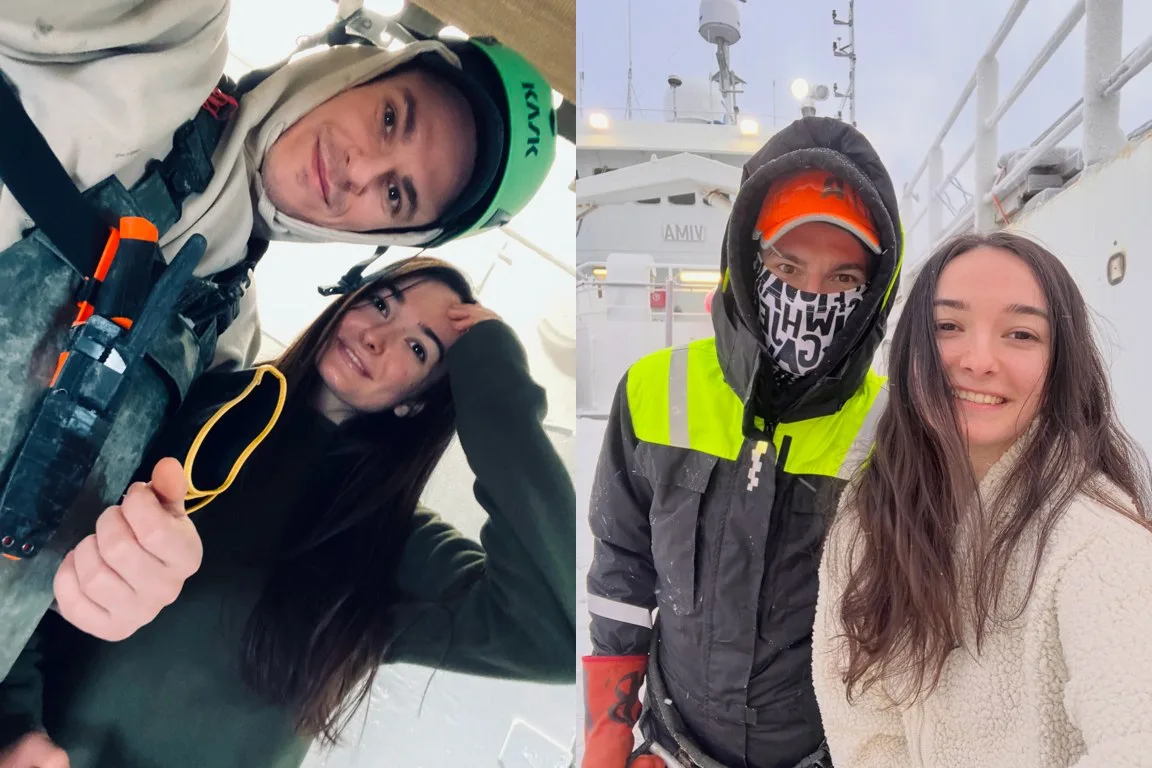
In 2022 Renat and Anastasia worked a season together; on Norwegian crab boats whole couples often work.
Whole couples work in the fleet.
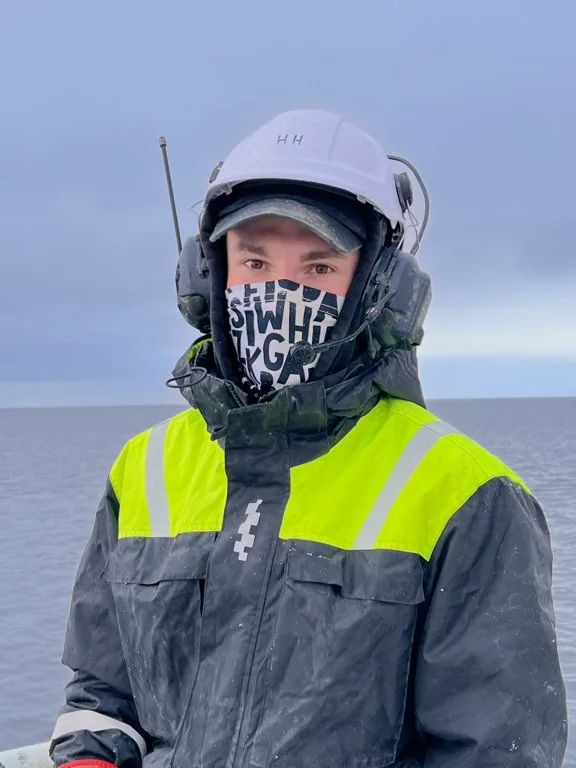
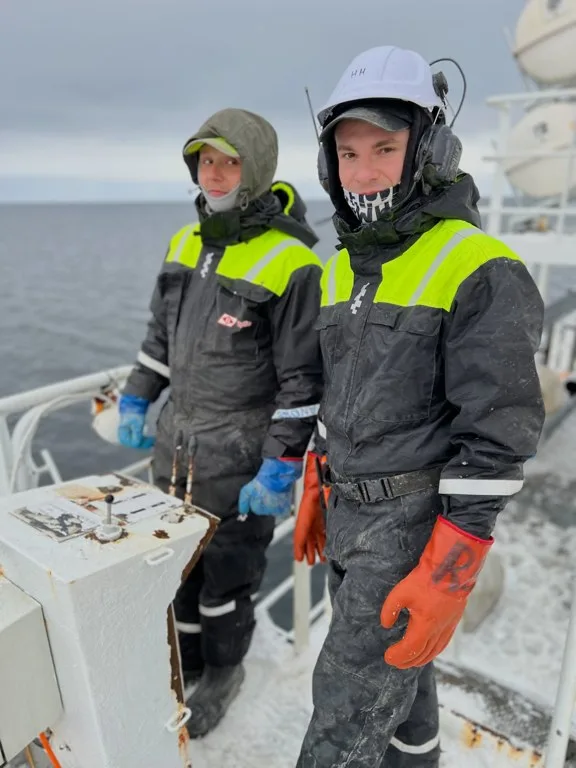
Balaclavas, reflective overalls and charged radio headsets are part of staying healthy and visible on deck.
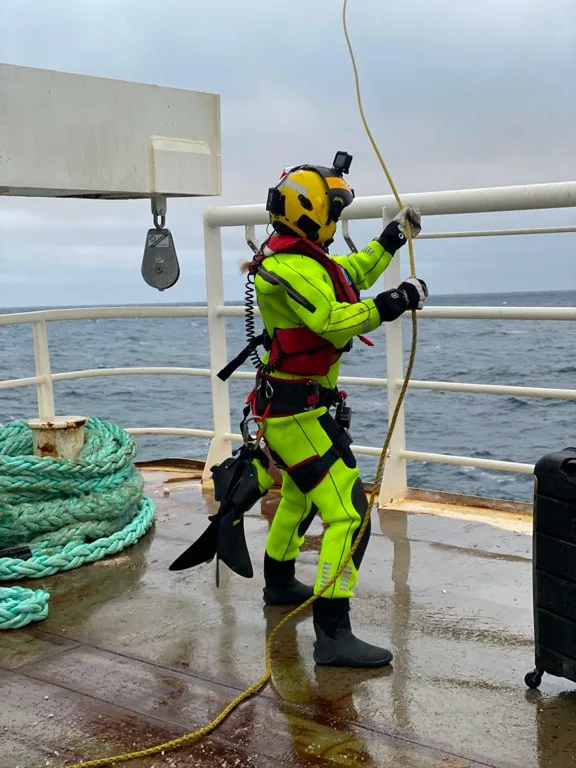
Fast rescue boats are used regularly for transfers and safety drills; boat and raft certificates are useful additions.
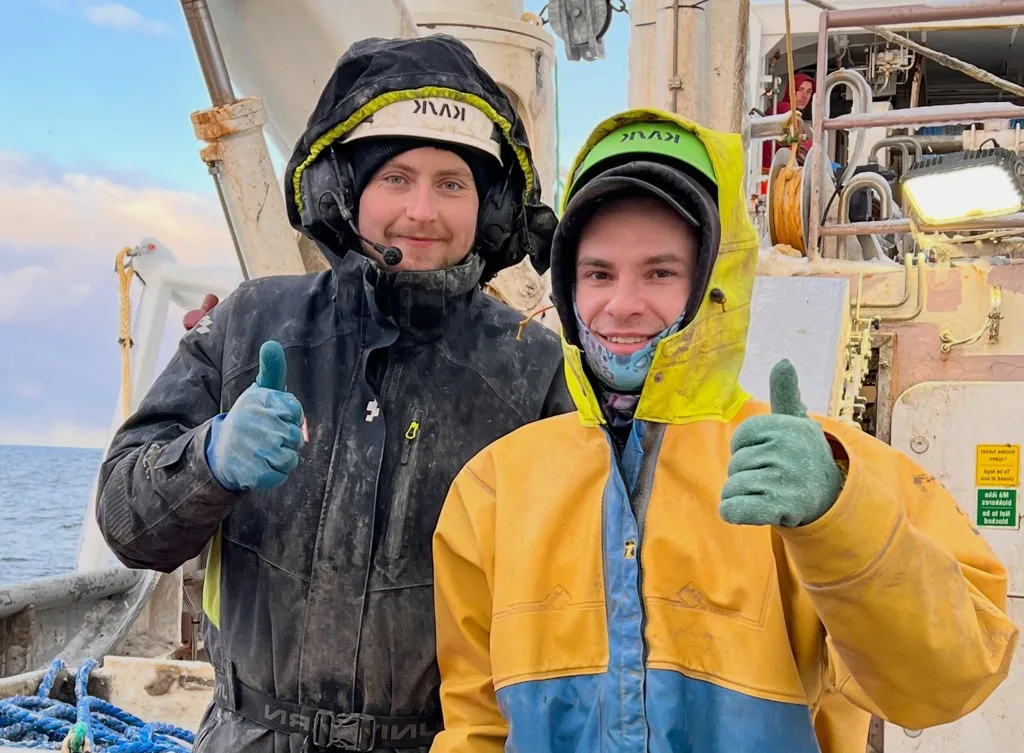
Ruben Træet started from the deck, became a mate, found stable work in Norway and even became a shareholder.
When a mechanic was suspected of appendicitis, a coast guard helicopter evacuated him under Norwegian insurance and employer protection.
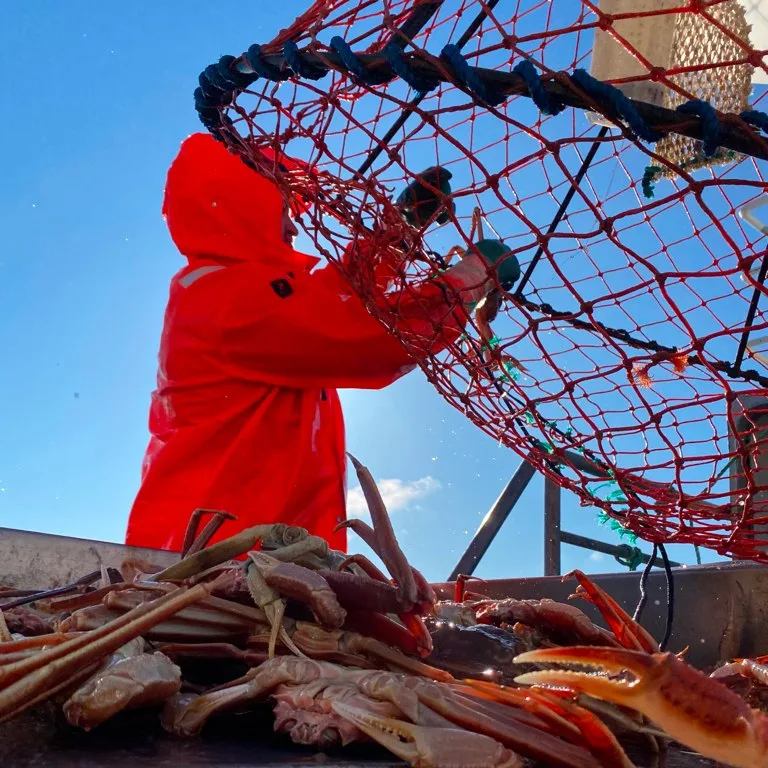
The live crab is sorted on the table, while damaged pots are marked and sent along the deck for repair.
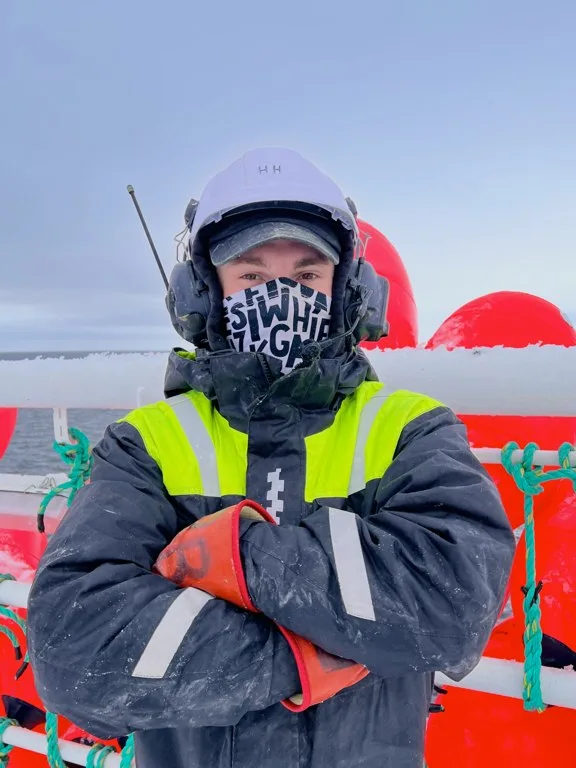
Linen, detergent, softener, pillows and blankets are provided aboard; salted work clothes are washed and maintained on the vessel.
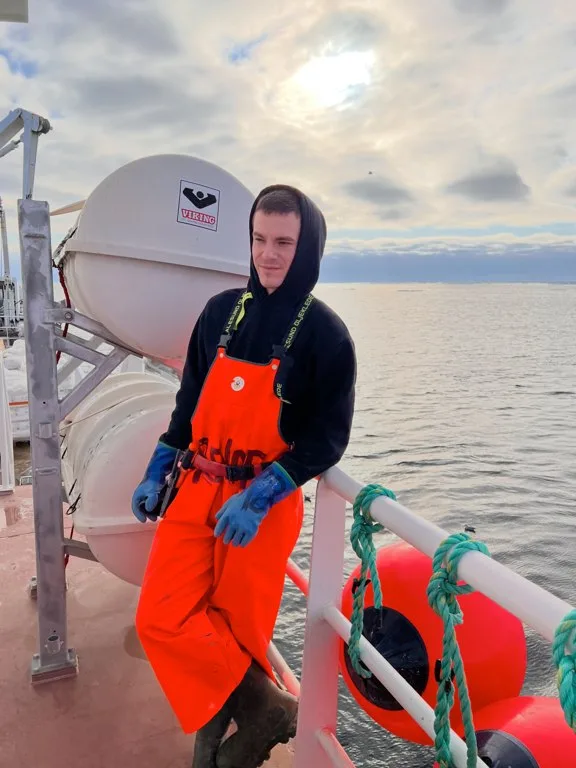
Rescue equipment has to be ready at any moment: boats, rafts and moving mechanisms are checked and greased.
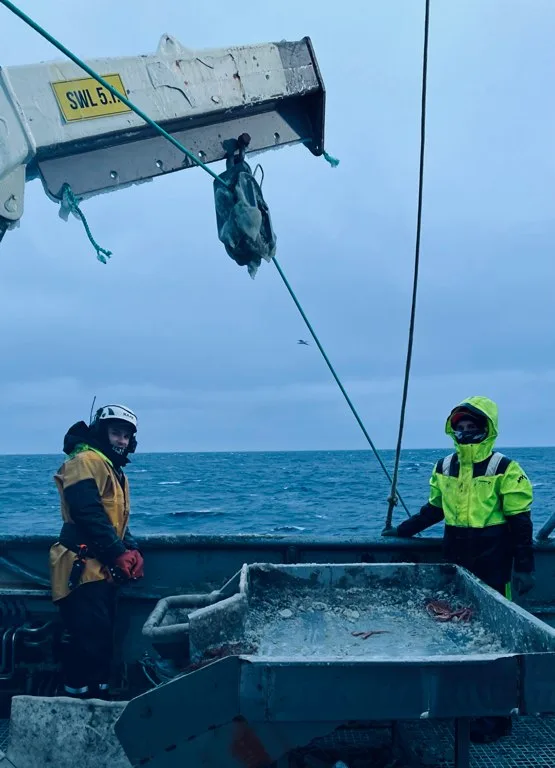
When there is little crab, the work can feel futile, but the line still has to be hauled and moved.
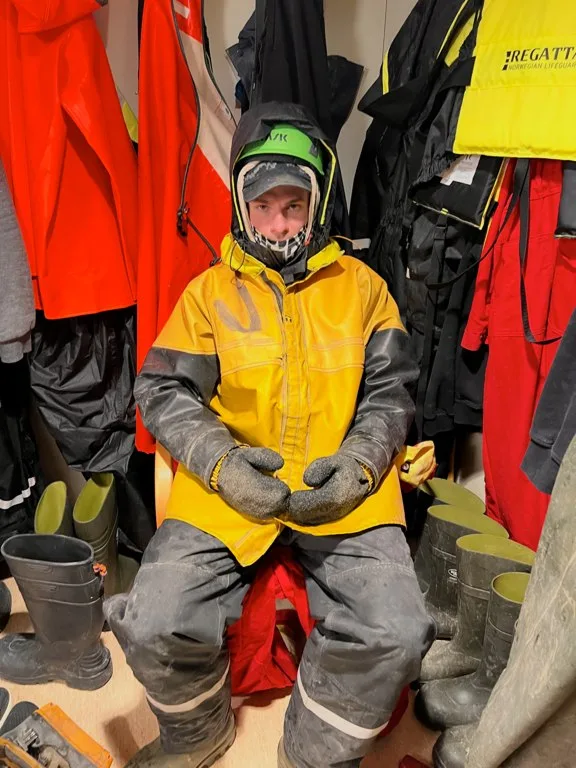
At the hydraulics station you layer up, then sweat in the warmth and freeze outside again as soon as the buoys are found.
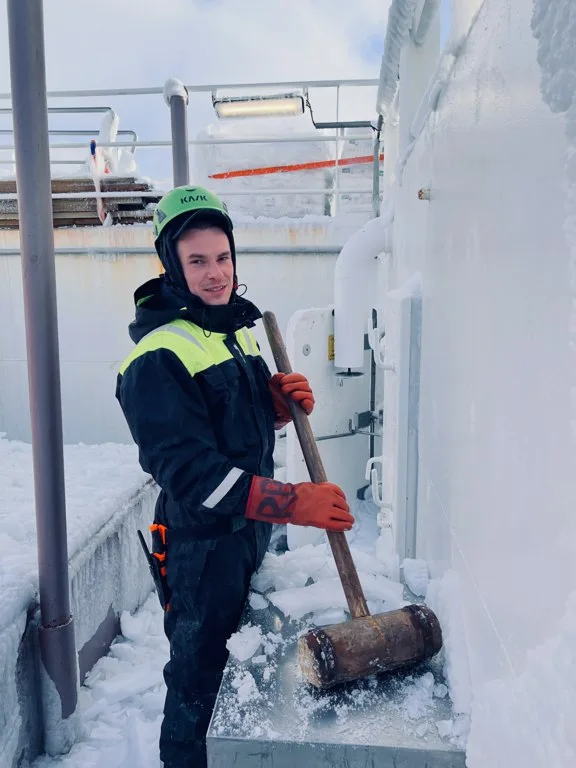
In Norway everyone chips ice, whatever the rank: if the ship goes down, everyone goes down.
Everyone chips ice, whatever their role.
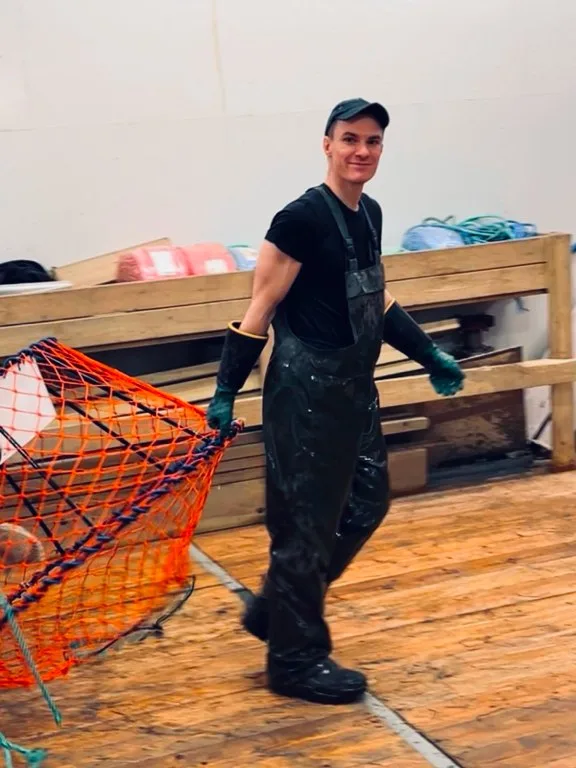
The Vima had a gym, but after moving about 200 pots at 17 kg each, rest matters more than training.
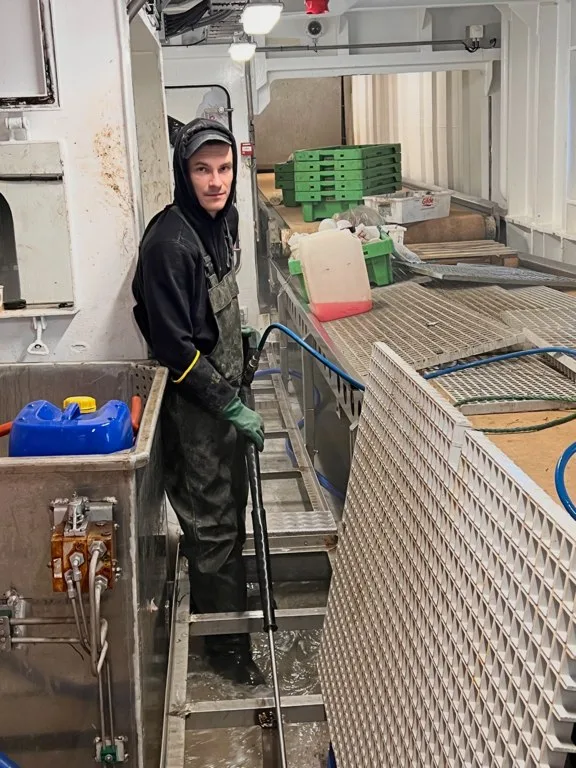
Before entering port, the deck is washed thoroughly, floor plates lifted and special chemicals used to prevent smell and rot.
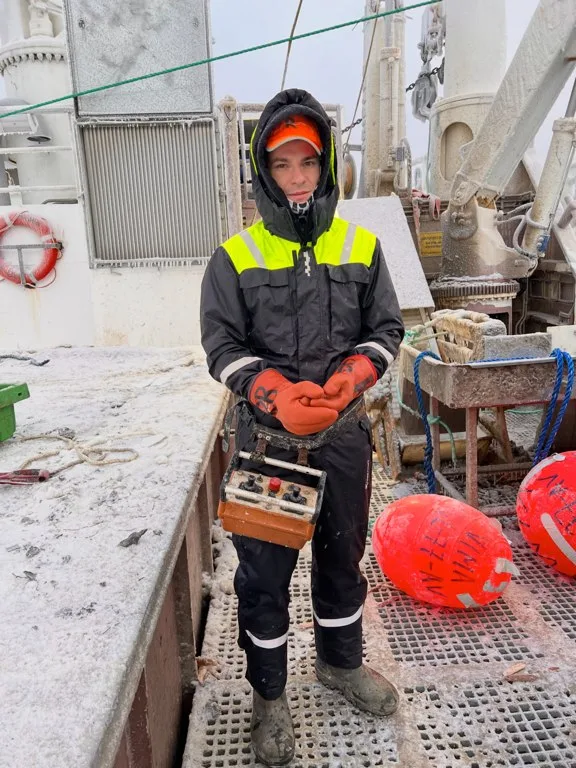
Warm mittens matter more than gloves at the hydraulics station: cold and water quickly make thin gloves useless.
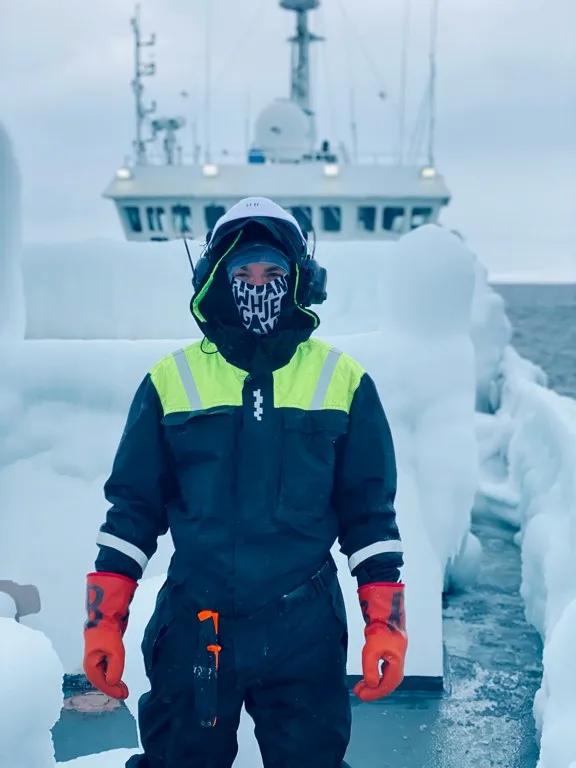
A sharp knife on the belt is a seaman’s best friend when a rope must be cut quickly.
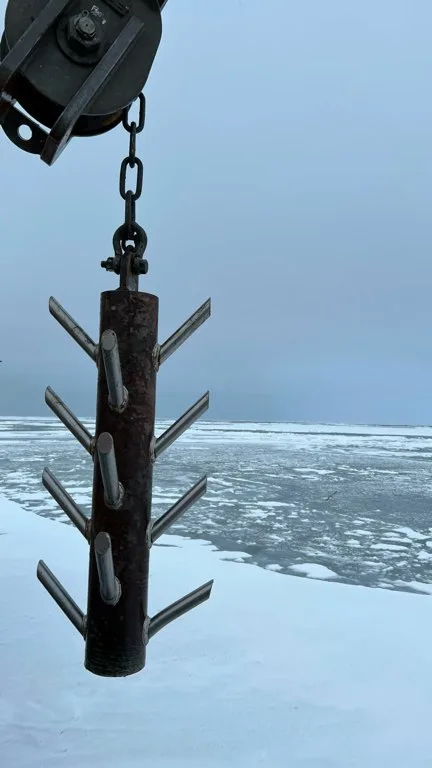
The grapnel is a heavy local invention used when ice cuts buoys or a line is lost on the bottom.
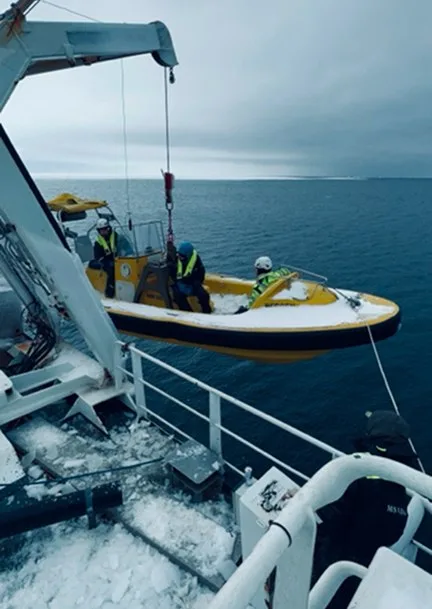
The fast rescue boat is launched almost every month for transfers, spare parts and training.
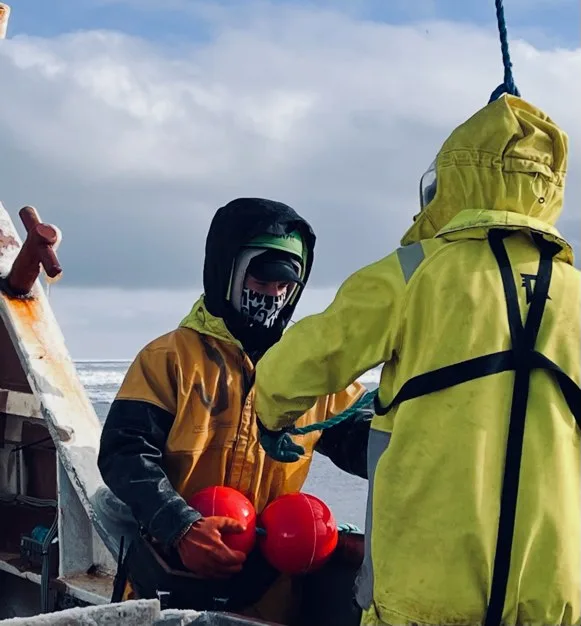
Anton Trellevik survived the Northguider shipwreck off Svalbard in 2018 and later became the Vima’s skipper.
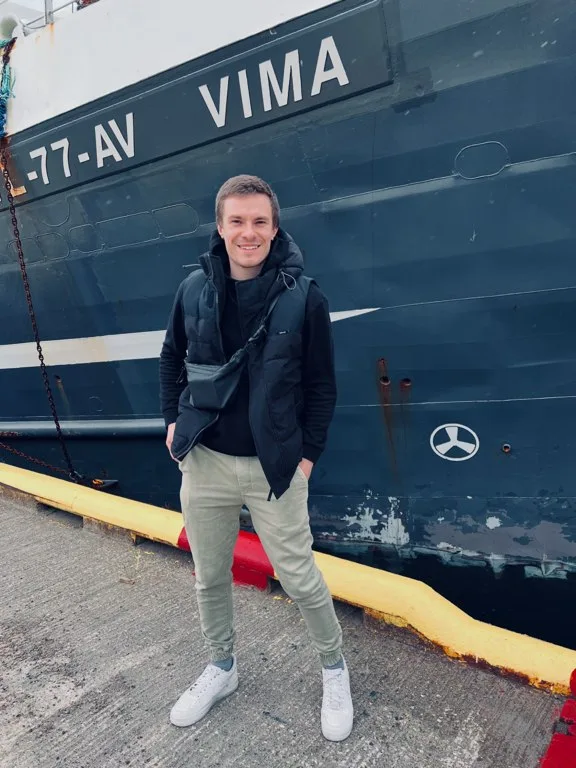
At the end of each voyage Renat takes a photo against the vessel; the Vima was so large she did not fully fit the frame.